
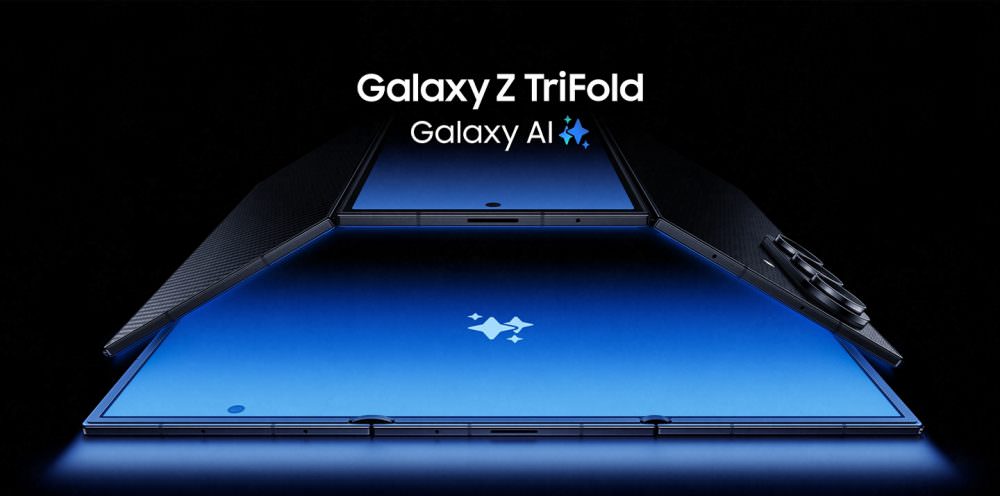
Samsung Unveils Galaxy Z TriFold, Its First Tri-Fold Smartphone
Samsung is preparing to introduce its first tri-fold smartphone, the Galaxy Z TriFold, marking the company’s entry into a form factor previously explored only by a small number of manufacturers.
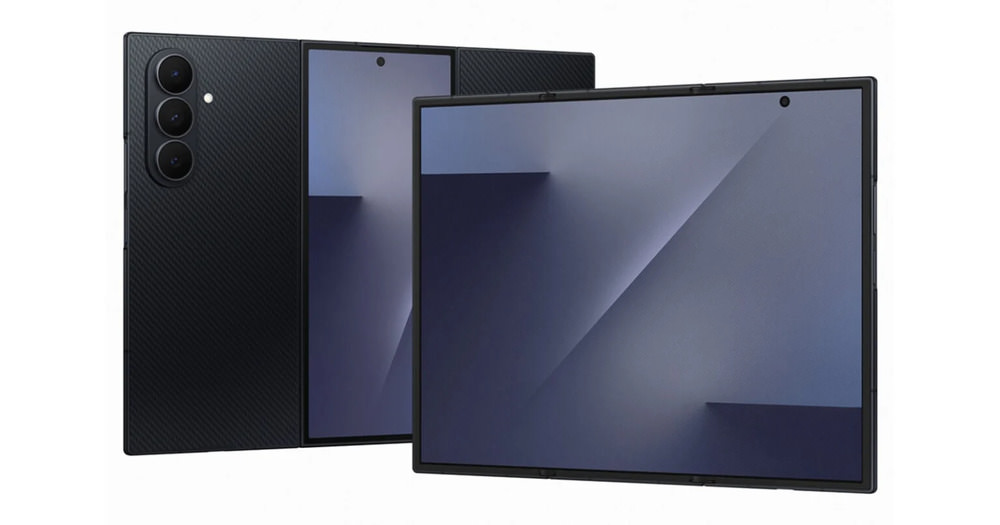
The Galaxy Z TriFold uses a dual-hinge, inward-folding design that divides the device into three panels. When folded, the device functions as a conventional smartphone via a 6.5-inch external display with a 21:9 aspect ratio, Full HD+ resolution, a 120 Hz refresh rate, and peak brightness of up to 2,600 nits. When fully unfolded, instead, it presents a 10-inch Dynamic AMOLED 2X internal display with a resolution of 2160 × 1584 pixels and a 120 Hz adaptive refresh rate. Peak brightness is rated at 1,600 nits.
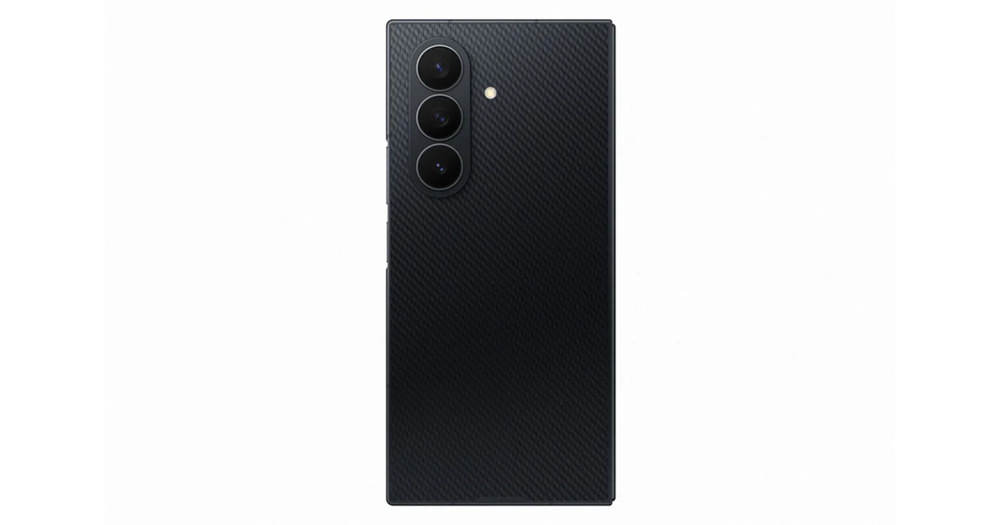
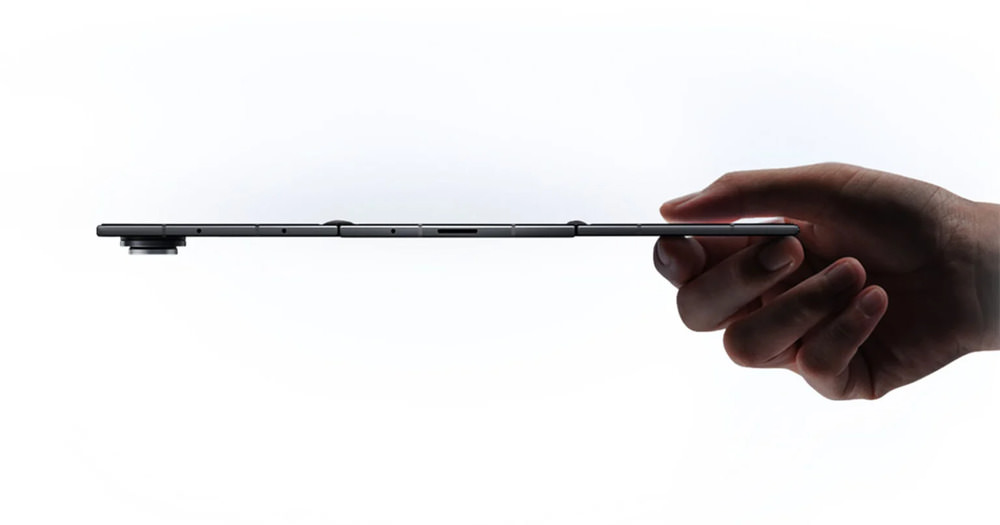
Each of the three panels differs slightly in thickness, measuring between 3.9 mm and 4.2 mm when unfolded. Folded, the device reaches an overall thickness of approximately 12.9 mm. Samsung rates the hinge mechanism for at least 200,000 folding cycles. The structure combines Advanced Armor Aluminum for the frame, titanium for the hinge housing, and a ceramic-glass fiber–reinforced polymer back panel. The cover display is protected by Gorilla Glass Ceramic 2, and the device carries an IP48 rating for water resistance.
Internally, the Galaxy Z TriFold is powered by the Snapdragon 8 Elite platform, paired with 16 GB of RAM and storage options of 512 GB or 1 TB. A three-cell battery system totals 5,600 mAh, with one cell integrated into each panel. Charging supports up to 45 W wired charging, along with wireless and reverse wireless charging. The device runs Android 16 with One UI 8 and supports multi-window multitasking, including the ability to run up to three apps simultaneously on the unfolded display. It is also the first Galaxy smartphone to support standalone Samsung DeX.
The camera system mirrors that of the Galaxy Z Fold 7 rather than Samsung’s Ultra-series phones: it includes a 200-megapixel main sensor, a 12-megapixel ultra-wide camera, and a 10-megapixel telephoto lens with 3× optical zoom and optical image stabilization. Two 10-megapixel front-facing cameras are included, one on the cover display and one on the internal screen. Images shared by a Samsung executive suggest that the company experimented with a four-camera rear layout during development. The unit shown appears to be a prototype or design mock-up rather than a production device, featuring an unfinished rear panel and an additional camera module not present in the retail version. Industry observers note that space constraints imposed by the dual-hinge mechanism, ultra-thin panels, and battery placement likely led Samsung to abandon a four-camera configuration in favor of reduced thickness, lower weight, and simplified manufacturing.
At approximately 309 grams, the Galaxy Z TriFold is heavier than conventional smartphones but comparable to other large foldables. Connectivity options include 5G, Wi-Fi 7, Bluetooth 5.4, and support for physical SIM and eSIM configurations. Storage expansion instead, via microSD is not supported.
The device is scheduled to launch in South Korea in mid-December, with availability in the United States expected in early 2026. Pricing in Samsung’s home market has been set at KRW 3,590,400, equivalent to roughly $2,440, with final U.S. pricing yet to be confirmed.