
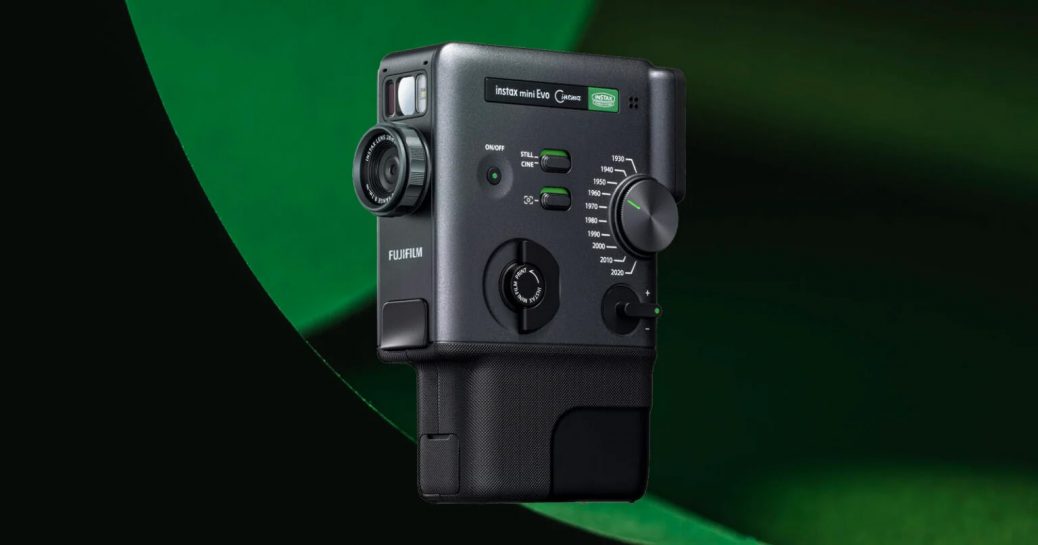
Fujifilm Unveils Instax Mini Evo Cinema Hybrid Instant Camera
Fujifilm has revealed the Instax Mini Evo Cinema, a new addition to its Evo line that extends the hybrid concept of digital capture and instant printing to include short-form video recording. As with previous Evo models, the camera uses a digital sensor to capture images that can be selectively printed on Instax Mini film, either directly from the camera or from a connected smartphone. The Mini Evo Cinema builds on this approach by allowing users to record brief video clips and associate them with physical prints.
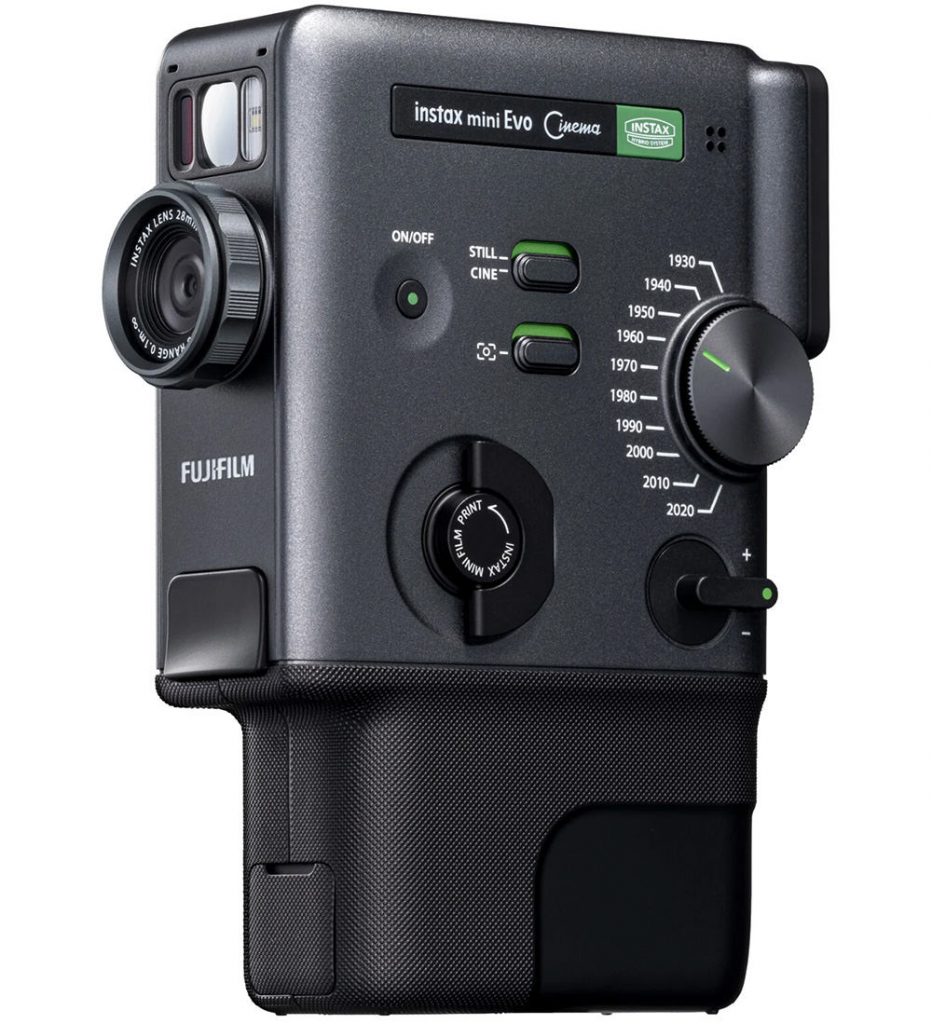
The camera is designed around vertical operation and visually references Fujifilm’s 1960s-era 8mm film cameras, particularly the Fujica Single-8 series: this form factor accommodates a grip-style trigger used to record video clips of up to 15 seconds. Through the companion app, multiple clips can be combined into a single video with a maximum length of 30 seconds, and from each clip a single frame can be extracted and printed onto Instax Mini film with an embedded QR code. Scanning the code links to the corresponding video hosted online, which Fujifilm states will remain accessible for up to two years.
At the core of the Mini Evo Cinema is a 5-megapixel 1/5-inch CMOS sensor paired with a fixed 28mm-equivalent f/2 lens. The camera supports still images and video recording at resolutions up to 1080 × 1440 pixels at 24 frames per second, with files stored internally or on a microSD card. A small rear LCD provides basic monitoring and playback, and optional accessories include a clip-on viewfinder attachment, an auxiliary grip, and a dedicated carrying case.
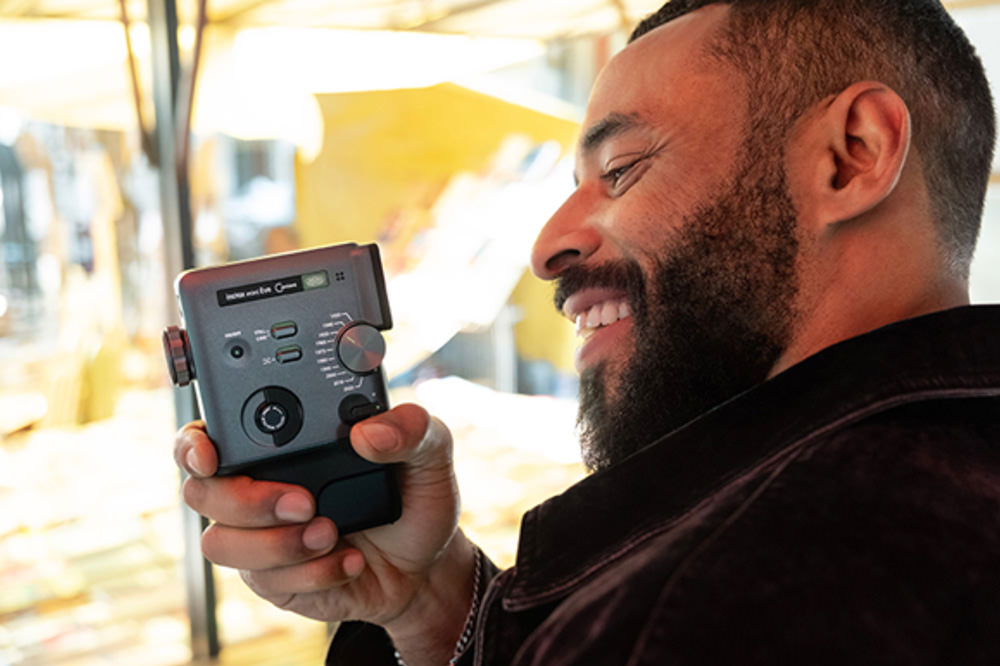
Autofocus options include single AF and face detection, and the camera includes features such as a built-in flash, continuous LED light, self-timer, selfie mirror, USB-C port, and microSD card slot.
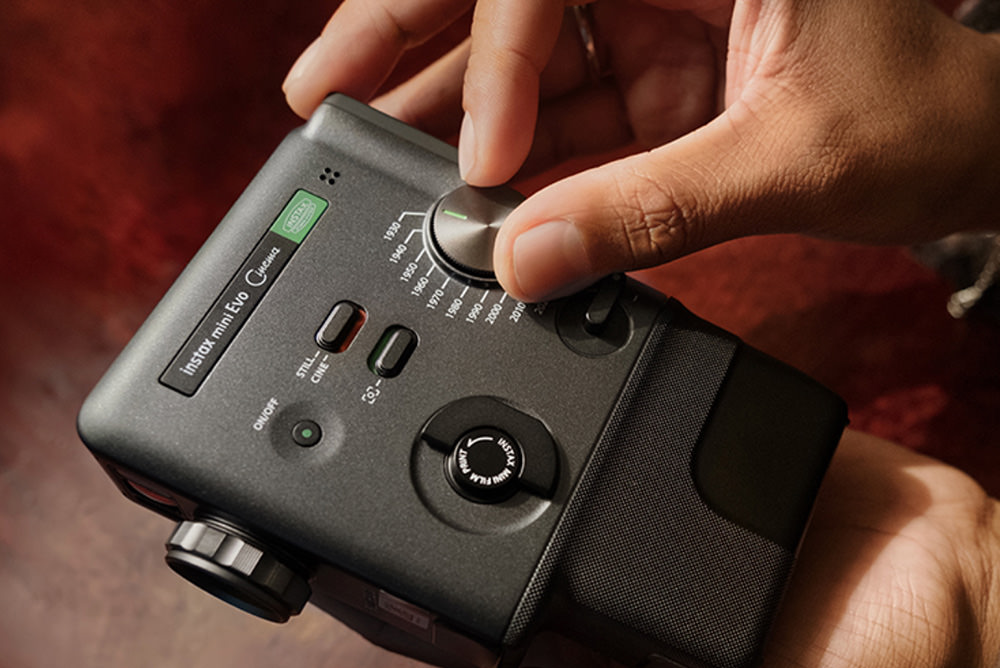
A central feature of the Mini Evo Cinema is the physical “Eras Dial,” which applies visual and audio effects inspired by different historical periods, ranging from the 1930s to the 2020s. Each era preset can be adjusted across ten intensity levels, resulting in up to 100 possible combinations when paired with additional image adjustments. These effects influence both still images and video, altering color rendering, contrast, noise, and, in some cases, adding era-themed audio characteristics. Additional controls allow for digital zoom, exposure compensation, and switching between still and video capture.
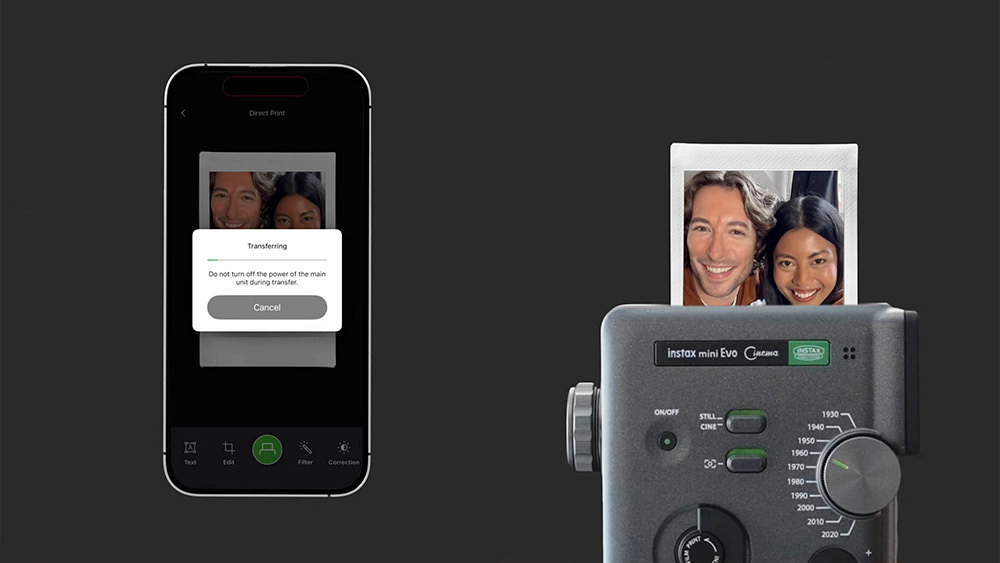
Like other Evo models, the Mini Evo Cinema also functions as a standalone Instax printer for smartphone images. Wireless connectivity via Bluetooth and Wi-Fi enables remote shooting, file transfer, basic editing, and printing through the dedicated Instax app. The app also supports clip assembly, simple titles and templates, and poster-style layouts for printed images.
Fujifilm has announced that the Instax Mini Evo Cinema will go on sale in Japan starting January 30, 2026. Pricing and availability for other regions have not yet been confirmed.