
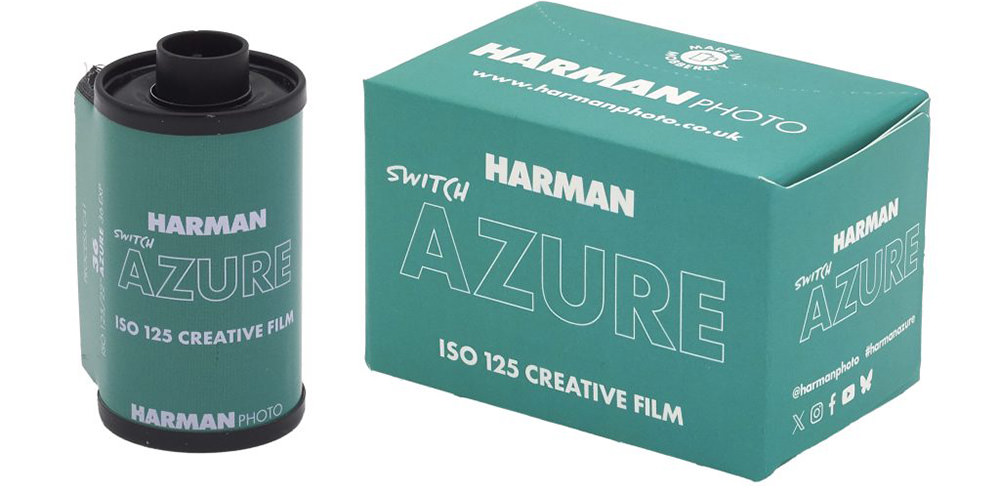
Harman Introduces Switch Azure Color Film
Harman Technology has introduced a new experimental color negative film called Switch Azure, expanding its recent line of unconventional emulsions. The film is designed to alter color relationships in a non-standard way, producing images where typical color reproduction is intentionally disrupted.
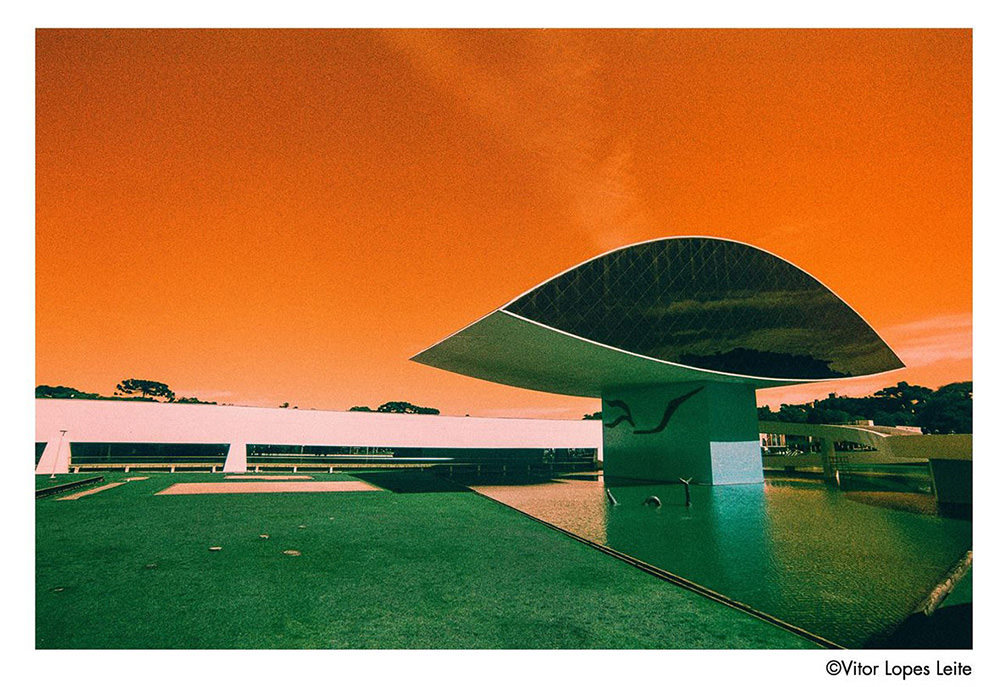
Switch Azure is rated at ISO 125 and is available in both 35mm and 120 formats. It is based on the British company’s earlier Phoenix color film platform, with modifications to the color layer response that result in shifted tonal rendering. In practical terms, blue tones are often translated into orange hues, yellows shift toward blue or cyan, and reds can appear as purple or deep blue. Greens tend to remain closer to their original appearance, although variations can still occur depending on lighting and subject.
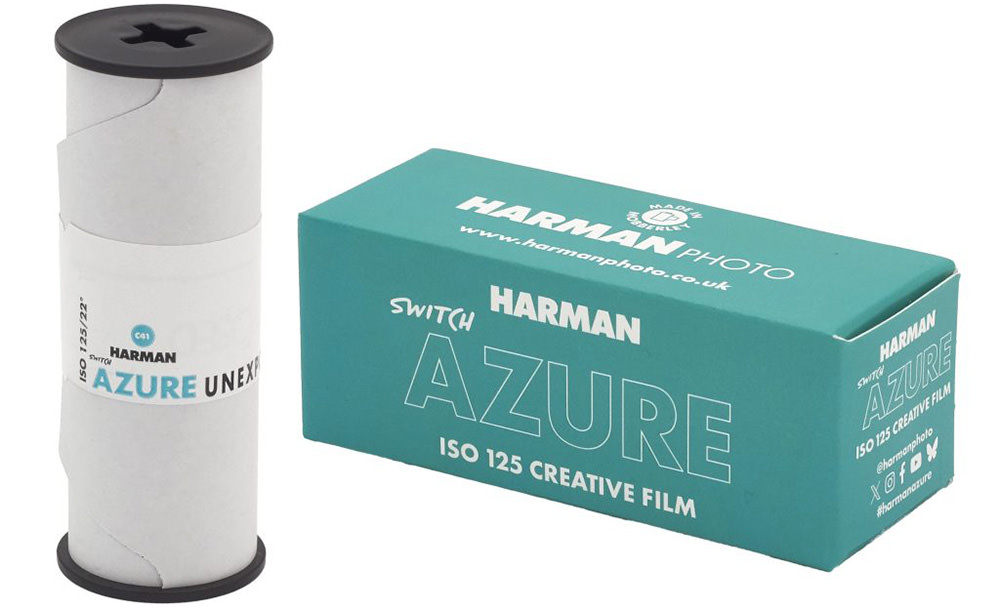
“By ‘switching’ two of the three color couplers around, this creates a differing contrast response to the individual channels which can render blues as orange, yellows as a vibrant azure and reds as hues of purple/blue,” says Giles Branthwaite, Harman Sales and Marketing Director.
The altered color response affects a wide range of subjects, including landscapes, urban environments, and portraits. Skies can appear inverted in tone, with warm hues replacing typical blues, while familiar objects may take on unexpected color characteristics. Skin tones are also affected, often appearing less natural compared to standard color negative films.
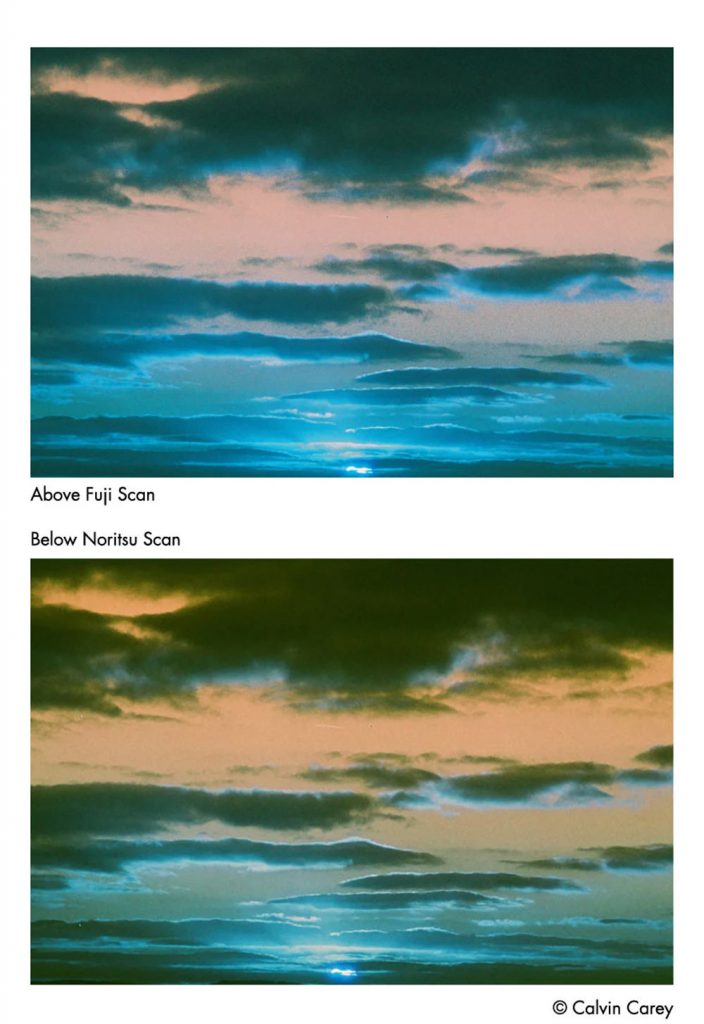
The final appearance of images can vary depending on the scanning process: Harman notes that different lab scanners produce different interpretations of the film’s color output. Fuji scanners tend to generate more saturated and intense colors, while Noritsu systems often produce softer or more muted tonal results, particularly in blue regions.
Switch Azure is processed using the standard C-41 color negative process, making it compatible with most commercial film labs and home processing setups. The film is intended to be exposed with attention to midtones, as this helps maintain a more balanced distribution of the altered color channels.
Here are some sample pictures, courtesy of Harman Technology:


This release follows other recent films from Harman, including Harman Red, Phoenix, and Phoenix II, which also explore variations in color rendering beyond conventional standards. The company has indicated that revenue from these experimental products is being used to support ongoing development of new color film stocks.
The film is currently available through retailers, with pricing varying by market, typically around $12–$13 per roll depending on format.