
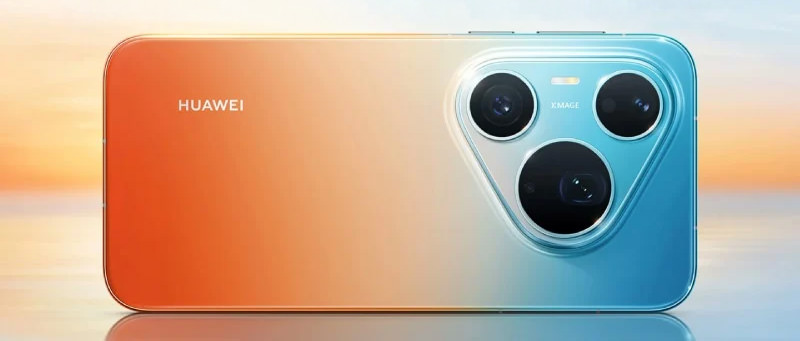
Huawei Unveils Pura 90 Smartphone Series
Huawei has unveiled the Pura 90 smartphone series comprising three distinct devices — the Pura 90, Pura 90 Pro, and Pura 90 Pro Max — with camera hardware as the primary axis of differentiation between them.
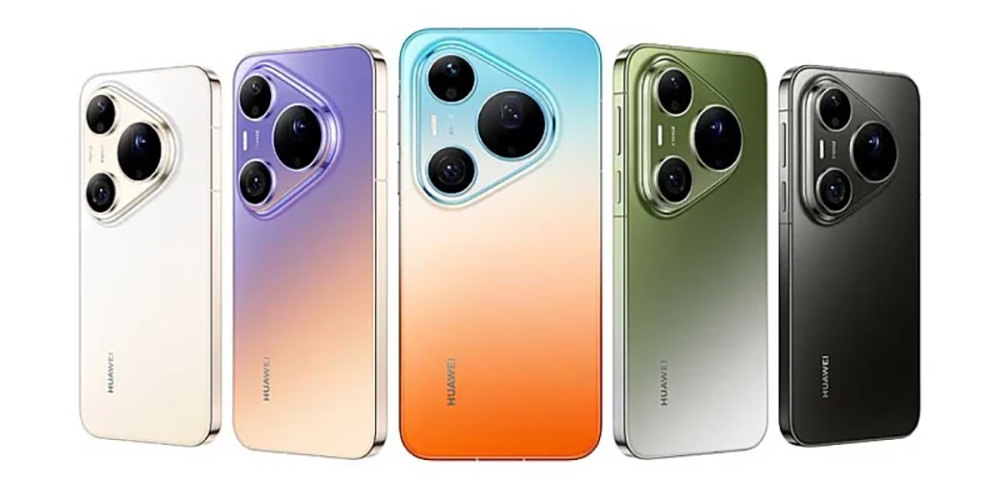
The Pro Max sits at the top of the imaging hierarchy. Its main sensor is a 50-megapixel RYYB unit measuring 1/1.28 inches, stabilized optically and equipped with a variable aperture that spans f/1.4 to f/4.0. The variable aperture allows the lens to mechanically restrict incoming light rather than relying solely on software, which has implications for depth of field control and exposure in high-contrast scenes. The Chinese company claims the sensor’s dynamic range exceeds that of the iPhone 17 Pro Max by up to sixteen times, translating to more retained detail in both bright highlights and deep shadows. Alongside the main sensor, the Pro Max carries a 40-megapixel RYYB ultra-wide and a 200-megapixel periscope telephoto — also on a 1/1.28-inch sensor — capable of 4x optical zoom, optical-quality output up to 8x, and digital zoom extending to 20x. The RYYB filter array, which replaces the green channel with yellow in the Bayer pattern, is designed to capture more light and improve low-light performance across all three rear cameras.
The Pura 90 Pro shares the same primary sensor as the Pro Max in both dimensions and optics, but differs in the supporting lenses: the ultra-wide drops to 12.5 megapixels, and the periscope telephoto to 50 megapixels, though the latter retains the same 4x and 8x zoom range. The step down in resolution on the telephoto is significant, as the Pro Max’s 200-megapixel sensor provides considerably more latitude for cropping and zoom interpolation.
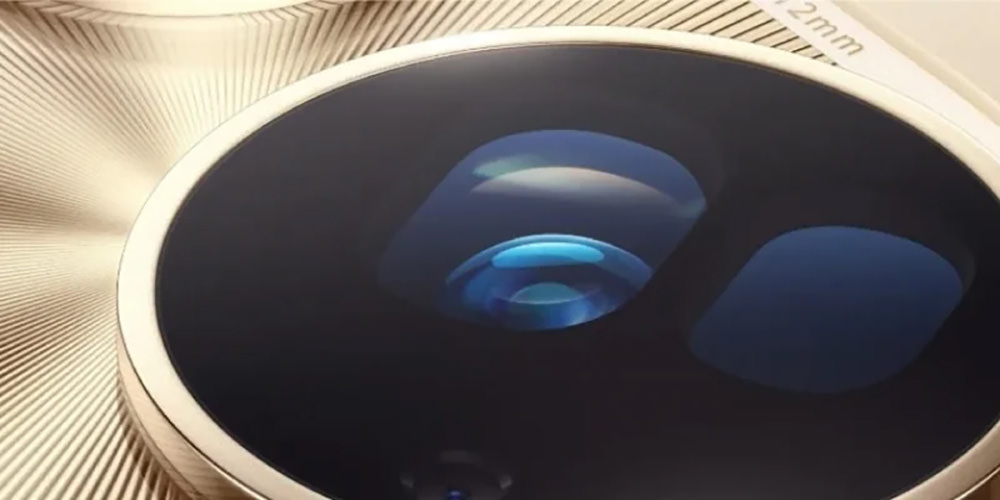
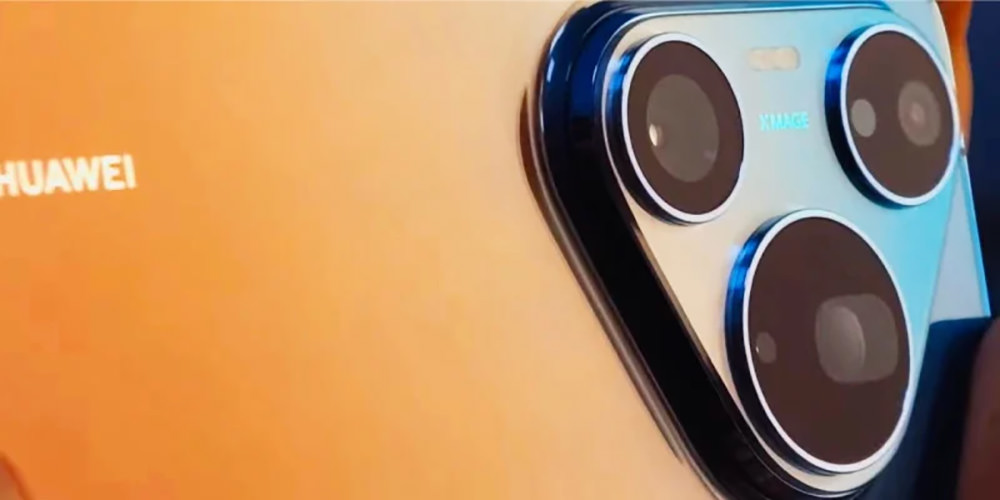
The standard Pura 90 departs more substantially from its siblings: the main camera remains a 50-megapixel RYYB sensor but with a fixed f/1.8 aperture and no variable diaphragm. The ultra-wide is also 12.5 megapixels at f/2.2, and the periscope telephoto — 50 megapixels — offers a slightly shorter 3.7x optical zoom. The front camera is consistent across all three models: a 50-megapixel selfie unit paired with a dedicated color composition sensor intended to optimize hue accuracy and tonal balance.
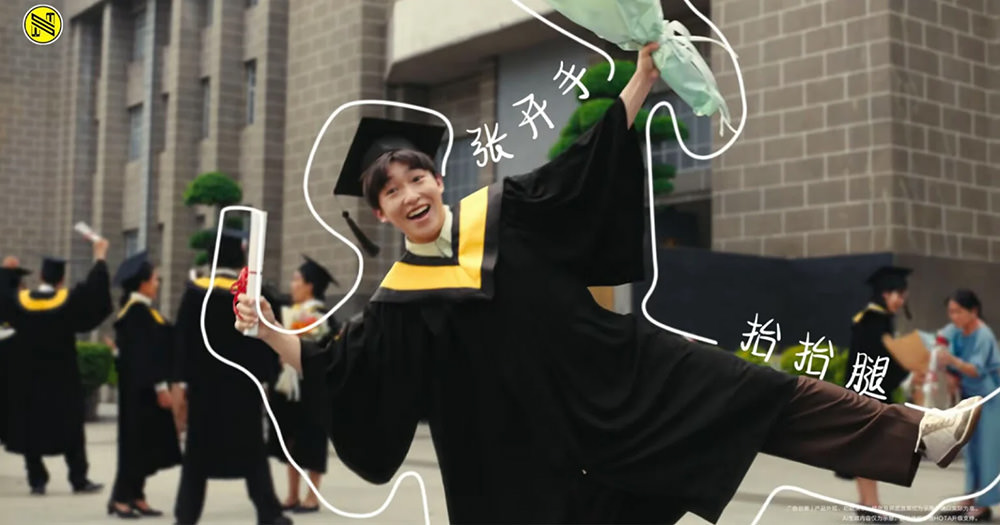
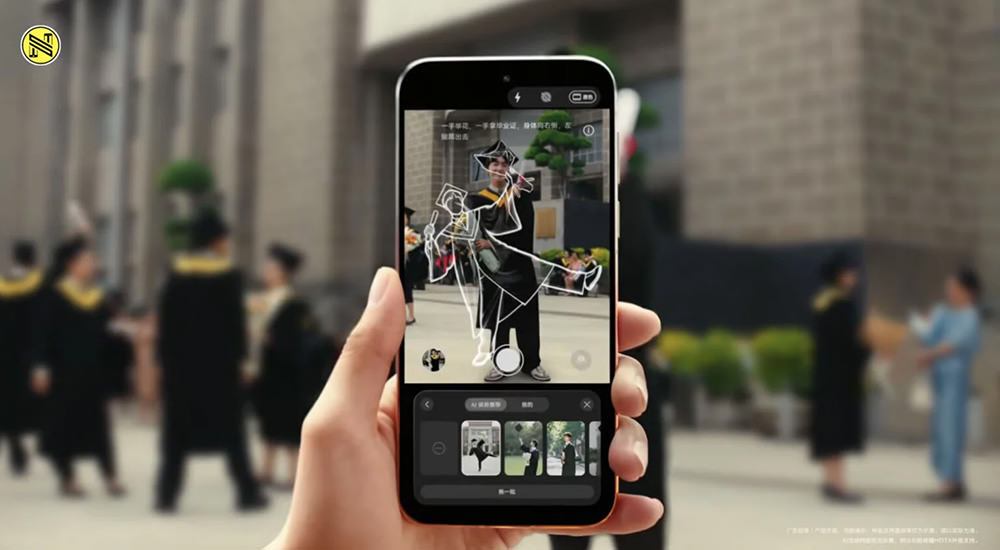
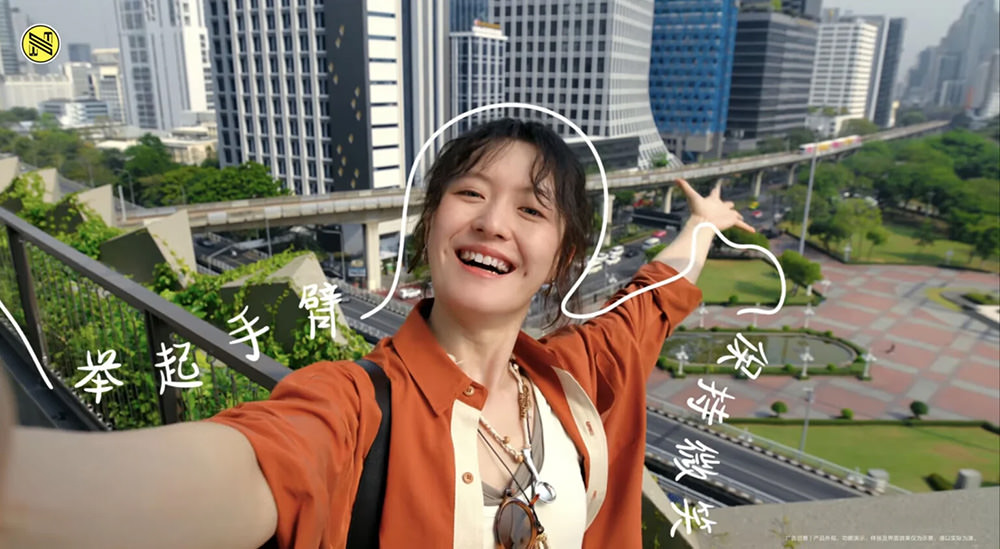
Across the lineup, Huawei has integrated an AI Photo Pose feature, accessible through a button in the camera application. When enabled, the system overlays real-time posture suggestions on the viewfinder, guiding the subject toward positions the algorithm determines to be more compositionally effective. The feature was introduced in a teaser that used the V-sign — a hand gesture ubiquitous in East Asian photography since the 1980s — as its starting point for contrast.
Beyond the cameras, the three devices share a common display architecture: OLED LTPO panels with adaptive refresh between 1 and 120 Hz, Full HD+ resolution, high-frequency PWM dimming, and Kunlun Glass protection. The chipset situation follows Huawei’s established pattern of opacity — the Pro and Pro Max use the Kirin 9030S, the base model the Kirin 9010S, with no official detail on fabrication process or core layout. HarmonyOS 6.1 runs across all three, with AI functions oriented toward the Chinese market. Satellite connectivity via Beidou is supported on all models, as is IP68 and IP69 protection.
Battery capacity inverts the usual flagship logic: the standard Pura 90 holds the largest cell at 6,500 mAh within a 7.0 mm body, while the Pro and Pro Max carry 6,000 mAh. Wired charging peaks at 100 watts on the base and Pro Max, and 66 watts on the Pro. Wireless charging is 50 watts on the base and Pro, 80 watts on the Pro Max. RAM is 12 or 16 GB across all models; storage reaches 1 TB on the Pro and Pro Max, while the base tops out at 512 GB.
Pricing begins at 4,699 yuan for the Pura 90, 5,499 yuan for the Pro, and 6,499 yuan for the Pro Max — approximately €585, €685, and €810 respectively. The top-tier 16 GB and 1 TB Pro Max configuration reaches 8,499 yuan, around €1,050. Distribution is momentarily confined to China.