Ming Smith: Wandering Light
This summer, Rencontres d’Arles turns its attention to one of the most singular voices in American photography. Wandering Light, on view at Église Sainte-Anne from July 6 to October 4, 2026, is the most expansive presentation of Ming Smith’s work to date — a journey through several decades of images that refuse easy classification. Smith has long occupied a space of her own: trained in an era when Black women were largely invisible within institutional photography, she built a body of work defined by restlessness, intuition, and a deep engagement with the possibilities of the medium. Wandering Light traces that trajectory in full, mapping the visual world she has constructed across cities, continents, and decades. Central to the exhibition is Smith’s relationship with Europe — and in particular with cities such as Rome and Paris, where she spent extended periods absorbing the weight of art history without being absorbed by it. Rather than producing work in dialogue with canonical traditions, she returned from these encounters with something more elusive: a sharpened sensitivity to light, to the body in motion, to the charged silence between moments. Her identity as a Black American woman was never set aside; it remained the lens through which everything else was seen.
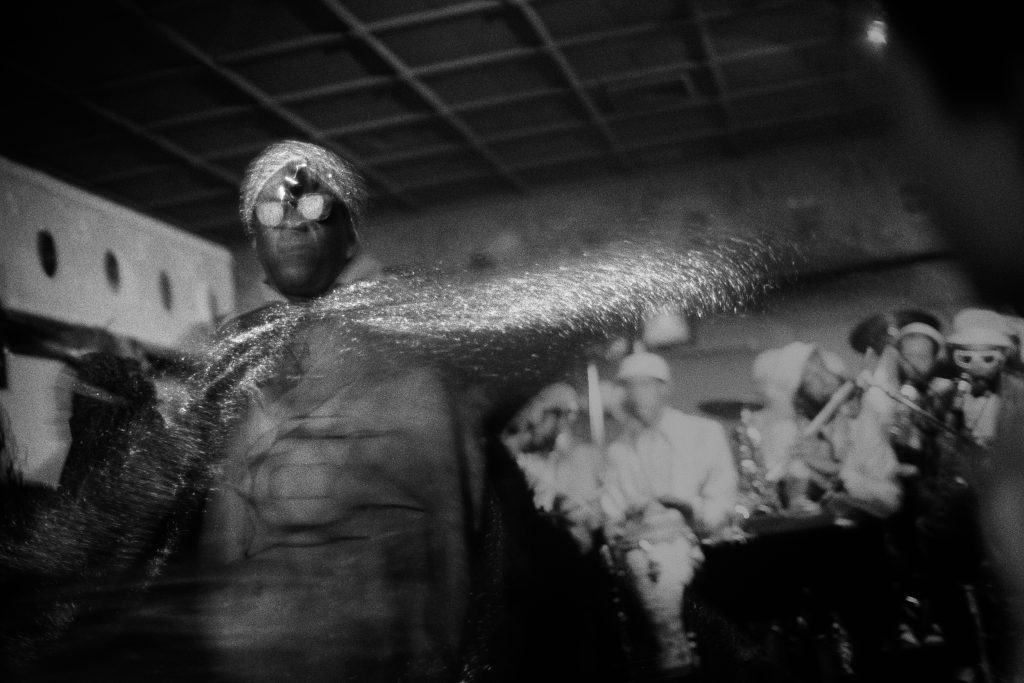
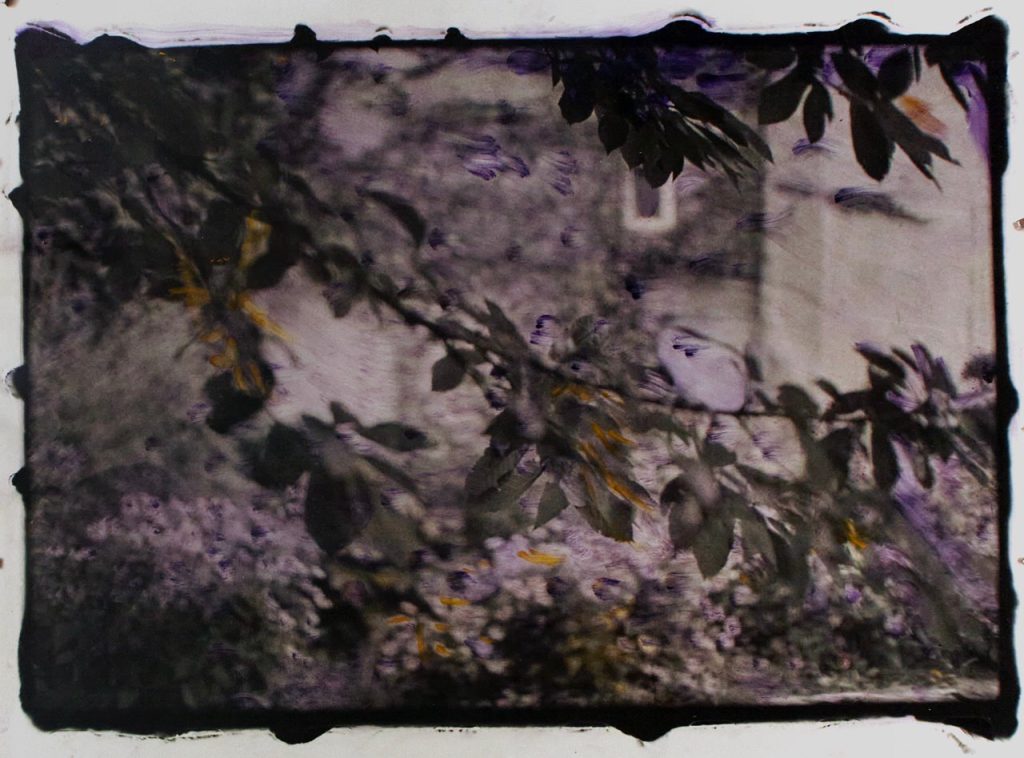
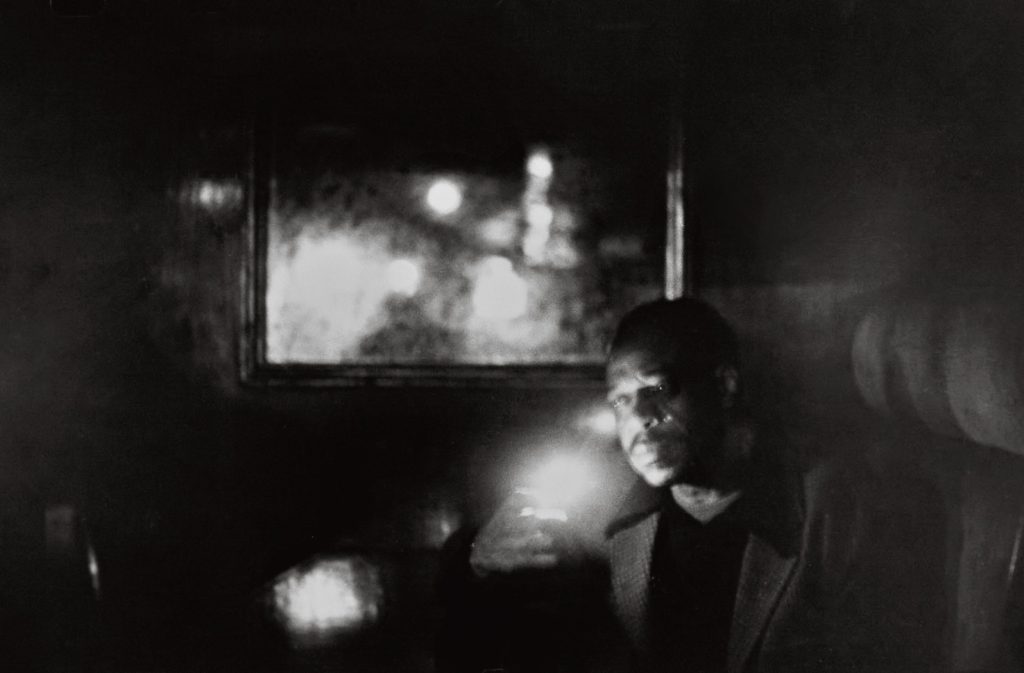
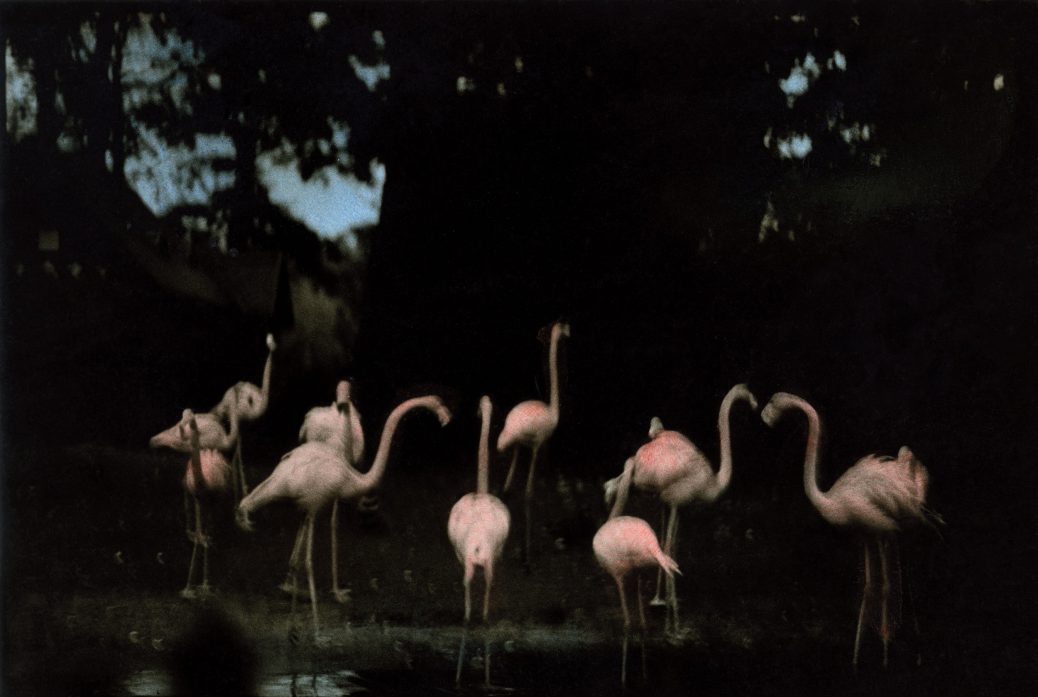
What distinguishes Smith’s photographs is their deliberate refusal of clarity. Figures blur, outlines dissolve, and faces hover at the edge of recognition. This is not technical imprecision — it is a considered aesthetic and political stance. By keeping her subjects in flux, Smith resists the flattening gaze that has so often been directed at Black life. Her images do not define; they open. They offer interiority rather than surface, sensation rather than documentation.
The work draws freely on painting, drawing, and performance. Color functions less as description than as atmosphere; blur operates like a brushstroke; the frame itself becomes a space of encounter. The result is photography that feels closer to lived experience than to the archive — porous, embodied, and alive to the moment.
Wandering Light is both a retrospective and an argument: that Ming Smith has been working at the frontier of her medium for decades, and that her vision — restless, luminous, and radically humane — is as urgent as ever.
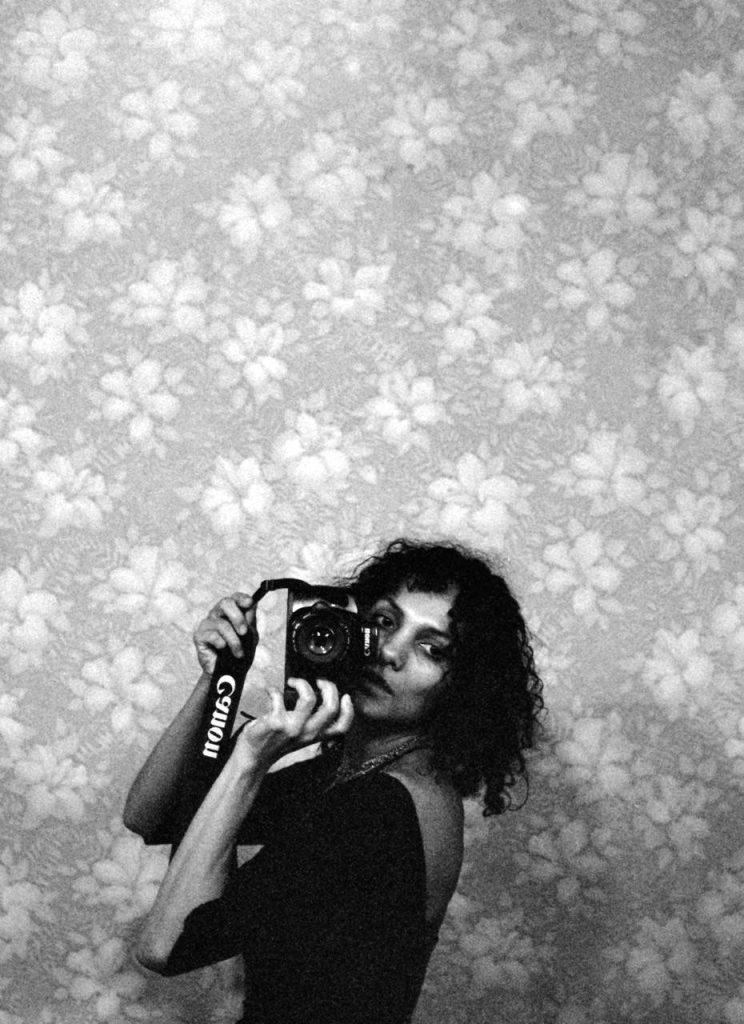
About the Author
Ming Smith, born 1947, Detroit, lives and works in New York.
Few photographers have staked out as distinctive a territory as Ming Smith. Over a career spanning more than five decades, she has developed a visual language unlike any other — one in which light bends toward the spiritual, the human figure resists definition, and the camera becomes an instrument of inner life as much as outward observation.
Her path into the medium was unconventional. In 1972 she became the only woman to join the Kamoinge Workshop, a collective of Black photographers committed to reclaiming representation on their own terms. The experience proved formative, deepening her understanding of photography as both artistic practice and cultural act. By 1979, the Museum of Modern Art in New York had acquired her work — a landmark recognition that made her the first Black woman photographer to enter the institution’s collection.
Working predominantly in black and white, Smith approaches light less as illumination than as a force — something that reveals, conceals, and transforms in equal measure. The result is a body of work that sits at an unusual intersection: rigorously photographic in its means, yet painterly, performative, and charged with a presence that exceeds the frame.
Her work has been exhibited internationally at venues including the Solomon R. Guggenheim Museum in New York, the Centre Pompidou in Paris, and the 36th Biennale de São Paulo. It is held in the permanent collections of the Whitney Museum of American Art, the National Gallery of Art, the Philadelphia Museum of Art, and the Moderna Museet in Stockholm, among others.
Ming Smith: Wandering Light
July 6 – October 4, 2026
Les Rencontres d’Arles – France
More info: