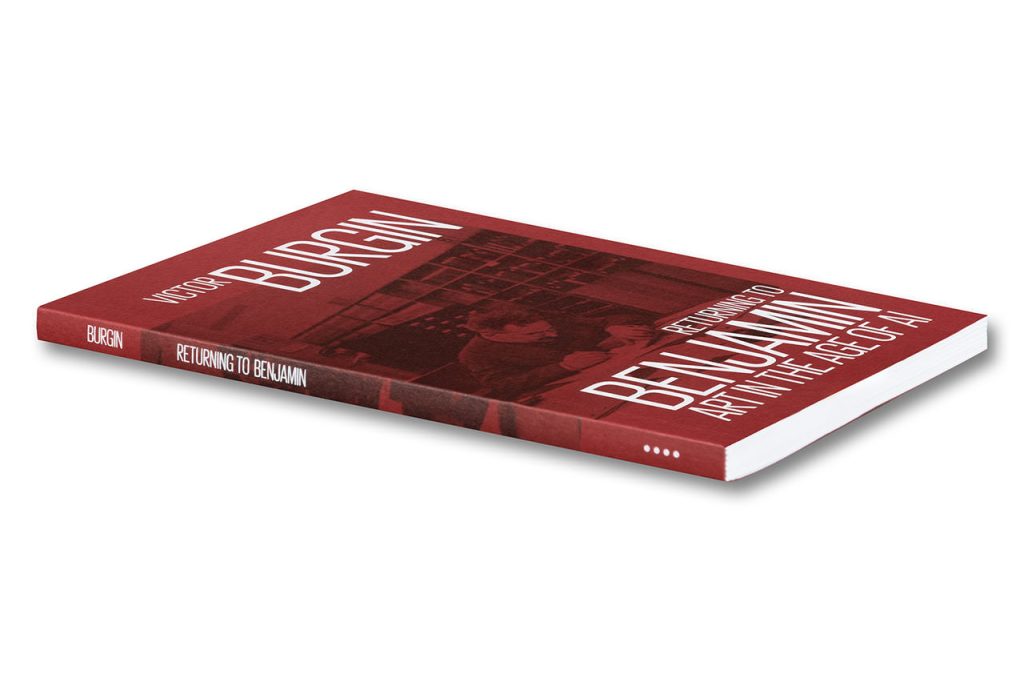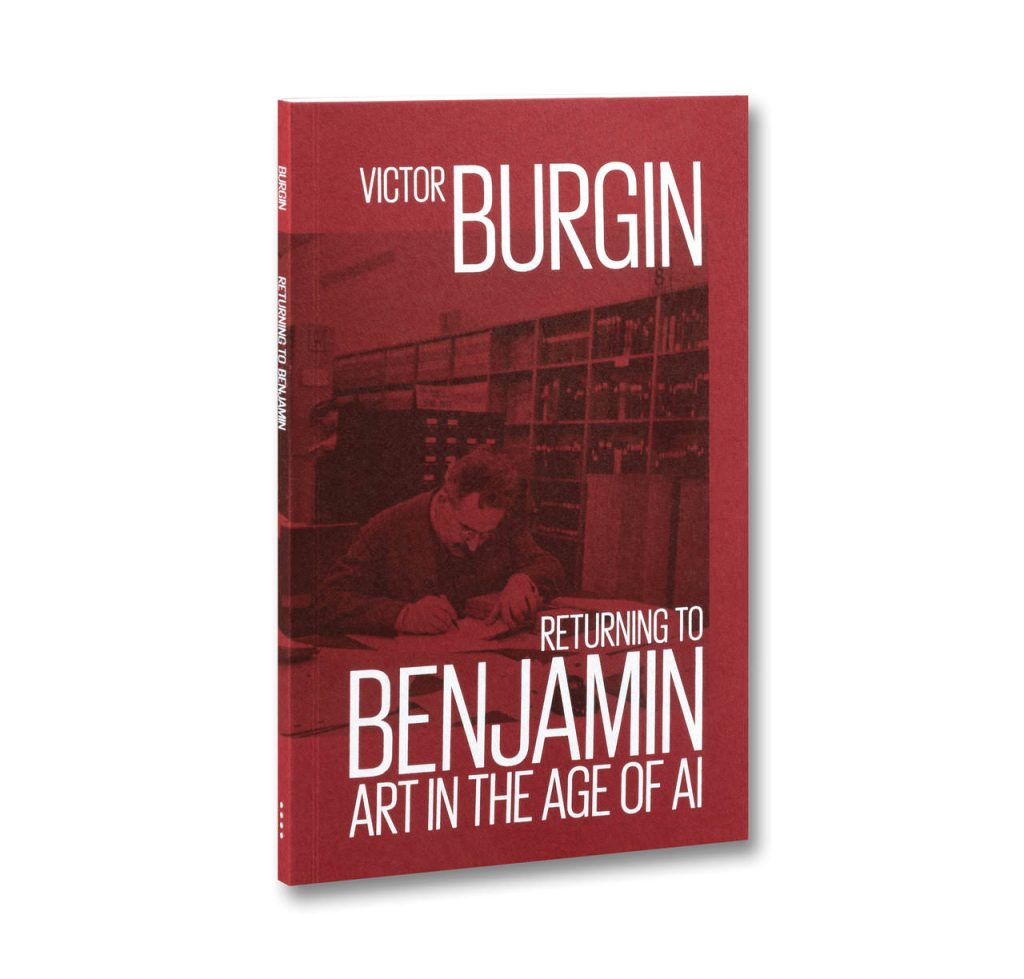
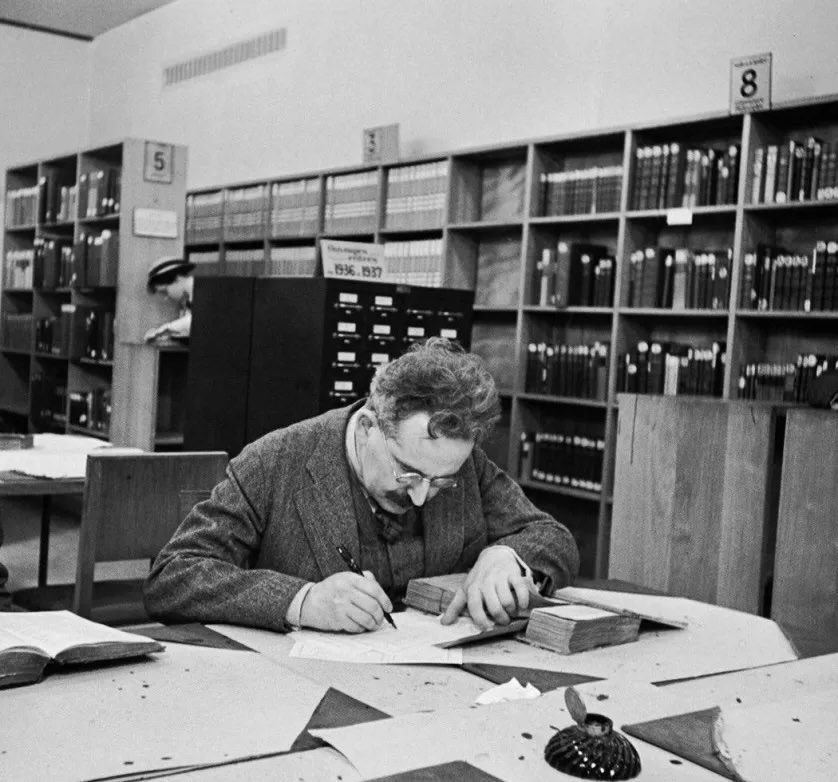
Victor Burgin: Returning to Benjamin. Art in the Age of AI
Walter Benjamin’s essay The Work of Art in the Age of Mechanical Reproduction has long established itself as a landmark text of cultural criticism, its arguments resonating through the twentieth century and into our own time. Benjamin’s central question was the relationship between art and the dominant representational technology of his era, photography and film. To return to his artwork essay today, in the spirit in which it was written, is to ask the same question with respect to the hegemonic representational technology of our own time: the digital. Benjamin found that these new mediums had eroded the auratic quality inherent to the art object, that sense of singular presence bound to a specific place and moment. Digital technology has gone further still, dissolving not merely the aura, but the very category of “medium” itself.
In two concise and sharply focused essays, artist and writer Victor Burgin rereads Benjamin’s 1935 text twice: the first examines the relationship between art and digital reproduction; the second confronts the broader implications of artificial intelligence for the image and its conditions of possibility. Rather than treating AI as a mere extension of prior technological shifts, Burgin asks what is genuinely unprecedented about it, the ways in which machine vision and generative systems have transformed not only how images are made and circulated, but what an image fundamentally is, and what it can mean.
The book is completed by a conversation with media theorist Katrina Sluis, offering a compelling engagement with the contemporary image and arguing that the camera is now profoundly entangled with that which lies beyond the visible. Together, these texts constitute an urgent and rigorous contribution to one of the defining questions of our moment: what becomes of art, and of vision itself, when intelligence is no longer exclusively human.
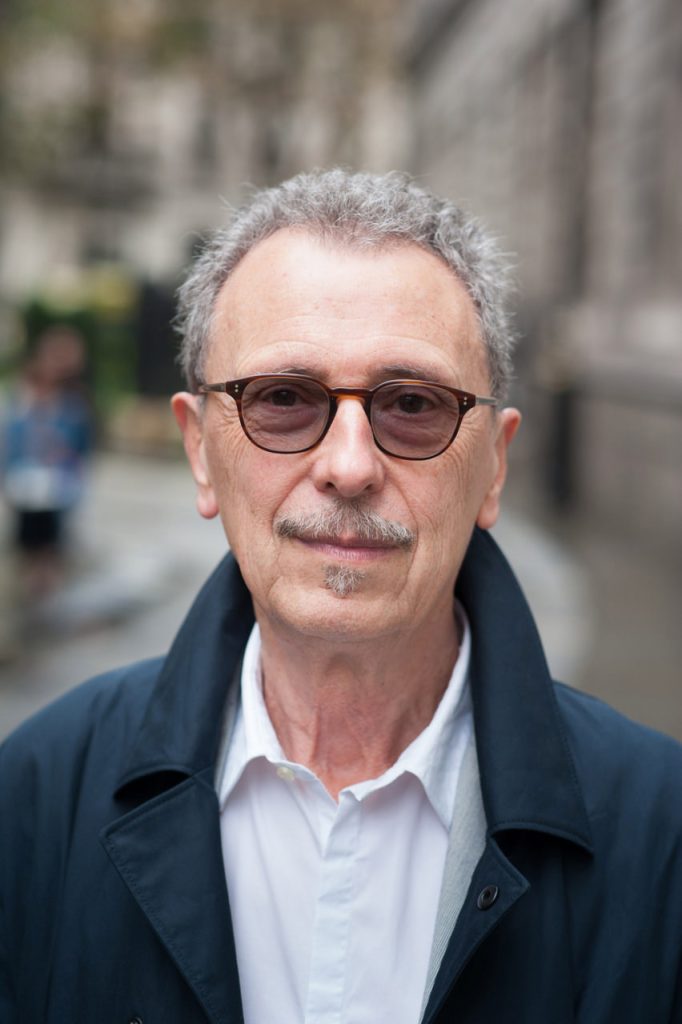
About the Author
Victor Burgin was born in Sheffield, England, in 1941. He studied at the Royal College of Art in London from 1962 to 1965, before completing an MFA at Yale University in 1967. He first achieved critical recognition in the late 1960s as one of the founders of conceptual art, with works included in landmark exhibitions such as When Attitudes Become Form (1969) and Information (1970). His practice, spanning photo-text works, prints, digital video, and 3D modelling, has consistently explored the interplay between image and language, and between representation and ideology.
Burgin was nominated for the Turner Prize in 1986. His theoretical writings include Thinking Photography (1982), The End of Art Theory (1986), In/Different Spaces (1996), and The Remembered Film (2004). He is Professor Emeritus of History of Consciousness at the University of California, Santa Cruz, and Emeritus Millard Chair of Fine Art at Goldsmiths College, University of London. His work is held in major public collections including the Metropolitan Museum of Art and MoMA in New York, the Tate Modern in London, and the Centre Georges Pompidou in Paris. He lives and works in Paris.