
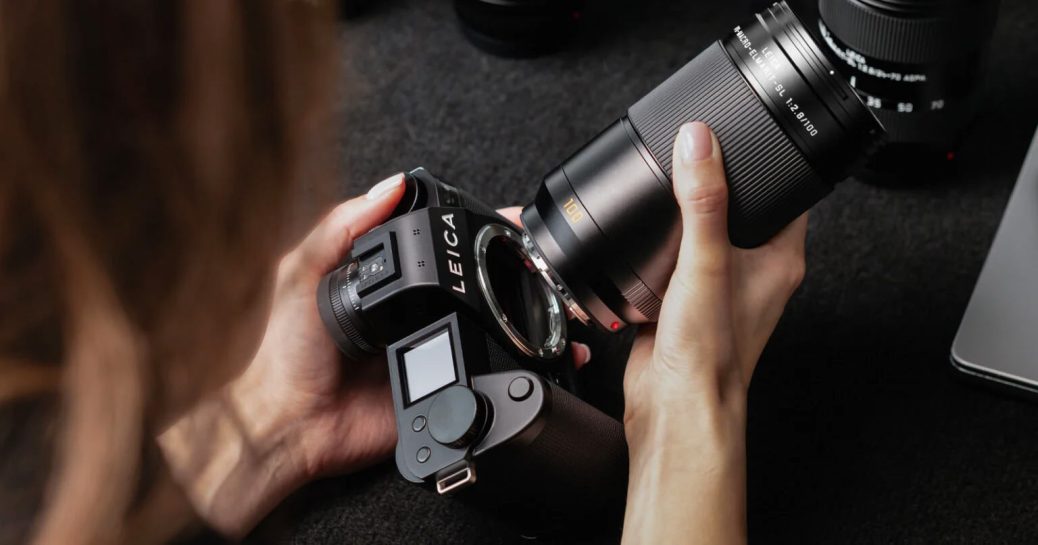
Leica Launches Its First SL Macro Lens
Leica has announced the APO-Macro-Elmarit-SL 100mm f/2.8, the first dedicated macro lens for the SL mirrorless system and a deliberate reference to the APO-Macro-Elmarit-R 100mm f/2.8 originally released in 1987 for the company’s R-mount SLR system. That earlier lens is widely regarded as one of the most optically accomplished macro lenses produced for the 35mm format, and has remained sought-after on the used market since Leica discontinued the R-mount system in 2009. The new SL version is presented as a modern reinterpretation rather than a direct optical recreation.
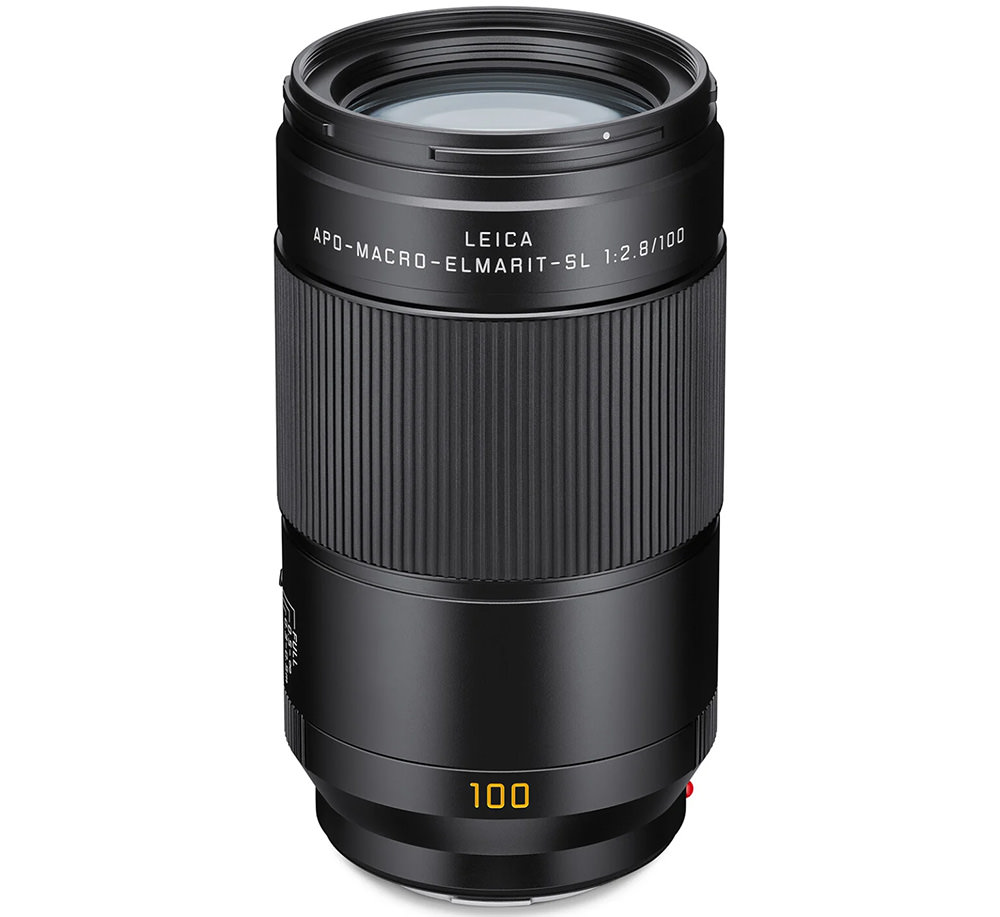
The new lens is substantially more complex than its predecessor: its optical formula comprises 17 elements in 12 groups, compared to the 8 elements in 6 groups of the original R-mount design. The additional elements are a consequence of the demands placed by modern high-resolution sensors and the optical corrections required for close-focus performance. The lens carries apochromatic correction, meaning it is designed to bring red, green, and blue wavelengths of light to focus at the same plane — a condition that reduces chromatic aberration both at infinity and at macro distances, where longitudinal chromatic aberration is typically most visible. The aperture diaphragm uses nine blades and covers a range from f/2.8 to f/22.
Minimum focusing distance is 30 centimeters, with a maximum reproduction ratio of 1:1 — the standard definition of a true macro lens, meaning the subject can be rendered at life size on the sensor. The front filter thread is 67mm, matching the Summilux-SL 50mm f/1.4 ASPH. announced simultaneously, and physical controls are minimal: an AF/MF switch is the only user-accessible element on the barrel, with aperture adjusted exclusively through the camera body. The lens weighs 862 grams and measures 137.6mm in length.
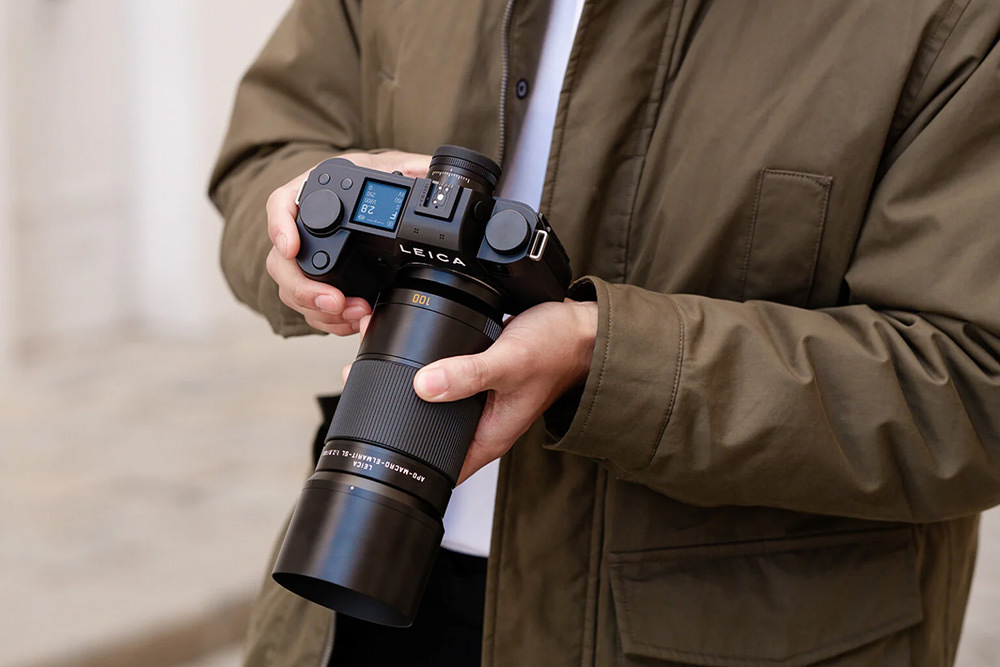
The APO-Macro-Elmarit-SL 100mm f/2.8 is available now at $2,700.