
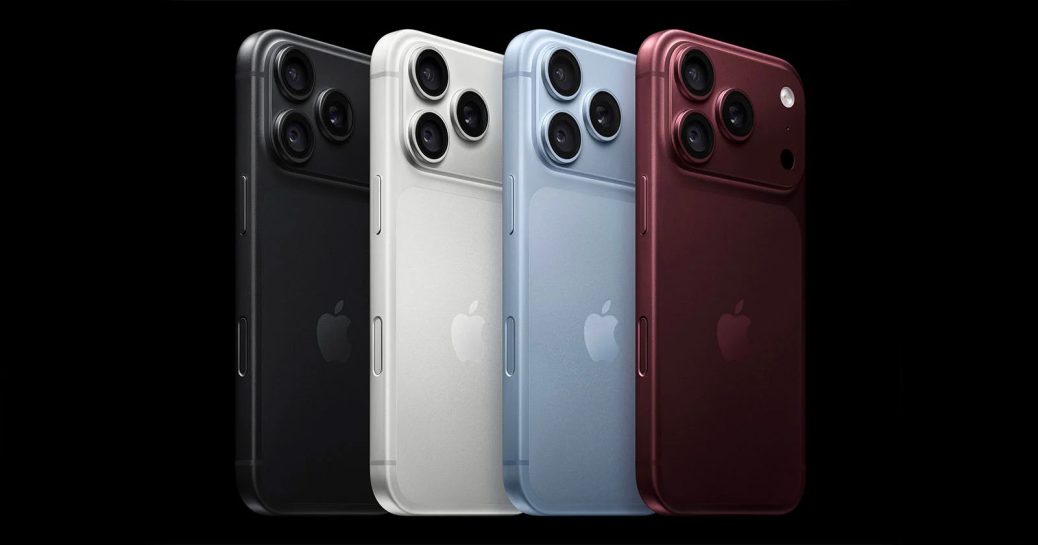
Apple Launches the iPhone 18 Pro With Variable Aperture
Apple has announced the iPhone 18 Pro, iPhone 18 Pro Max, and — for the first time — a foldable model called the iPhone Duo. The two Pro models are built around the new A20 Pro chip on a 2-nanometer process and are available in 256GB, 512GB, 1TB, and 2TB configurations in four colors: black, silver, glacier, and burgundy. The Pro measures 6.3 inches and weighs 211 grams; the Pro Max stretches to 6.9 inches and 249 grams. Battery life, a consistent area of improvement across recent iPhone generations, is rated at up to 36 hours of video playback on the Pro and 45 hours on the Pro Max. The iPhone Duo, Apple’s first foldable, has a 7.6-inch inner display and shares the A20 Pro chip but differs substantially in its camera capabilities.
The headline camera update on the Pro models is mechanical rather than computational: a six-blade variable aperture built into the 48-megapixel Fusion Main camera, operating at four fixed positions — f/1.48, f/1.8, f/2.8, and f/4.0. This is the first time any iPhone has offered user-controllable aperture. The practical benefit for video is real but bounded: having control over aperture without relying solely on shutter speed or ISO is a meaningful change, though the four fixed positions preclude smooth aperture pulls mid-shot, and f/4.0 alone is insufficient to manage exposure in bright daylight without neutral density filtration. Apple claims approximately 50 percent improved low-light performance, though this figure is almost entirely attributable to the wider maximum aperture rather than the sensor itself — opening from the previous f/1.78 to f/1.48 yields roughly 45 percent more light, just over half a stop. The American company has not published sensor specifications such as pixel pitch, read noise, or dynamic range, making it impossible to evaluate any underlying sensor improvement independently. An API opens the full aperture range to third-party camera applications, which may allow finer control than the four native presets.
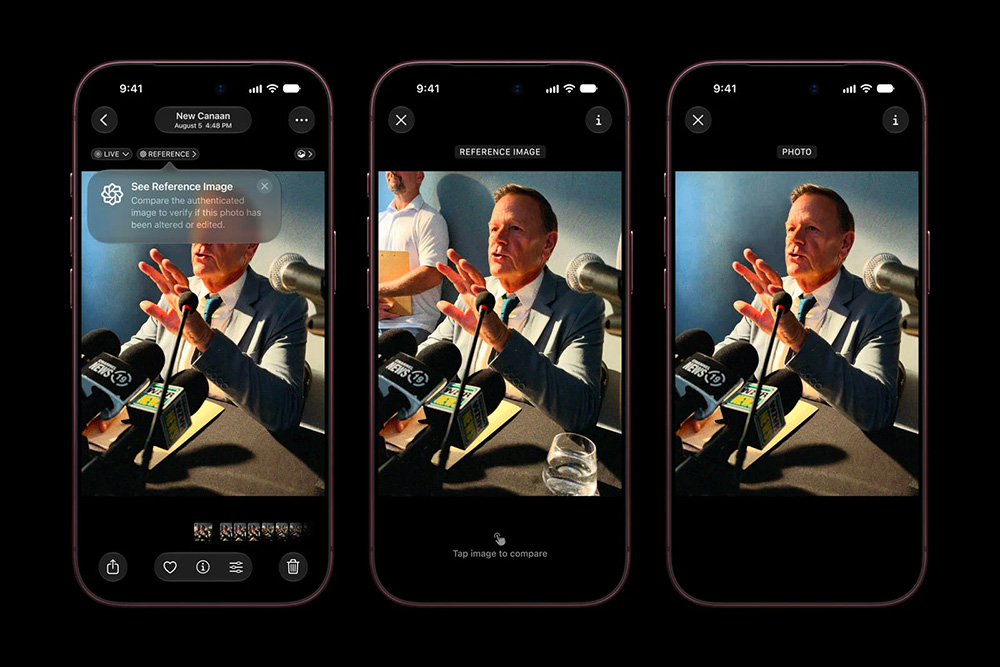
A new feature called Apple Reference Image uses signed sensor data to generate a cryptographic record of each photograph at the point of capture, functioning as a verifiable reference showing the unedited state of the file. It is limited to the Fusion Main camera and will not be available at launch in the EU or China, with no timeline provided for either market.
The full camera array comprises the 48-megapixel variable aperture Fusion Main, a 48-megapixel ultra-wide, and a 48-megapixel telephoto with 3D sensor-shift OIS offering 4x and 8x optical zoom. Video recording reaches 4K at 120fps in Dolby Vision on the main camera and 60fps on the ultra-wide and telephoto. The professional video stack from the iPhone 17 Pro carries over intact: ProRes up to 4K120 to an external drive, ProRes RAW, Apple Log 2, ACES color management, and genlock support. Cinematic Mode effects can now be applied after capture to footage recorded up to 60fps, removing the previous requirement that the mode be active at the time of recording. A new Pro controls panel in the native Camera app gives direct access to aperture, shutter speed, and white balance alongside a histogram — functions that until now required third-party applications on every previous iPhone.
The iPhone Duo shares the A20 Pro and the same main sensor as the Pro models, but uses a fixed aperture, has no telephoto, and omits the entire professional video stack — no ProRes, no Apple Log 2, no genlock, no Apple Reference Image. It records 4K at 120fps in Dolby Vision and supports Cinematic Mode post-capture effects, with dual-screen framing modes added to take advantage of its foldable form factor.
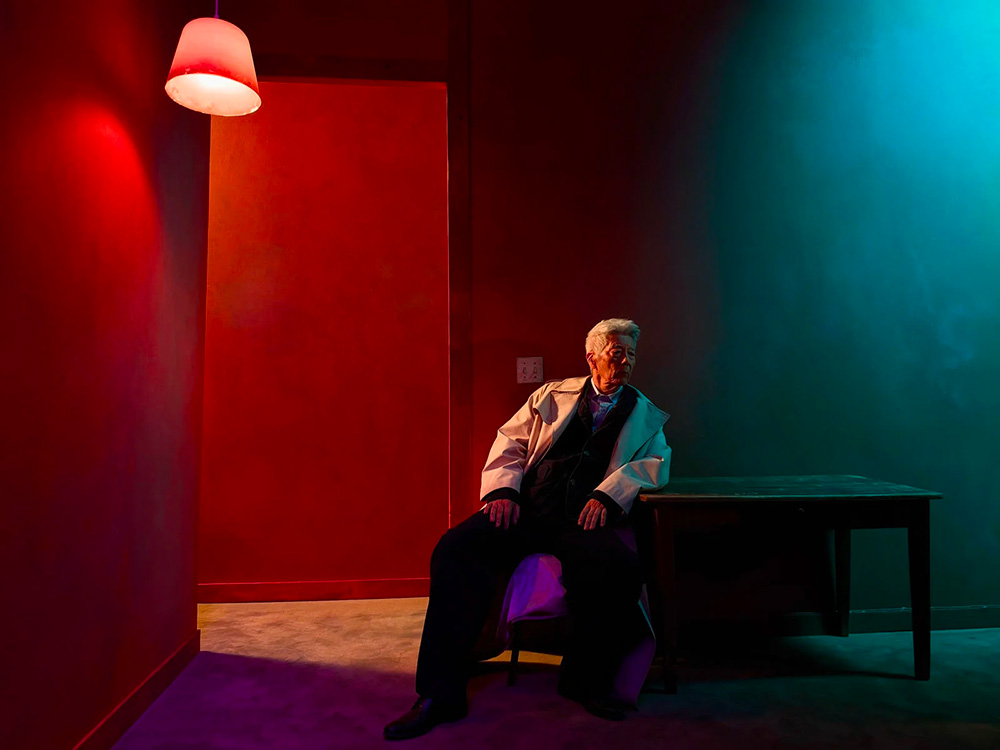
Here are some sample pictures, courtesy of Apple:






Pre-orders for the iPhone 18 Pro and Pro Max are already open, with availability from September 18 in over 65 countries. The iPhone 18 Pro starts at $1,199 for 256GB and rises to $2,399 for the 2TB model; the Pro Max starts at $1,299 and reaches $2,499. The iPhone Duo is priced at $1,999 for 256GB and is available from October 23.