
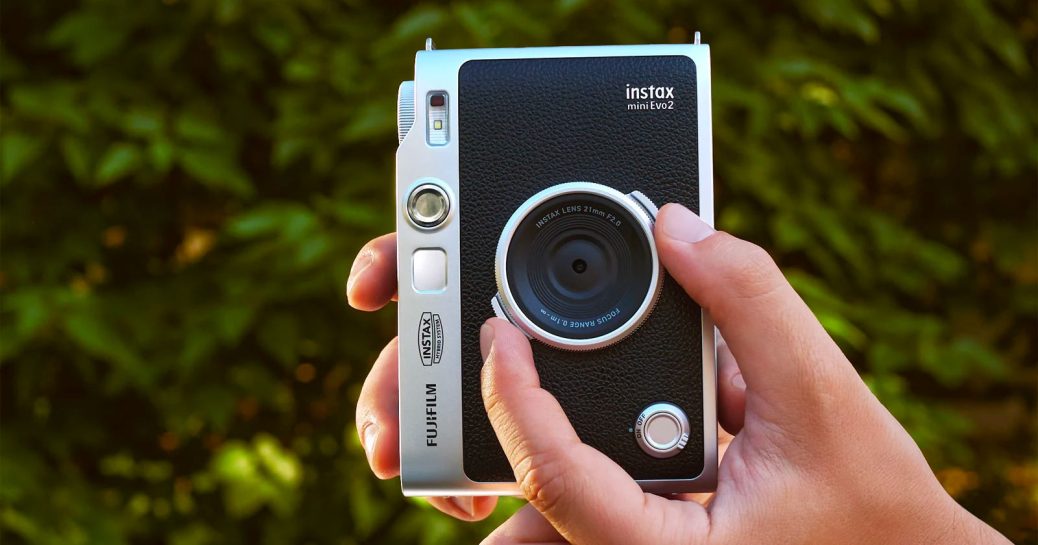
Fujifilm Updates instax mini Evo With Second Generation
Fujifilm has announced the instax mini Evo 2, a hybrid instant camera that combines digital image capture with printing on instax mini film. The new model succeeds the original mini Evo, introduced in 2021, retaining its retro-inspired design and analog-style controls while introducing a larger touchscreen, a revised imaging system and additional shooting functions.
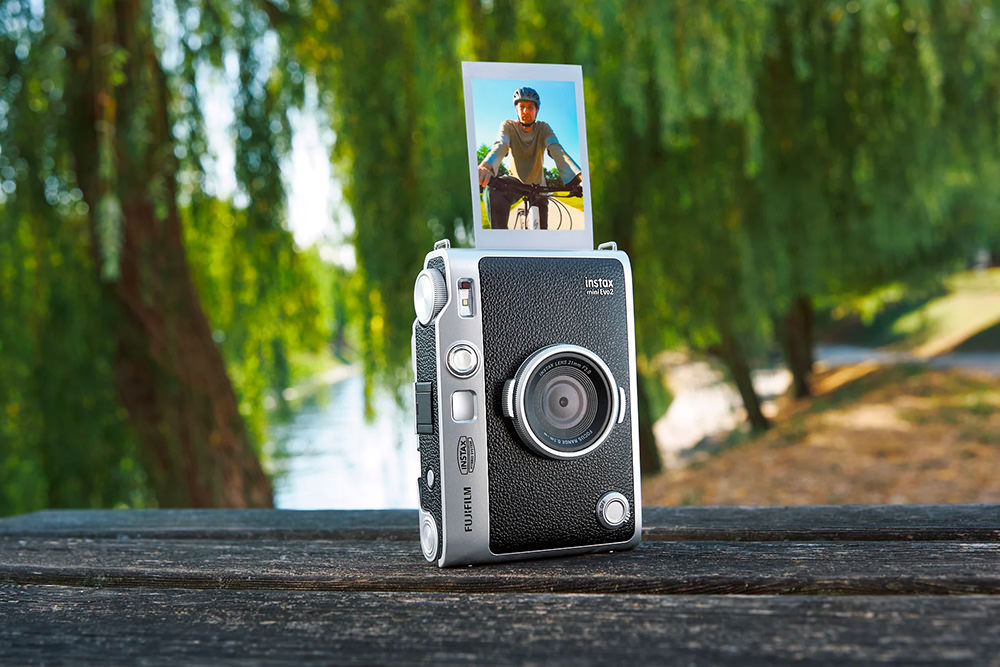
The camera incorporates a 1/2.77-inch CMOS sensor, replacing the smaller 1/5-inch sensor used in the previous generation. Image resolution has also increased, with standard photographs recorded at 2144 × 2860 pixels and a higher-resolution mode capable of producing 3100 × 4128-pixel files when a microSD card is installed. The fixed lens has a 21mm-equivalent focal length and an f/2 maximum aperture, providing a wider field of view than the original model.
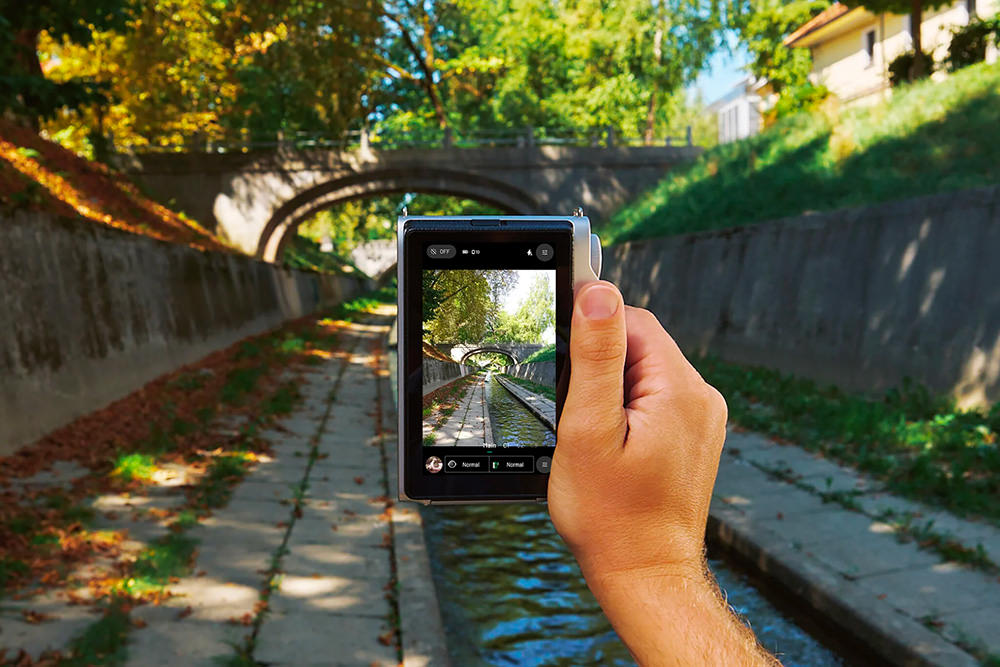
One of the main additions is instax Expanded View, a framing function that allows users to see a wider area than the final photograph will contain. When activated, the camera displays the surrounding scene alongside a guide indicating the actual capture area. The feature is intended to assist composition by showing subjects or objects positioned outside the selected frame. Depending on the shooting settings, the effective field of view can vary between approximately 23mm and 33mm equivalent.
The rear display has also been substantially redesigned. The mini Evo 2 features a 4.46-inch touchscreen with approximately 1.23 million dots, replacing the smaller 3-inch display of its predecessor. The larger panel provides access to shooting settings, image previews and playback functions, while physical controls remain available for adjusting photographic effects and operating the printing mechanism.
As with the original mini Evo, the camera offers ten lens effects and ten film effects, which can be combined to produce 100 different image treatments. These include variations in color, contrast and optical rendering. Exposure compensation, white balance and flash settings can also be adjusted, while autofocus supports face recognition and a minimum focusing distance of 10 centimeters.

Another new function is instax Immersive Movie, which records the four seconds preceding each photograph. The resulting short video clips are saved as MP4 files and can be associated with still images through the companion smartphone application. However, this function requires a microSD card and is limited to low-resolution video rather than conventional high-definition recording.
The camera continues to operate as both a digital camera and an instant printer, allowing users to select which photographs to print instead of exposing a sheet of film with every shutter release. Images are printed on standard instax mini film, with a print area measuring approximately 46 × 62mm. Fujifilm provides two printing profiles, instax-Rich Mode and instax-Natural Mode, which produce different levels of color saturation and tonal contrast. Printing takes approximately 14 seconds, excluding the subsequent development time of the film.
Through the updated instax mini Evo smartphone application, users can also transfer photographs, print images stored on a smartphone and operate the camera remotely. Internal memory accommodates approximately 45 photographs, while microSD cards provide additional storage. The built-in rechargeable battery supports approximately 90 prints per charge and uses a USB-C connection for charging.
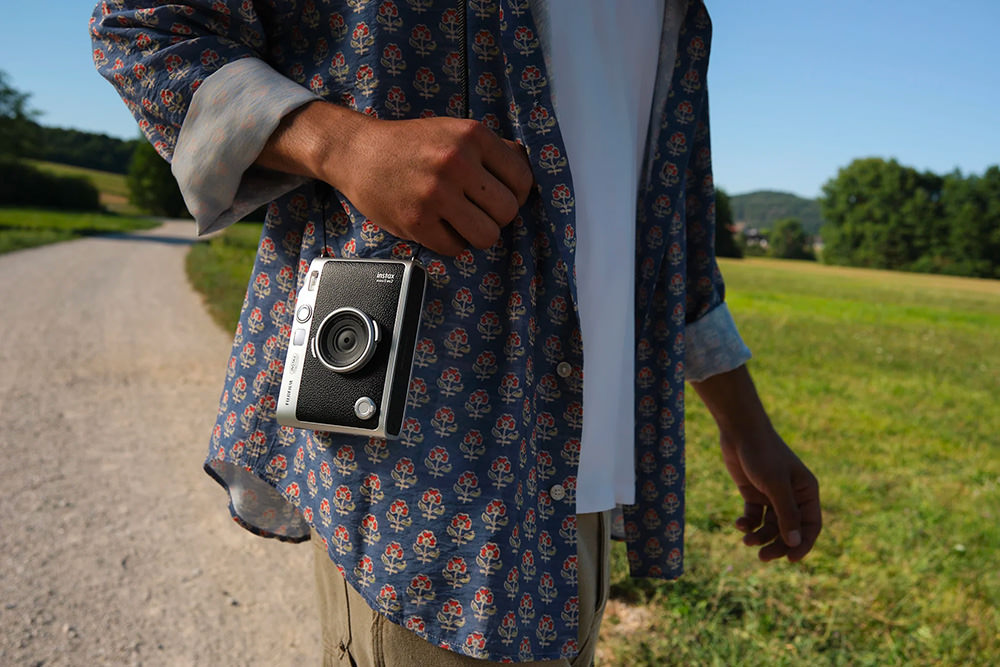
The mini Evo 2 measures approximately 125.3 × 87.5 × 43.7mm and weighs 330 grams without film or a memory card. Its exterior retains the mechanical styling of the original model, including dedicated controls for selecting effects and initiating prints, although the larger display changes the arrangement of the rear controls.

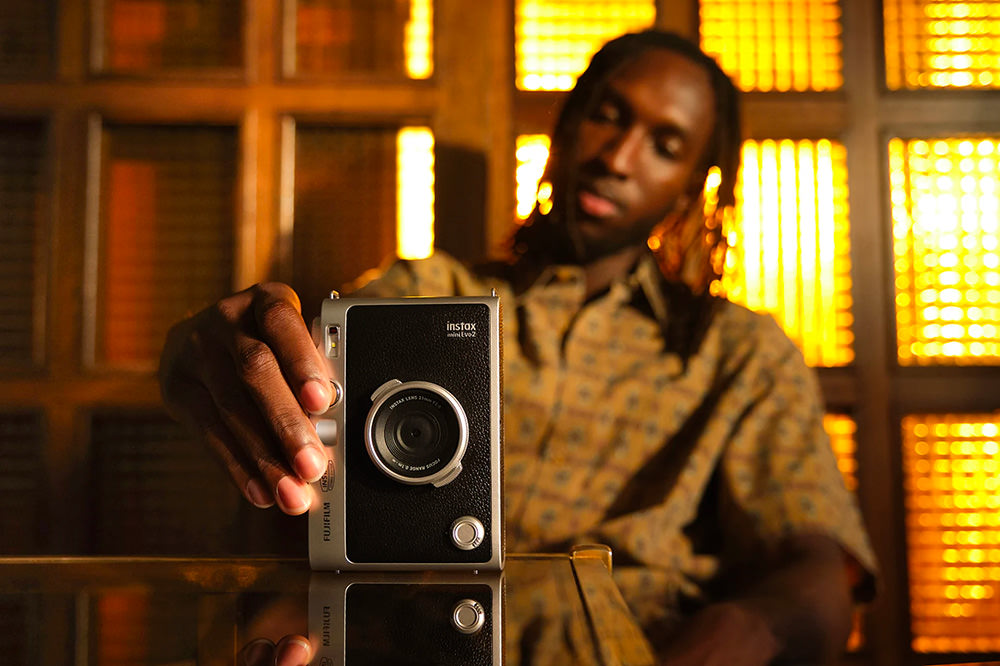
The Fujifilm instax mini Evo 2 is scheduled for release in late November 2026, with availability beginning in Japan on November 27. The recommended retail price is $289.95 in the United States, £229.99 in the United Kingdom and €269.99 in Europe. Instax mini film and microSD memory cards are sold separately.