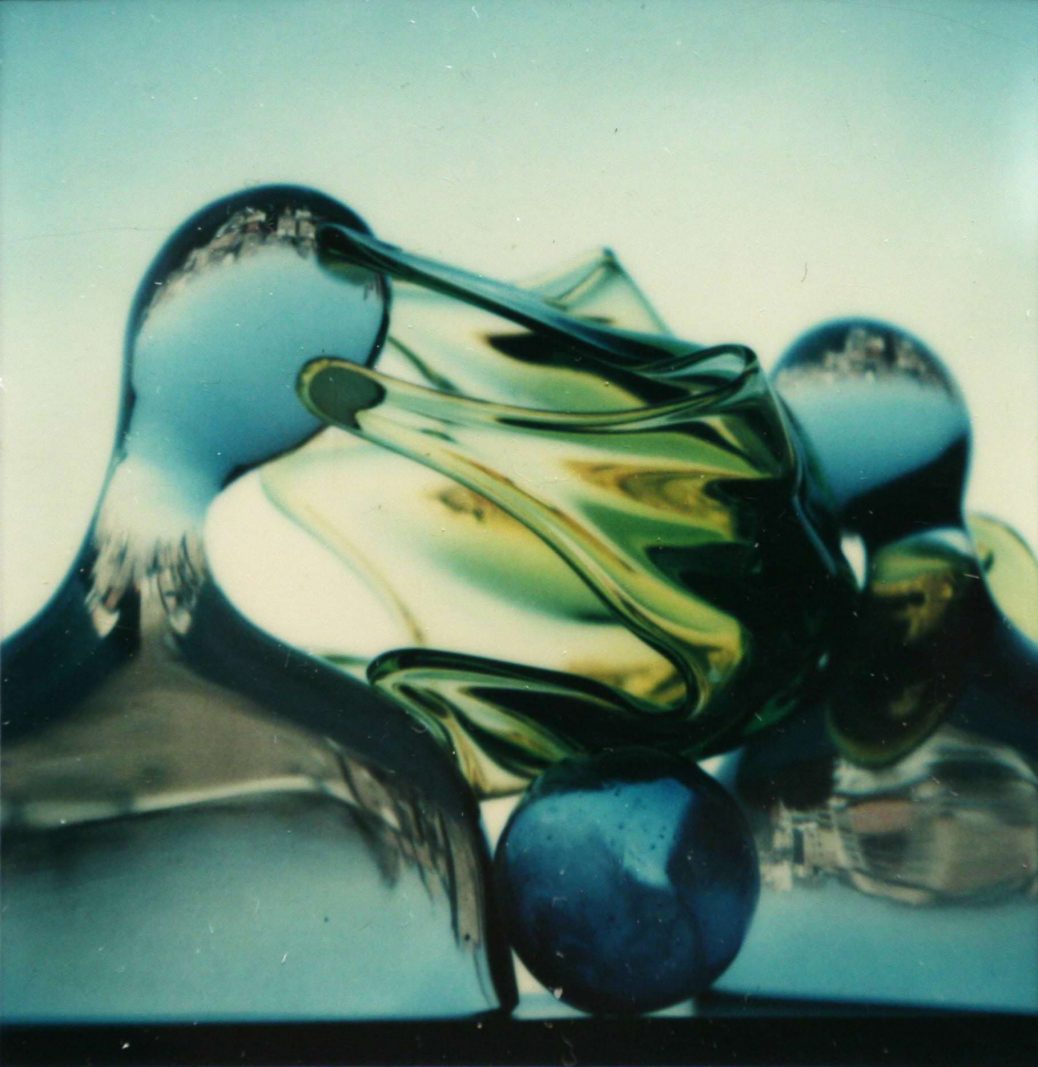
André Kertész and M. C. Escher: Between Order and Chaos
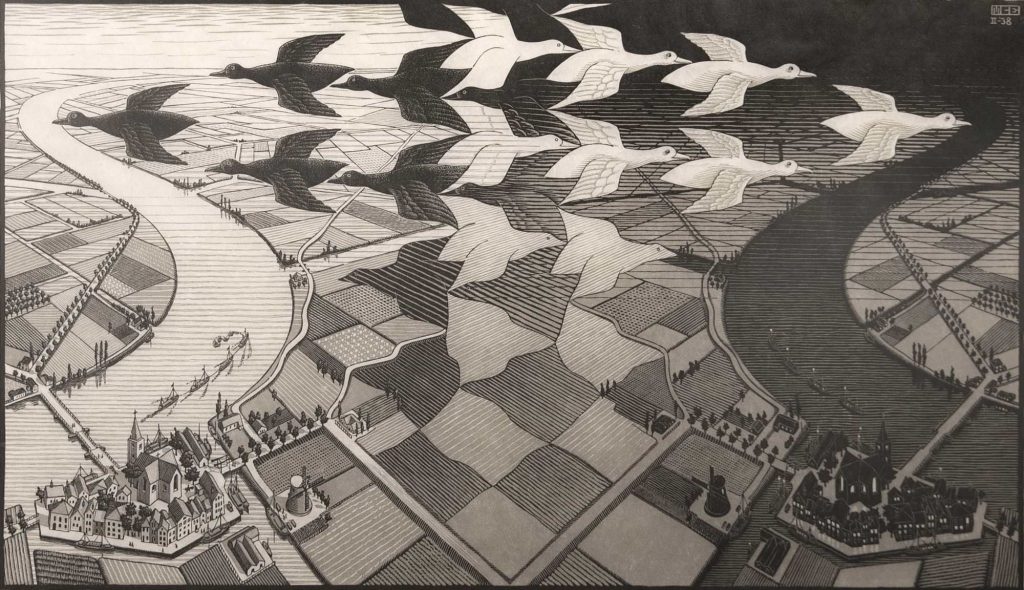
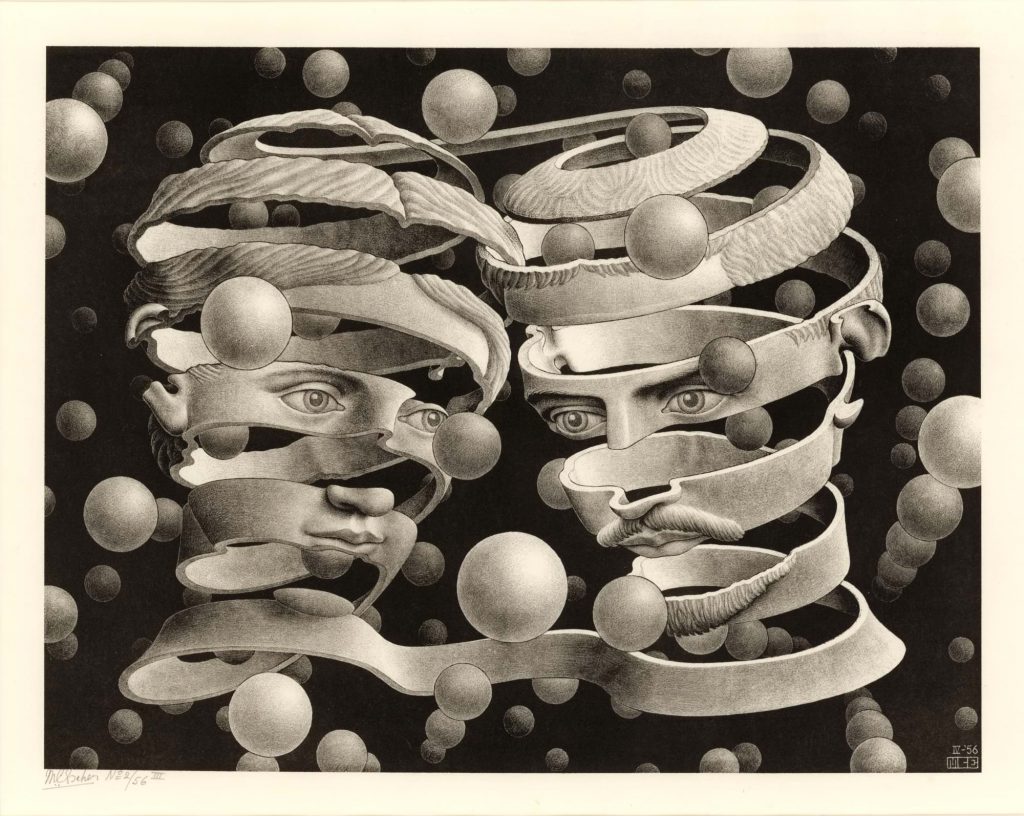
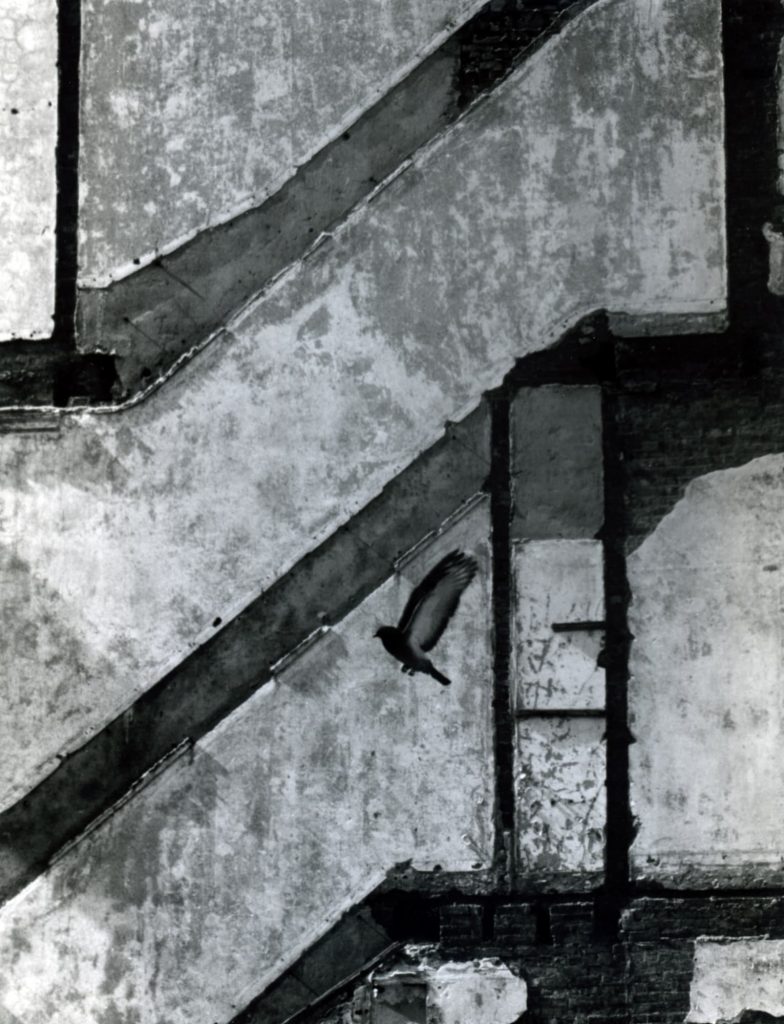
Bruce Silverstein Gallery is proud to present Between Order and Chaos: André Kertész and M. C. Escher, an exhibition that brings into dialogue two seminal figures of twentieth-century visual culture who, through distinct media and methodologies, profoundly transformed the way reality is seen and understood. One through photography, the other through printmaking, Kertész and Escher each developed a singular visual language rooted in a deep inquiry into perception, structure, and illusion. Rather than positioning order and chaos as opposing forces, their work reveals them as mutually dependent states through which the world is continuously organized and unsettled.
The exhibition presents a carefully curated group of original prints by M. C. Escher alongside vintage photographs by André Kertész drawn from across his eight-decade career, including numerous works rarely or never before exhibited. Born only four years apart—Kertész in Budapest in 1894 and Escher in Leeuwarden in 1898—both artists followed paths largely independent of the dominant artistic movements of their time. Their practices were guided by highly personal modes of seeing that resisted categorization and treated reality as fluid, capable of endless reconfiguration.
Displacement and solitude played a formative role in shaping their perspectives. Kertész’s migrations from Hungary to Paris and later to New York, and Escher’s extended travels throughout Italy and Spain before his return to a transformed Netherlands, fostered a sense of distance that sharpened their observational acuity. This outsider’s position allowed both artists to perceive latent complexity within the everyday, cultivating a vision at once detached and intensely attentive.
In Escher’s work, order is meticulously constructed only to be destabilized from within. Through extraordinary technical precision, he isolates natural and architectural systems—reflections, tessellations, recursive spaces—and renders them with rigorous clarity, even as they collapse conventional spatial logic. Works such as Ripple (1950) transform ephemeral motion into structured visual patterns, while Order and Chaos (1950) stages a fragile geometric equilibrium surrounded by fractured forms, underscoring Escher’s conviction that stability and disorder are inseparable forces.
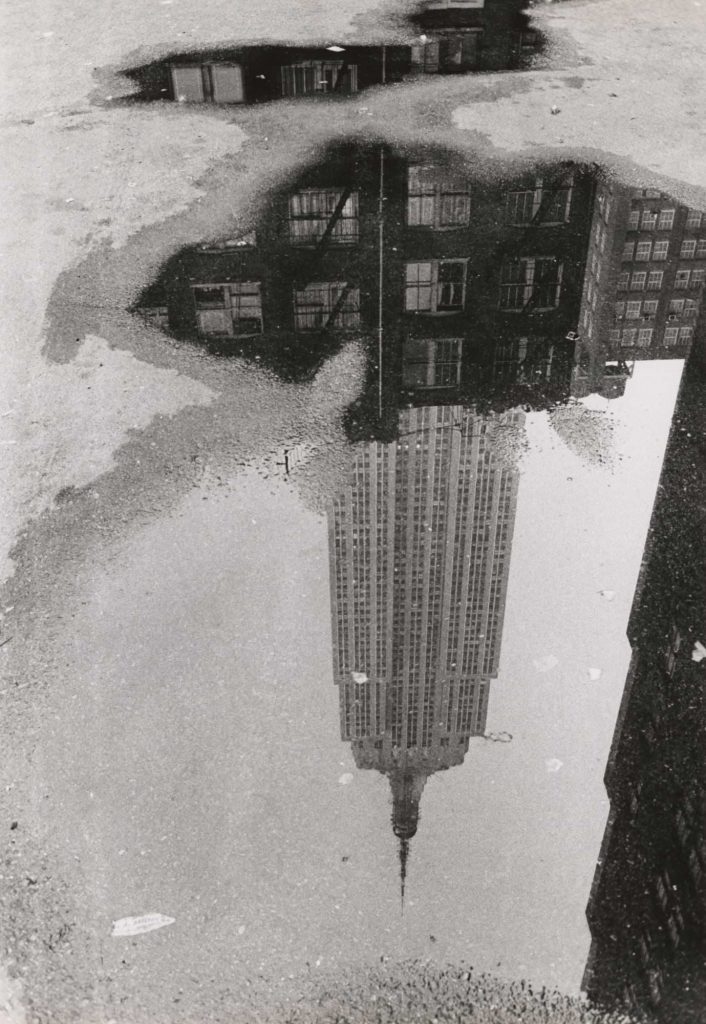
Kertész approaches a comparable tension from within lived reality. Through unconventional viewpoints, reflections, distortions, and radical cropping, his photographs reveal how constraint can generate visual richness and poetic ambiguity. Where Escher invents impossible worlds, Kertész uncovers moments in which the real world briefly slips out of alignment. In Puddle, Empire State Building (1967), a fleeting reflection quietly destabilizes one of modernity’s most rigid symbols, transforming the familiar into something uncertain and uncanny. His Distortions series and images made from his Fifth Avenue windows resonate with Escher’s mirrored spheres and infinite staircases, each challenging the viewer’s trust in visual coherence.
For both artists, fidelity to observed detail is essential. This grounding in the real allows moments of visual disruption to feel plausible rather than purely fantastical. In Escher’s prints, tension arises from the collision of exacting realism and speculative construction, producing a sense of intellectual wonder. In Kertész’s photographs, instability unfolds more subtly, embedded within ordinary scenes where poetic meaning emerges through slight shifts in perspective.
The influence of both figures extends far beyond their respective mediums. Escher’s explorations of paradoxical space, recursion, and visual logic have shaped the thinking of artists, architects, filmmakers, and theorists across disciplines, while Kertész’s intuitive approach to composition and everyday subject matter helped define the course of modern photography, profoundly influencing generations of image-makers.
Working within media long considered peripheral to the traditional hierarchy of fine art, both Kertész and Escher expanded the boundaries of visual experience. Their work demonstrates how practices once viewed as marginal could exert enduring influence across culture. Seen together, their images invite viewers to reconsider what appears stable, logical, or self-evident. In the space between order and chaos, structure and uncertainty coexist—revealing perception itself as a fragile, dynamic process.
About the Authors
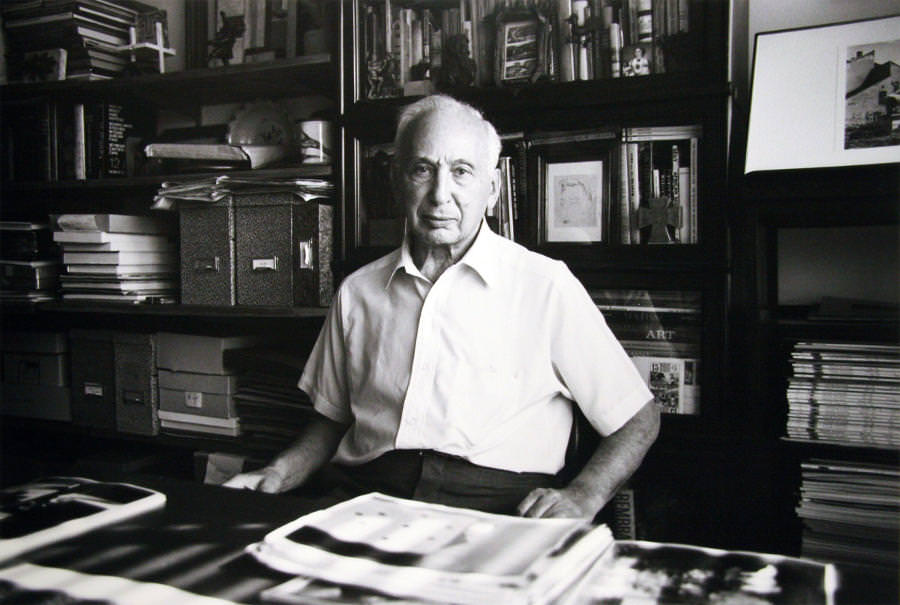
André Kertész (1894–1985) developed a lyrical and incisive photographic language that remained consistent throughout his long career. Balancing wit and formal rigor, his black-and-white photographs combine the intuition of street photography with a modernist sensitivity. Attentive to everyday life, Kertész captured both the vitality of Paris and a sense of solitude experienced later in New York, where his late Polaroids, made from within his apartment, revisited themes of love, loss, and memory through the immediacy of the handheld camera.
Born in Budapest, Kertész began photographing in his teens and moved to Paris in 1925, where he established himself as a photojournalist and formed close ties with key figures of the modernist avant-garde. After relocating to New York in 1936, his artistic recognition grew steadily, culminating in renewed acclaim from the 1970s onward. By his death in 1985, he had received numerous international honors, and since 2003 his work has been presented in multiple exhibitions at Bruce Silverstein Gallery. From the 1920s onward, Kertész’s photographs have been exhibited widely in major museums across Europe and the United States and are held in the permanent collections of leading international institutions. He is also the author of more than twenty influential photography books, including J’aime Paris, Washington Square, and Kertész on Kertész, which have helped shape the history and understanding of modern photography.
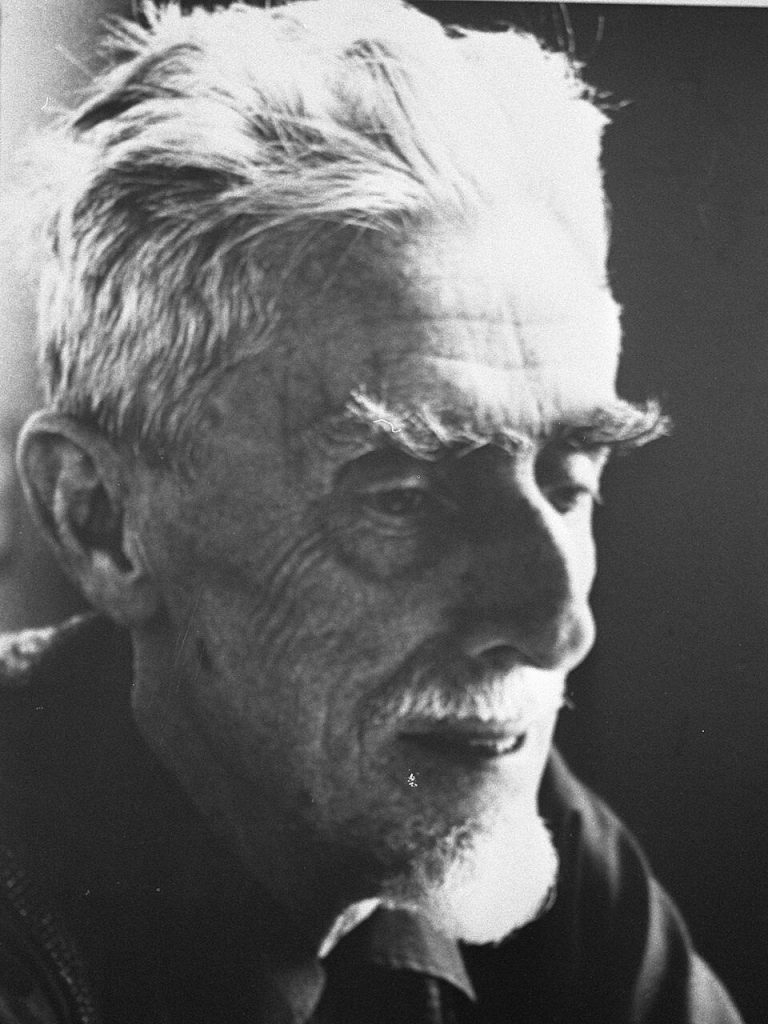
Maurits Cornelis Escher (1898–1972) was a seminal twentieth-century artist known for transforming mathematical and geometric principles into visually striking prints that challenge perception and spatial logic. Working primarily in woodcuts, lithographs, and mezzotints, he developed a singular visual language at the intersection of art, mathematics, and philosophy.
Educated at the Haarlem School for Architecture and Decorative Arts, Escher was deeply influenced by his travels in Italy and Spain, particularly the geometric ornamentation of the Alhambra. Throughout his career, he explored themes of symmetry, tessellation, reflection, and impossible space, continuously revisiting and recombining these ideas into a coherent body of work.
Although working largely outside the avant-garde, Escher achieved wide recognition during his lifetime. His work is now held in major museum collections worldwide and remains central to the study of perception and visual structure.
Between Order and Chaos: André Kertész and M. C. Escher
From January 22, 2026 to March 21, 2026
Bruce Silverstein Gallery, New York
More info: