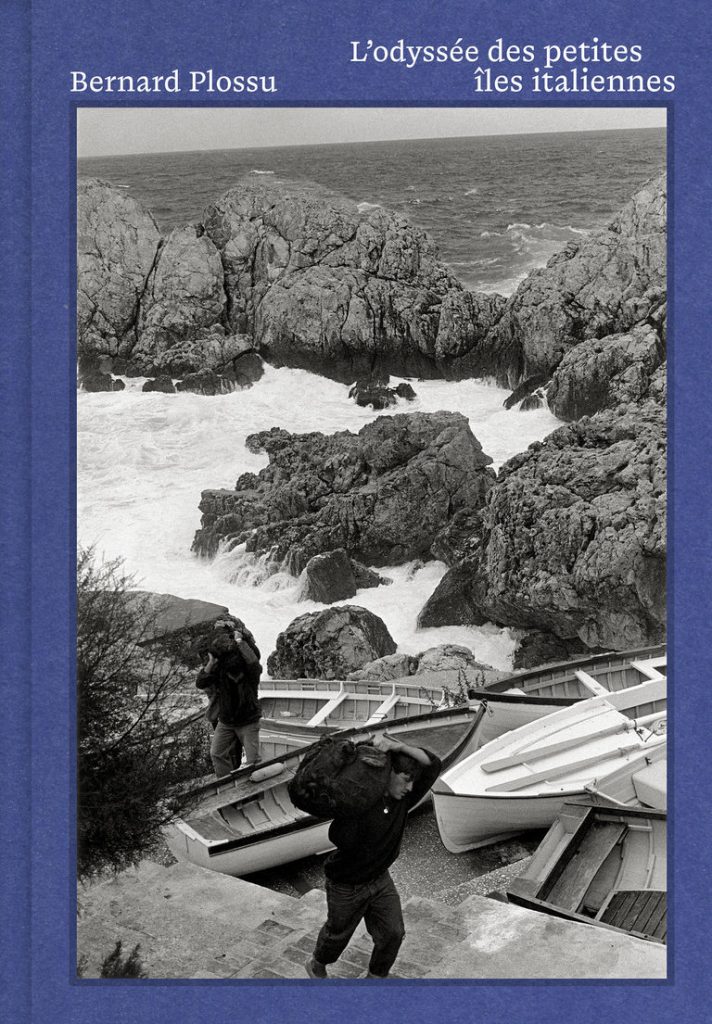
Bernard Plossu – Walter Guadagnini: The Odyssey of the Small Italian Islands
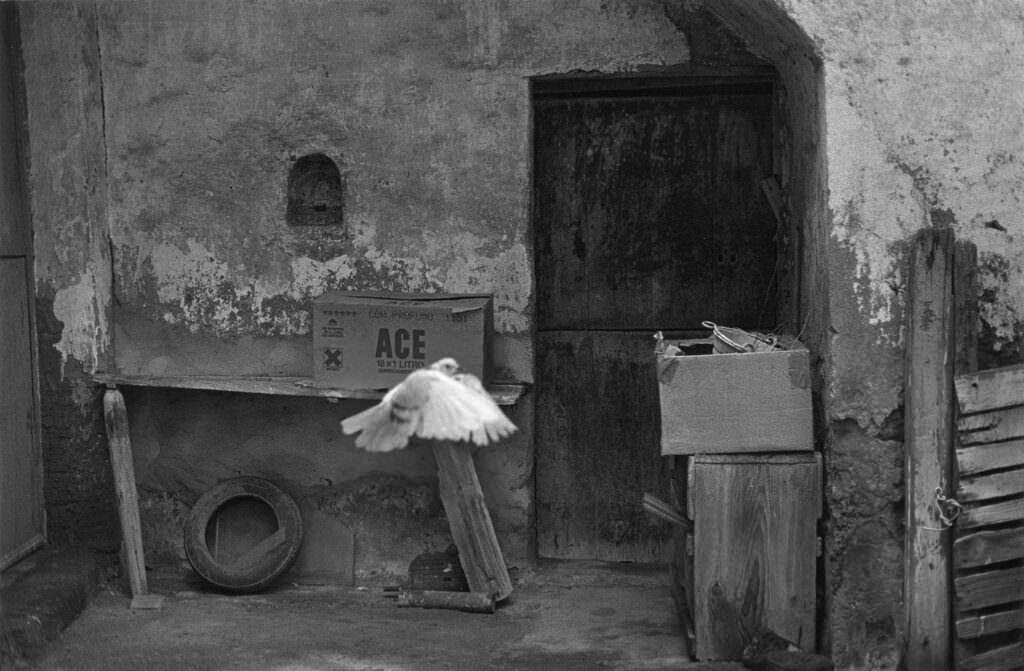
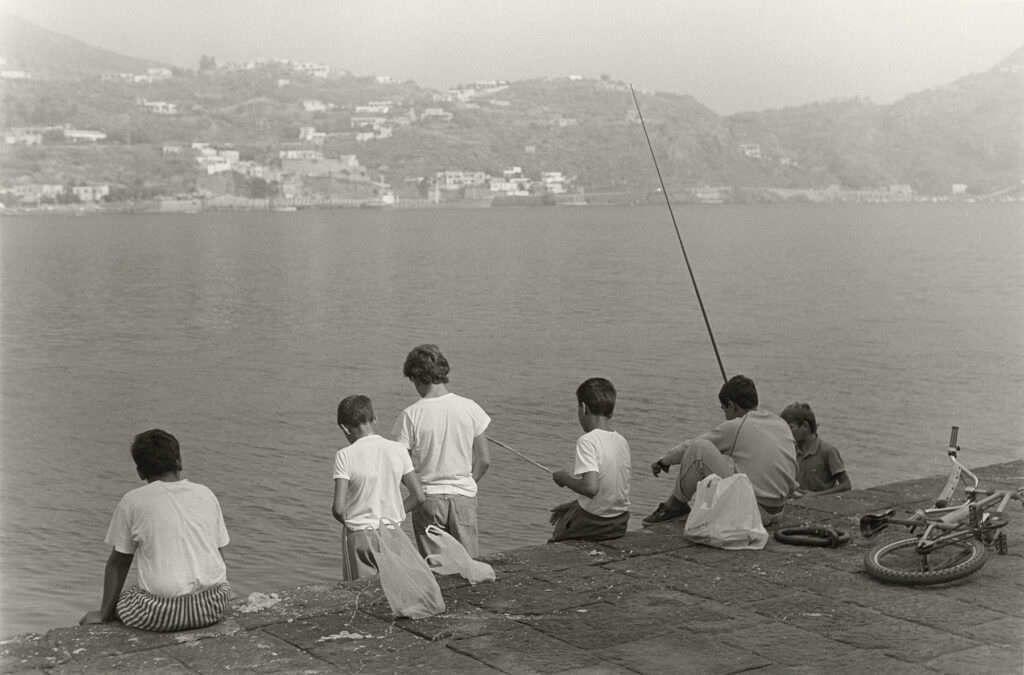
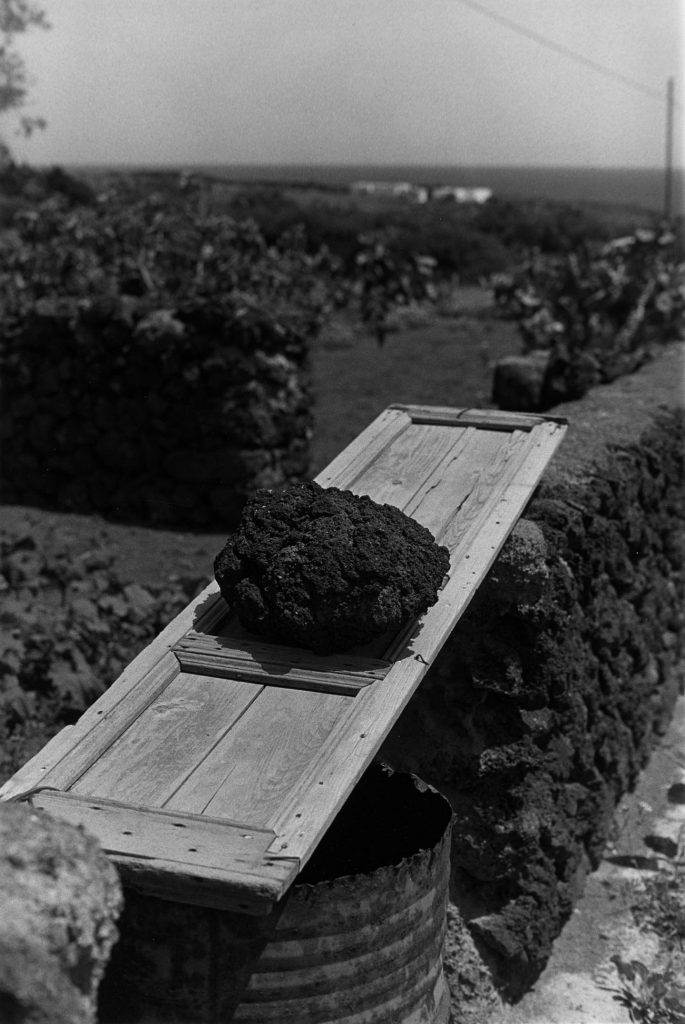
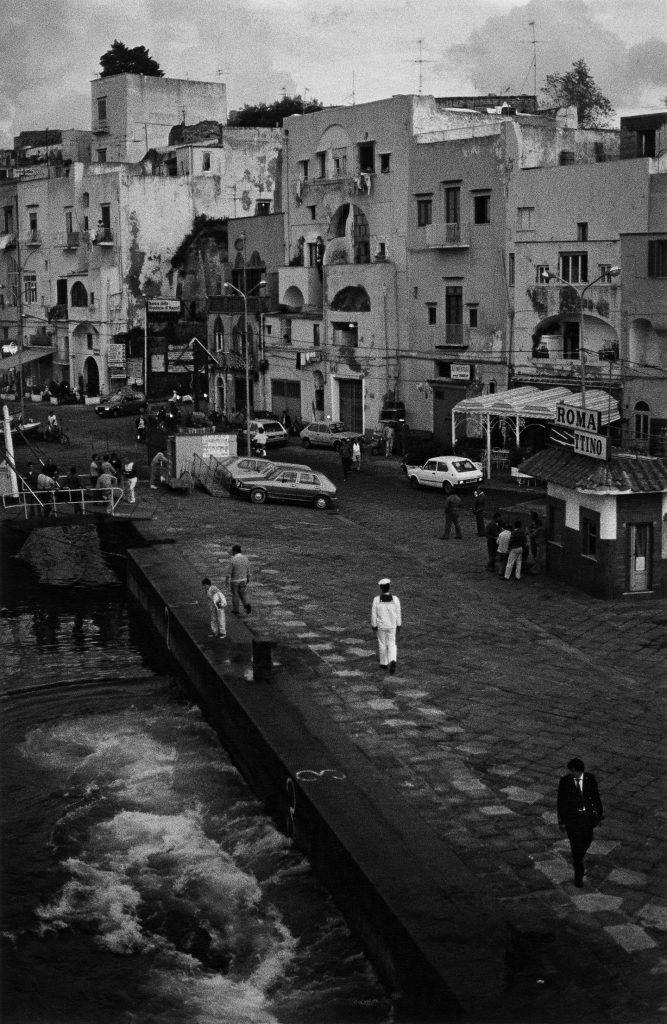
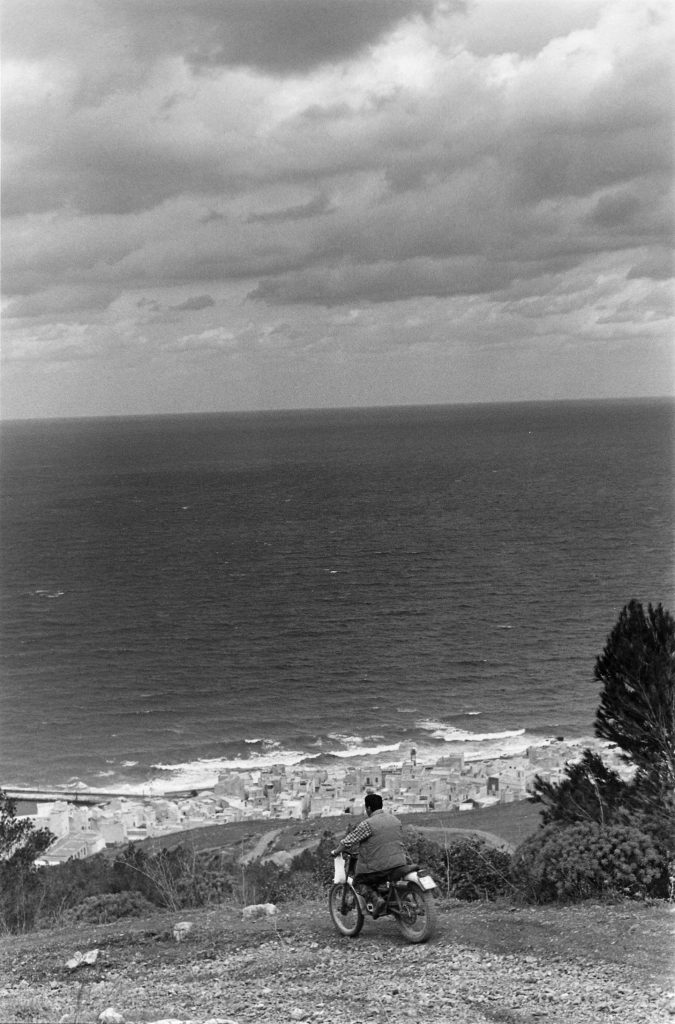
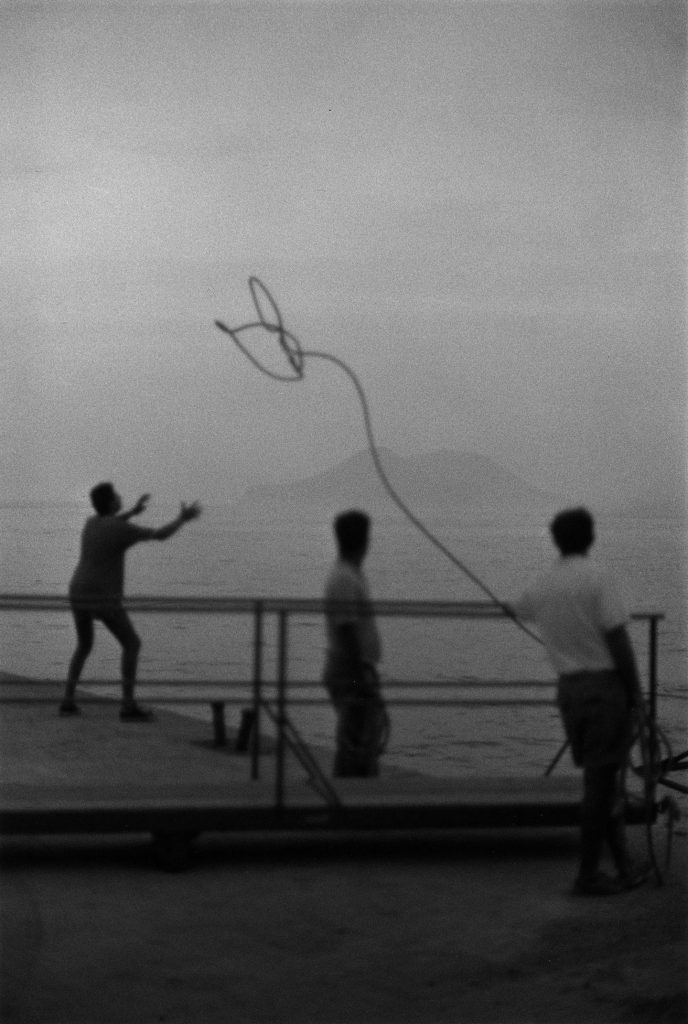
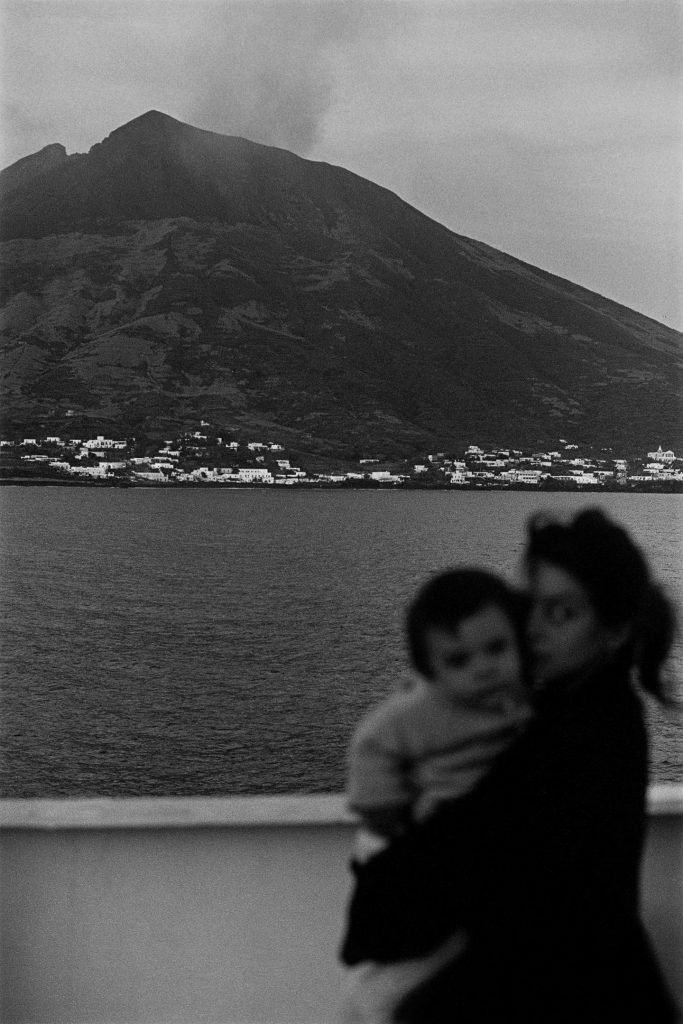
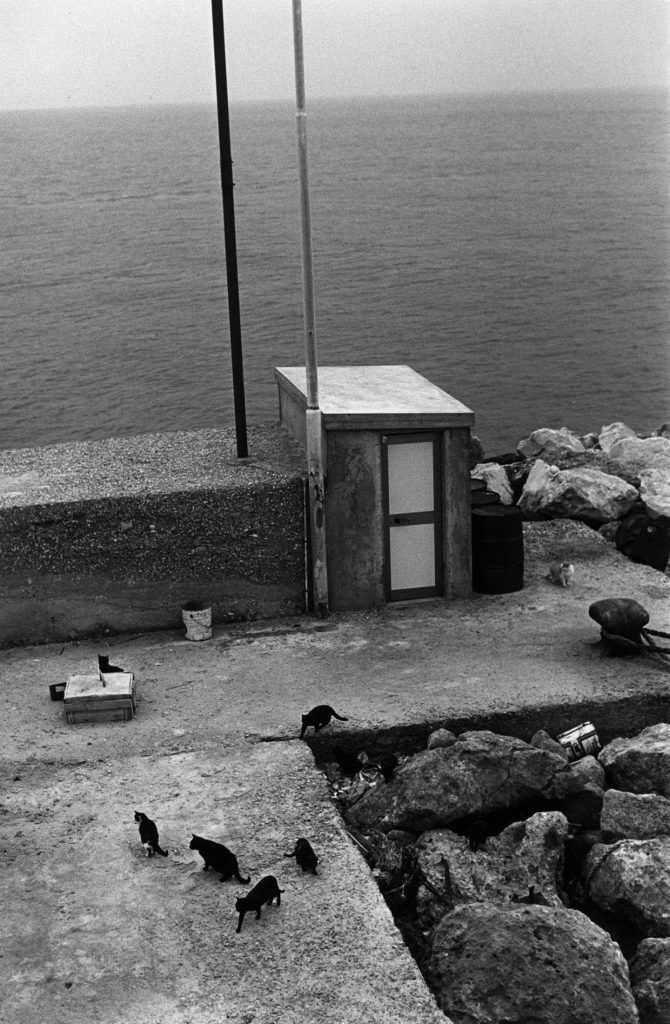
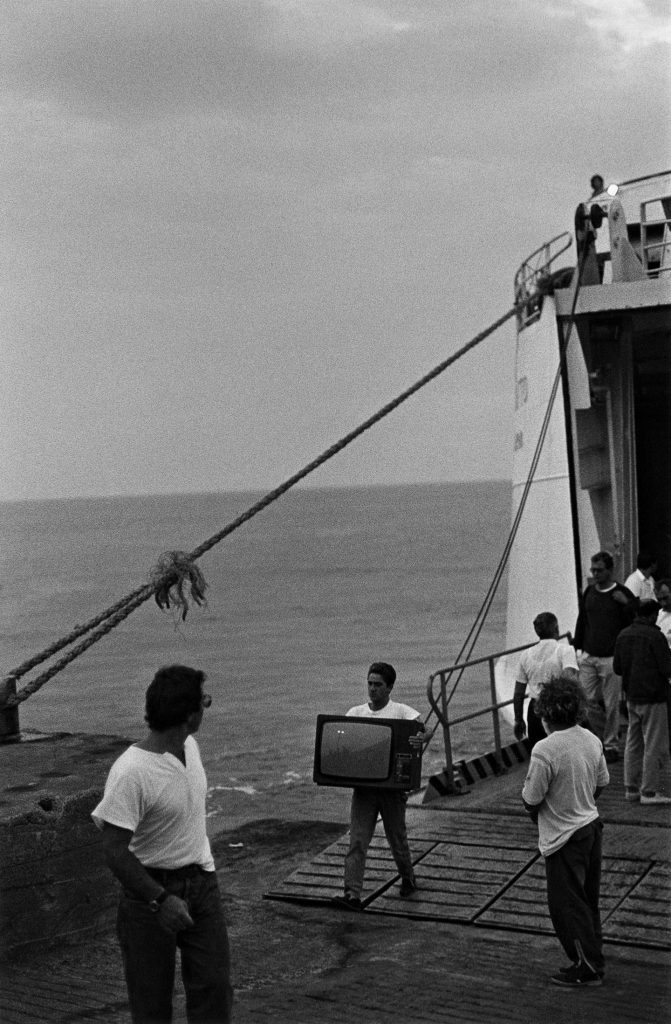
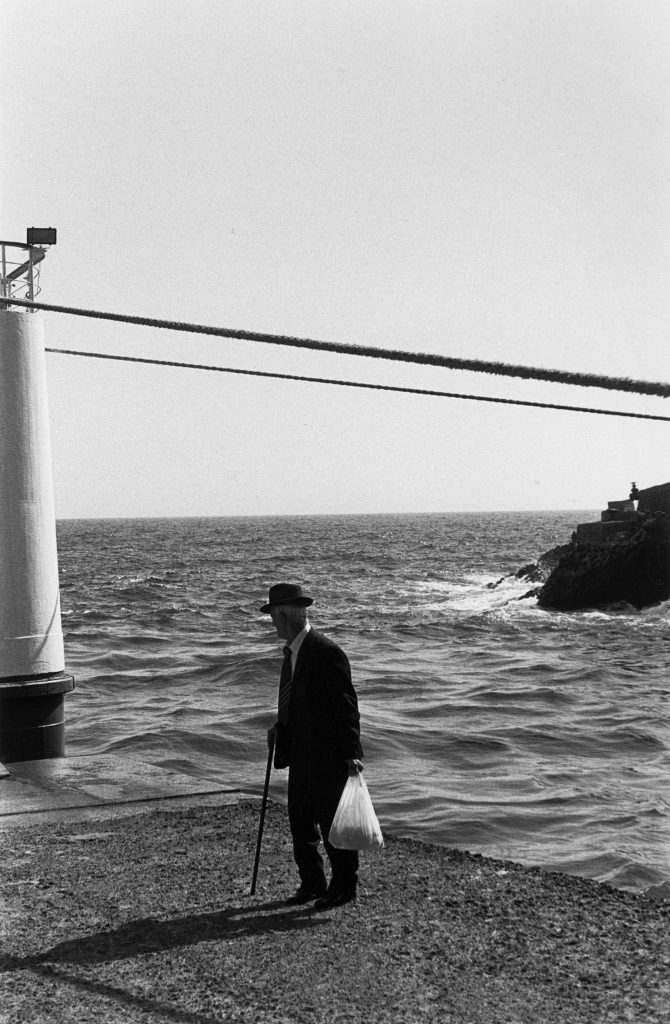
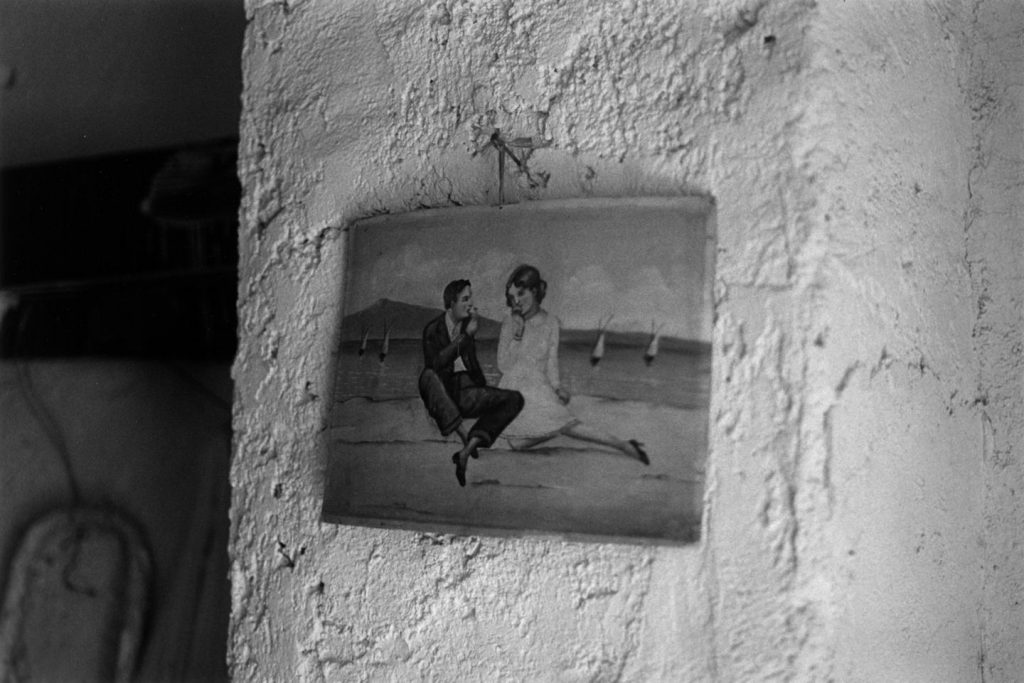
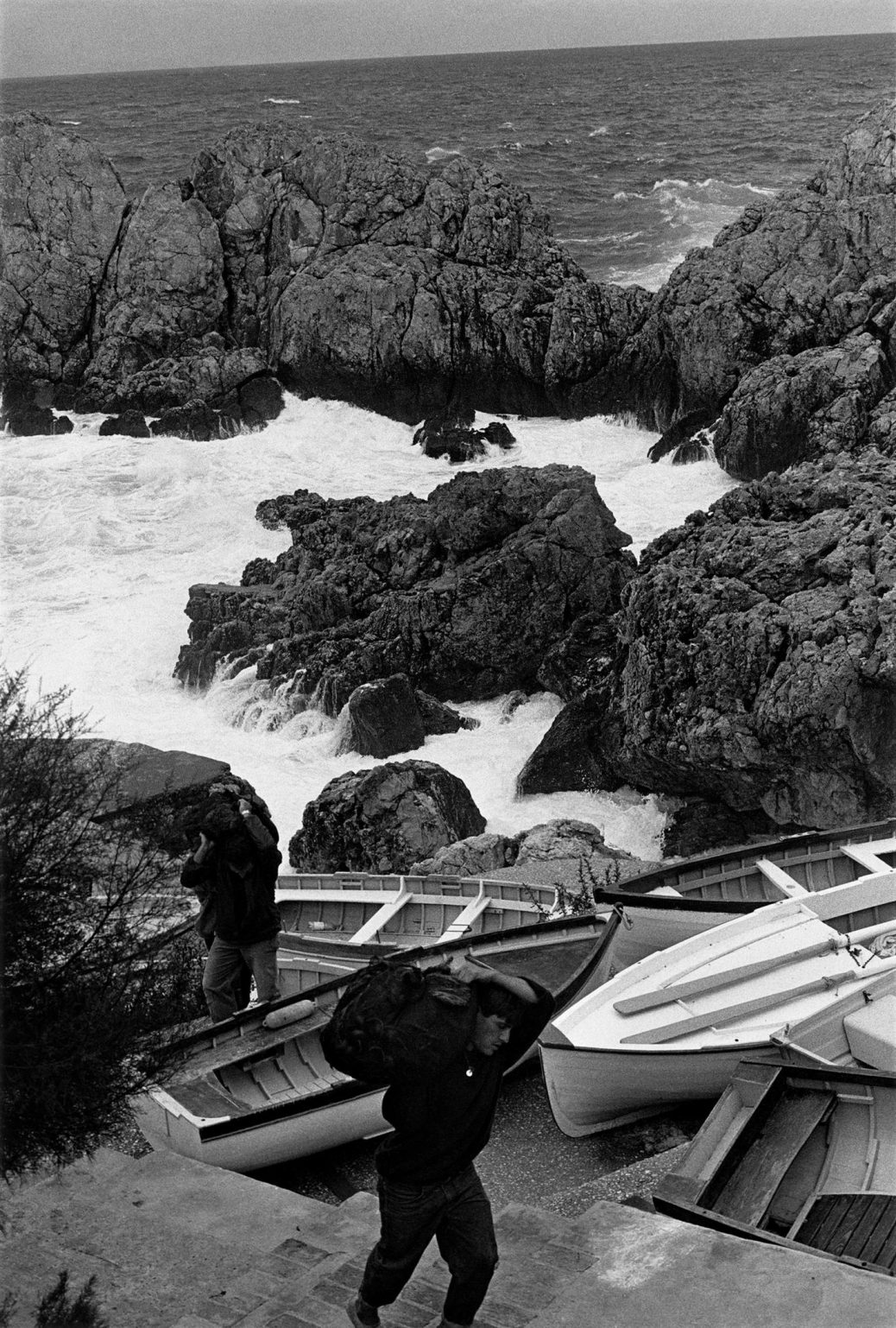
Between 1987 and 2014—always “after the summer”—Bernard Plossu moved across Italy’s smaller islands with the persistence of someone returning to a place rather than discovering it for the first time. Stromboli, Capri, Elba, Capraia, Favignana, Giglio, Levanzo, Ischia, Procida, Filicudi, Vulcano, Panarea, Alicudi: in the volume published in 2024 by Éditions Textuel these names do not function as picturesque destinations but as coordinates in a long-term relationship with landscape. More than three hundred black-and-white photographs form a compact yet breathing body of work, shaped over nearly three decades. The journey here is not conquest or spectacle; it is repetition, attention, and duration.
The story began in 1987 with a stay in Stromboli, made possible by the French Institute in Naples. The following year Plossu returned to the Aeolian Islands, settling for a period in Lipari with his wife, photographer François Nuñez, and their son. From that initial anchorage the itinerary gradually widened, extending to other islands without a rigid plan, guided instead by circumstance and by the simple act of walking. What emerged over time was less a project than a practice—an ongoing dialogue with wind, salt air, harsh light, and the measured rhythm of insular life.
Human presence in these images is sparse and often peripheral. The island is never a backdrop; it is a living structure within which people appear as fleeting signs. Plossu avoids the climactic moment. He works in the interval, in what might be called the infra-ordinary, where apparent banality reveals its density. A sun-bleached wall, an empty road, a figure crossing the frame without claiming it—nothing is staged to impress. Light does not embellish; it exposes. Time does not freeze; it settles into the surface of the photograph. The viewer senses that the image was not seized but allowed to surface.
The book opens with family photographs, not as autobiographical indulgence but as an acknowledgment of continuity. On these islands, time seems less linear than cyclical. Sea and sun weather buildings quickly, stripping away the gloss of newness and folding everything into the landscape. Limited infrastructure—often a single road connecting the main points—reinforces a sense of physical and perceptual concentration. Movement happens on foot. Walking, for Plossu, is not a romantic gesture but an operational necessity: without moving through space, there are no photographs. The geography of the islands, defined by clear edges and constant horizons, creates the ideal condition for a gaze rooted in attentiveness.
In his introductory essay, Walter Guadagnini observes that these photographs offer an Italy stripped of monumental rhetoric and grand historical display. What emerges instead is a minimal, wind-swept territory where landscape and human traces alternate in a balance that mirrors the actual tempo of island life. The book unfolds less as a sequence of views than as a coherent emotional atlas, each image resonating quietly with the next.
This publication marks the seventh collaboration between Plossu and Fondazione Almayuda, confirming a partnership grounded in shared vision and long-term commitment. The Odyssey of the Small Italian Islands is neither nostalgic nor touristic. It is a sustained exercise in looking—an insistence on slowness, on proximity, on the essential.
About the Author
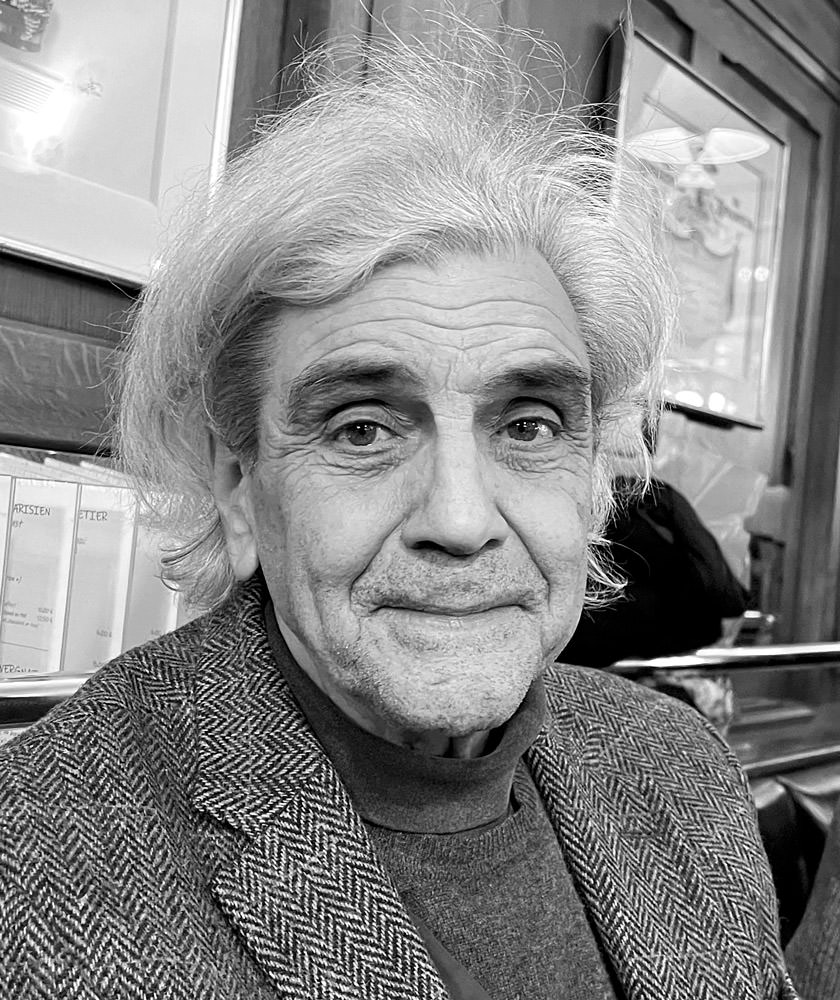
Bernard Plossu (born 1945 in Dalat, Vietnam) is a French photographer widely recognized as one of the leading figures in contemporary European photography. Raised in France, he began photographing in the early 1960s and soon developed a highly personal visual language shaped by travel, everyday life, and a sustained practice of walking.
Over the course of his career, Plossu has published more than one hundred books and exhibited extensively in Europe, the United States, and Latin America. His work is characterized by a quiet, diaristic approach and a preference for small-format black-and-white prints, through which he explores what he has described as the “sur-banal” — the poetic charge embedded in ordinary moments.
Travel has been central to his practice, from early journeys to Mexico and the American West to long-term projects in Europe, North Africa, and the Mediterranean. Rather than seeking dramatic events, Plossu focuses on fleeting impressions, peripheral details, and the understated rhythm of daily life.
In 1988 he was awarded the Grand Prix National de la Photographie in France. His photographs are held in major public and private collections, and his work continues to influence generations of photographers drawn to a contemplative, non-spectacular approach to the medium.

Walter Guadagnini was born in 1961 in Cavalese (Trentino, Italy). He lives and works in Bologna. He is Director of CAMERA – Centro Italiano per la Fotografia in Turin and teaches History of Art and History of Photography at the Academy of Fine Arts in Bologna.He began his career in 1986 at the Galleria Civica di Modena, where he later served as Director from 1995 to 2005. During his tenure, he curated major thematic exhibitions including The Invention of Landscape, Metamorphoses of the Body, The Bourgeois Hero: Themes and Figures from Schiele to Warhol, Pop Art UK – British Pop Art 1956–1972 (with Marco Livingstone), and Pop Art Italia – 1958–1968. He also organized significant retrospectives devoted to artists such as Allen Jones, Mel Ramos, Domenico Gnoli, Peter Phillips, and Allan D’Arcangelo. From 2004 to 2015 he chaired the Scientific Committee of UniCredit and Art, contributing to the development and international presentation of the bank’s art collection. Since 2018 he has been among the Artistic Directors of Fotografia Europea in Reggio Emilia, where he has curated exhibitions dedicated to both historical and contemporary photographers. Guadagnini has also been active as a critic and editor. He contributed as an art critic to la Repubblica from 1995 to 2003 and was head of the photography section of Il Giornale dell’Arte from 2006 to 2021. He has collaborated with FMR since 2005 and served as co-director of FMR – Bianca between 2008 and 2010. He is the author of several publications, including the monograph Henri Matisse. La vita e l’opera (1993) and Domenico Gnoli. Lettere e scritti (2004), along with numerous essays on modern and contemporary art and the history of photography. His recent curatorial projects include exhibitions on Lucio Fontana, Man Ray, and Italian Pop Art.