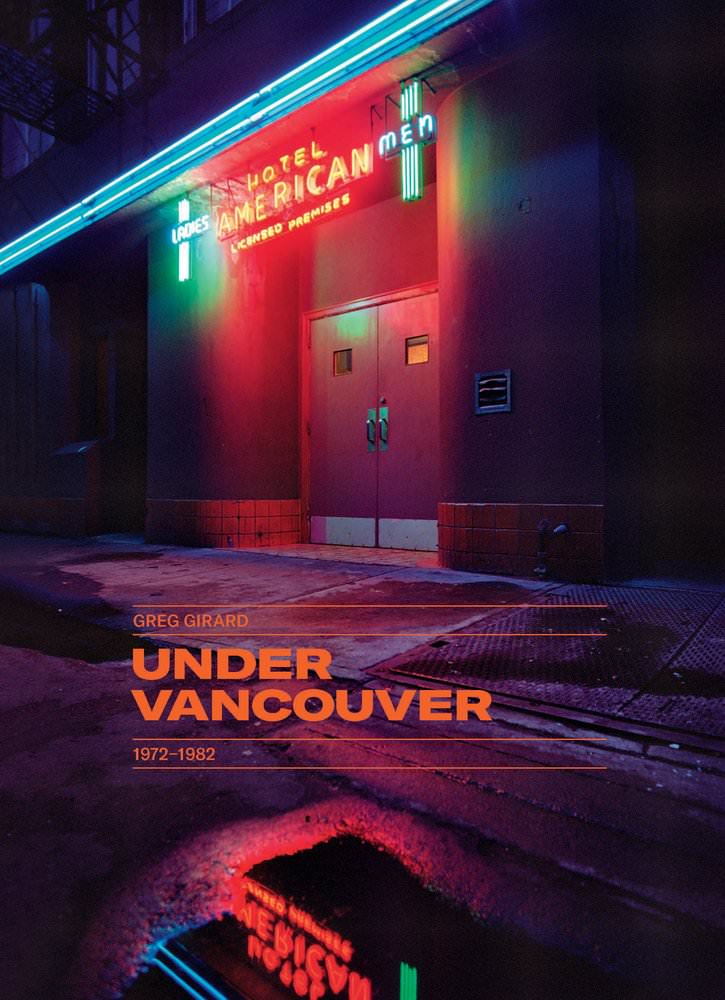
Greg Girard: Under Vancouver 1972–1982
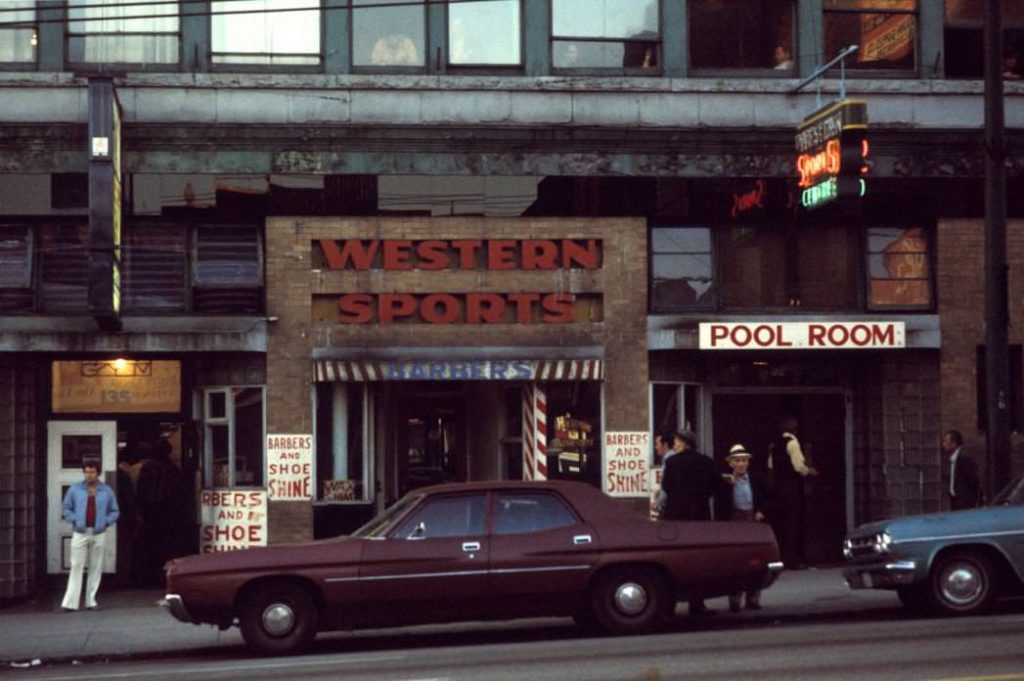
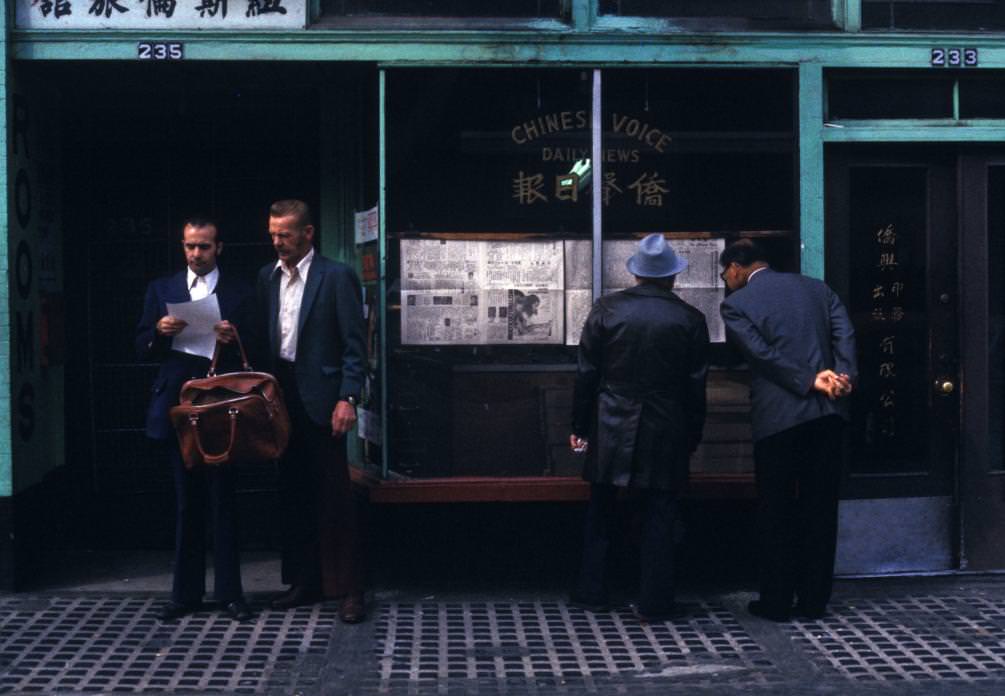
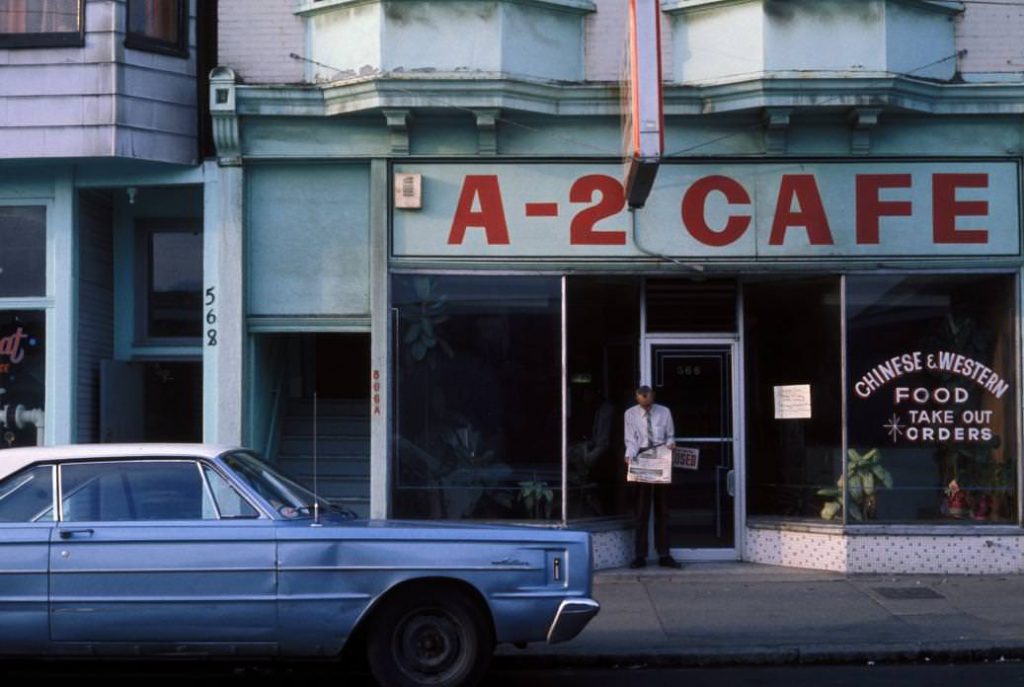
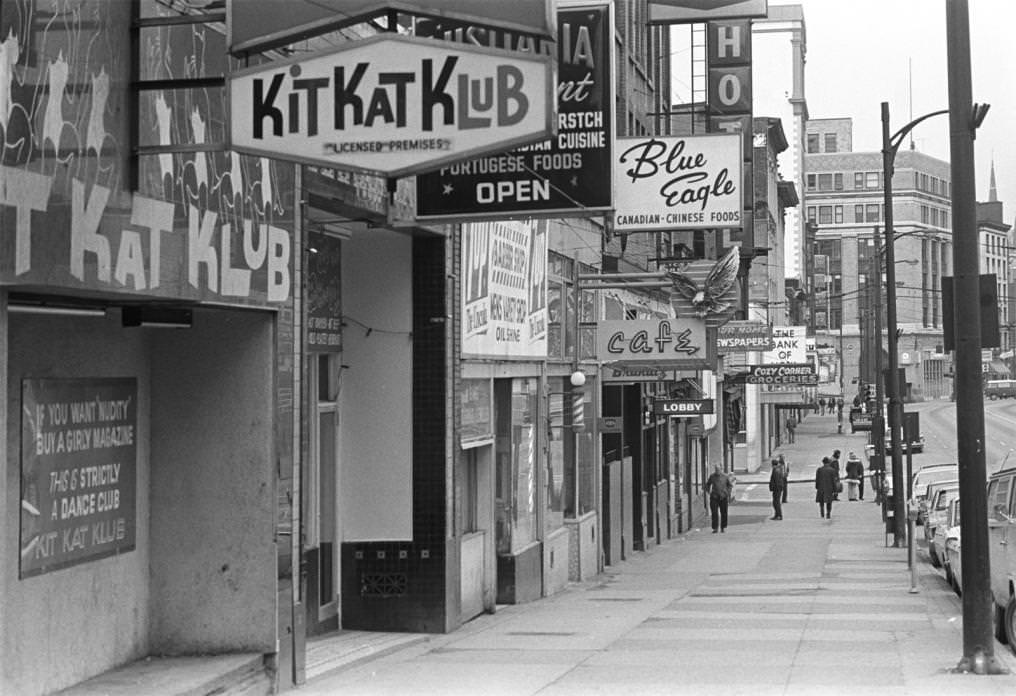
Greg Girard’s photographs of Vancouver from the 1970s and early 1980s capture a city on the verge of transformation, still functioning as a terminal port at the end of the railway line. Not long afterward—Expo 86 is widely regarded as the turning point—Vancouver entered the global spotlight and began to reinvent itself as a leisure-oriented metropolis closely tied to its natural surroundings, while also emerging as an attractive hub for real estate investment. In that earlier period, well before post-9/11 security measures restricted access to the working waterfront, many streets in the downtown core and east side ran directly to the water. The shoreline was dense with fishing wharves, shipping docks, and a network of bars and cafés frequented by dockworkers and sailors. Downtown pawn shops advertised outboard engines, chainsaws, and fishing equipment in their windows. Moving through these streets and staying in inexpensive hotels, Girard documented the everyday—and nocturnal—life of the city in which he was raised.
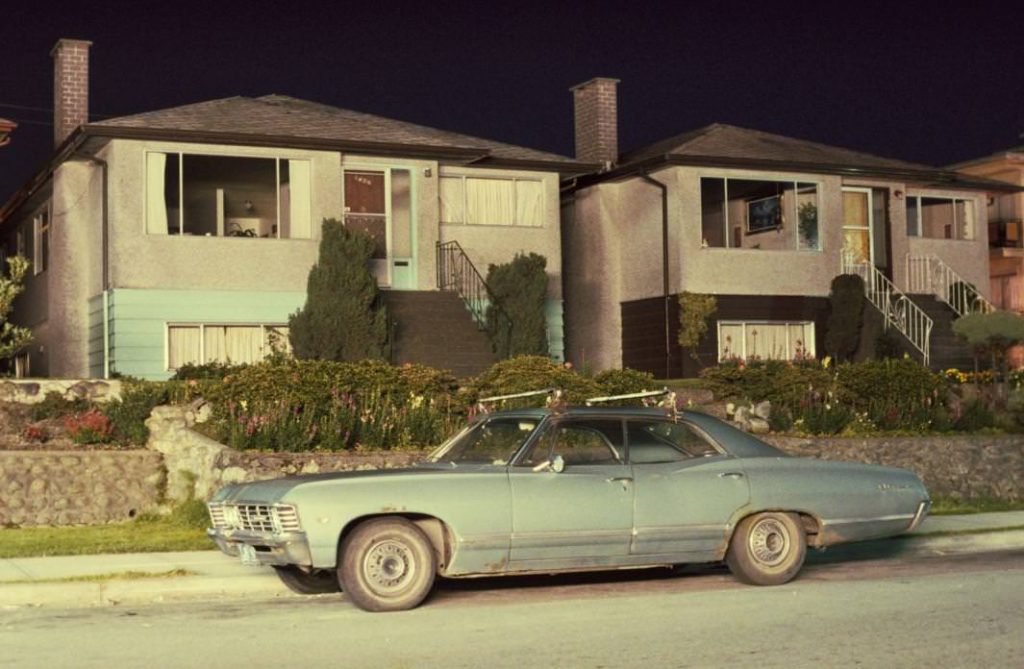
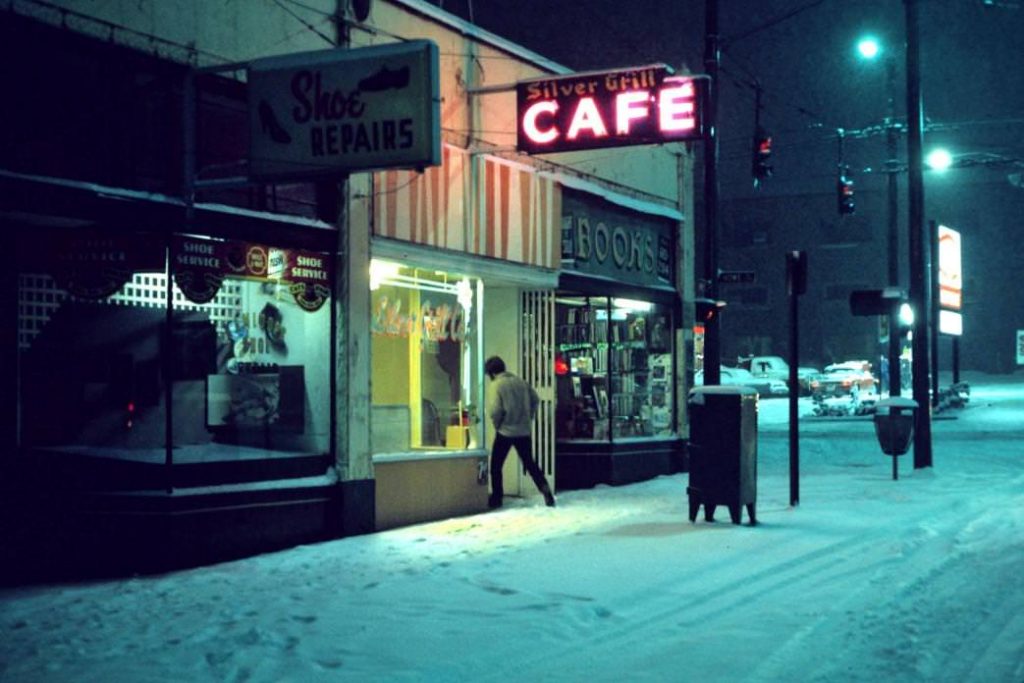
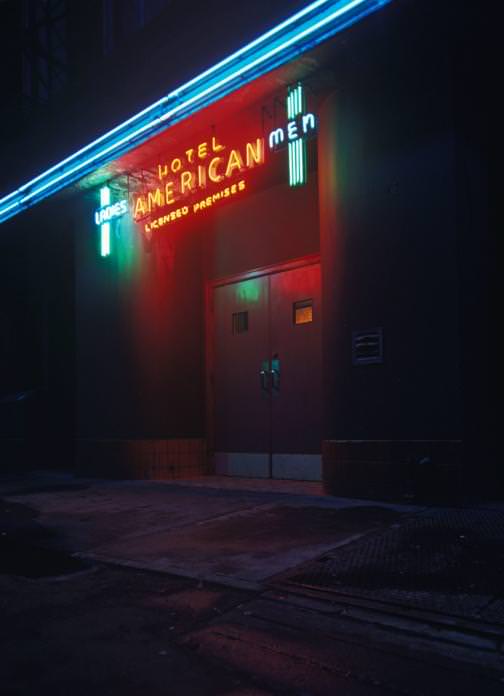
The photographs collected in Under Vancouver 1972–1982 were produced before Girard began supporting himself as a magazine photographer and before he developed a more formal artistic practice. Already present, however, are many of the concerns that would later define his work: an attention to marginal or unseen spaces, an experimental use of colour film at night, and a sustained photographic exploration of a single location. These approaches would later come to maturity in books such as City of Darkness and City of Darkness Revisited (focused on the Kowloon Walled City), Phantom Shanghai, and Hanoi Calling.
Under Vancouver 1972–1982 represents the first extensive presentation of Girard’s early Vancouver photographs. Created in direct response to the city and the time in which he lived, these images—often drawn from its hidden or neglected zones—have since become an unintentional visual archive of a Vancouver that has largely vanished.
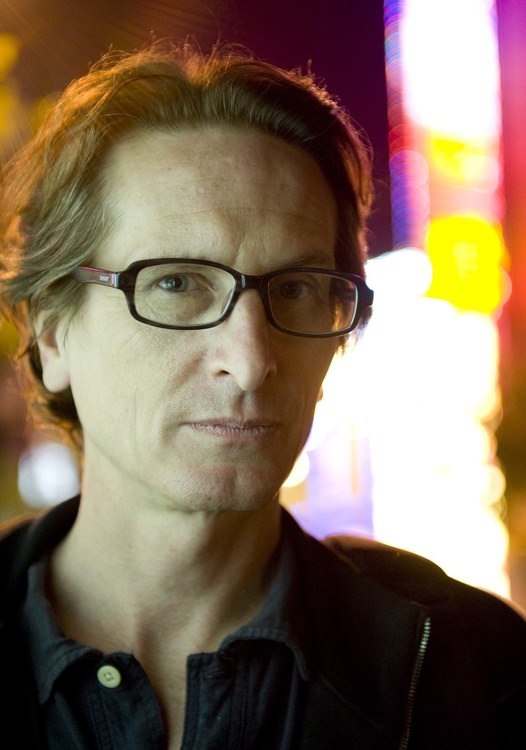
About the Author
Greg Girard is a Canadian photographer whose work, over more than thirty years, has explored the social and spatial transformations of major Asian cities. City of Darkness Revisited, published in 2014, renewed his early collaboration with co-author Ian Lambot and revisited their influential book City of Darkness: Life in Kowloon Walled City (Watermark, 1993).
Based in Shanghai from 1998 to 2011, Girard produced the photographic monograph Phantom Shanghai (Magenta, Toronto, 2007), which includes a foreword by novelist William Gibson and examines the city’s rapid—and at times brutal—push toward modernity at the start of the 21st century. His other publications include Hanoi Calling (Magenta, Toronto, 2010) and In the Near Distance (Kominek, Berlin, 2010), a collection of early photographs made in Asia and North America between 1973 and 1986.
Girard’s work is held in the collections of the National Gallery of Canada, the Art Gallery of Ontario, the Vancouver Art Gallery, as well as numerous public and private collections. He is represented in Canada by Monte Clark Gallery. Alongside his books and gallery projects, Girard regularly contributes to National Geographic magazine. His feature “How the DNA Revolution is Changing Us” appeared in the August 2016 issue, followed by stories including “Can China Go Green?”, “The Kingdom of David and Solomon”, and “Bitter Waters: China’s Water Crisis.”