Guido Guidi: Album, 1969–82
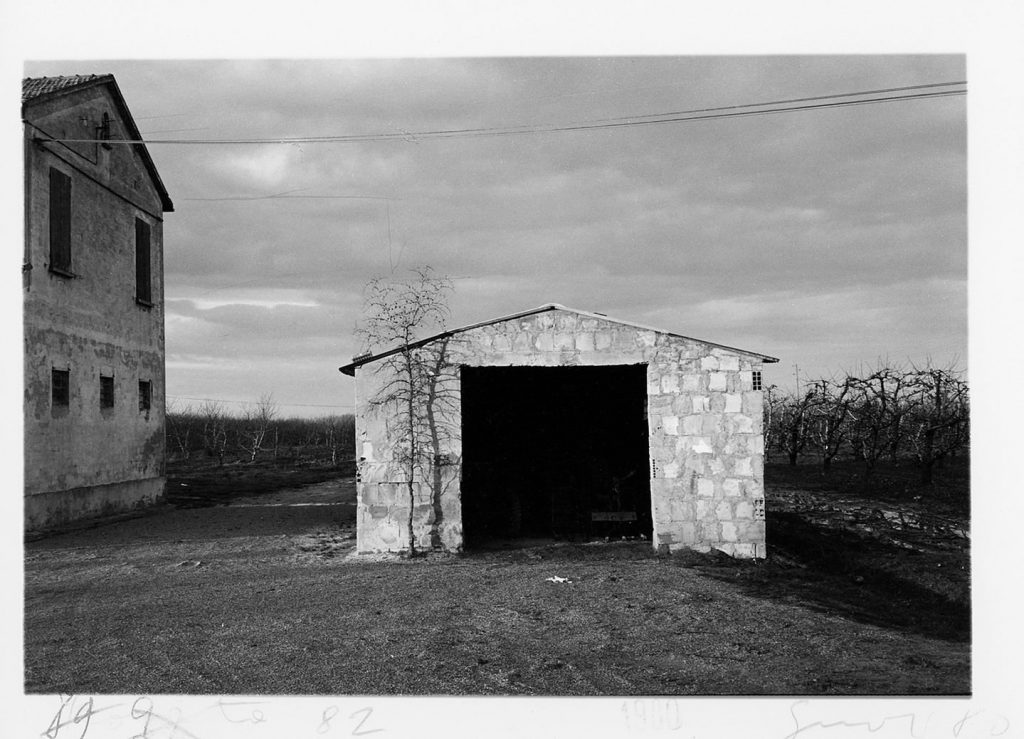
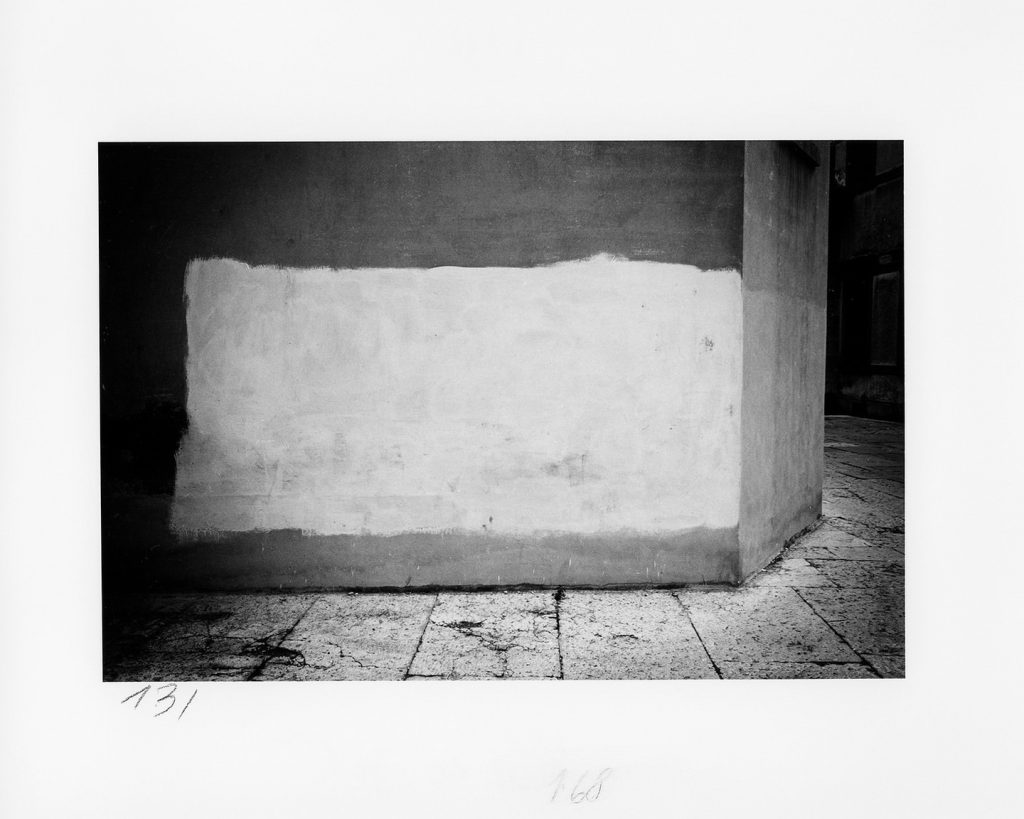
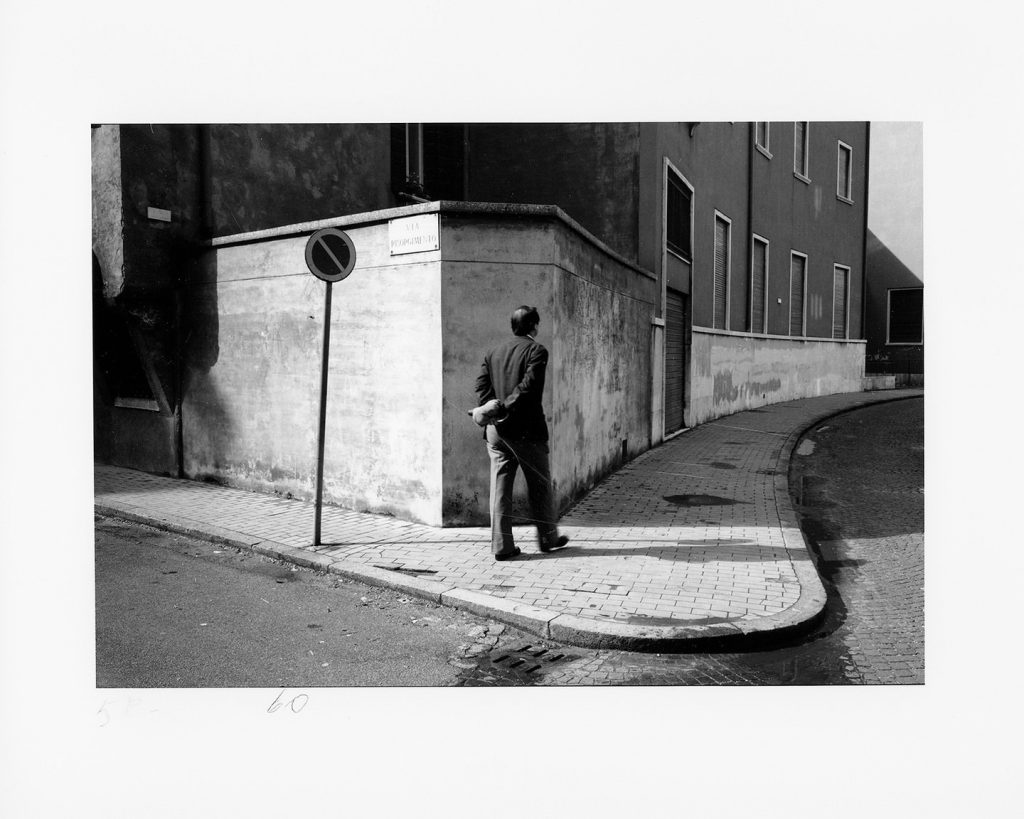
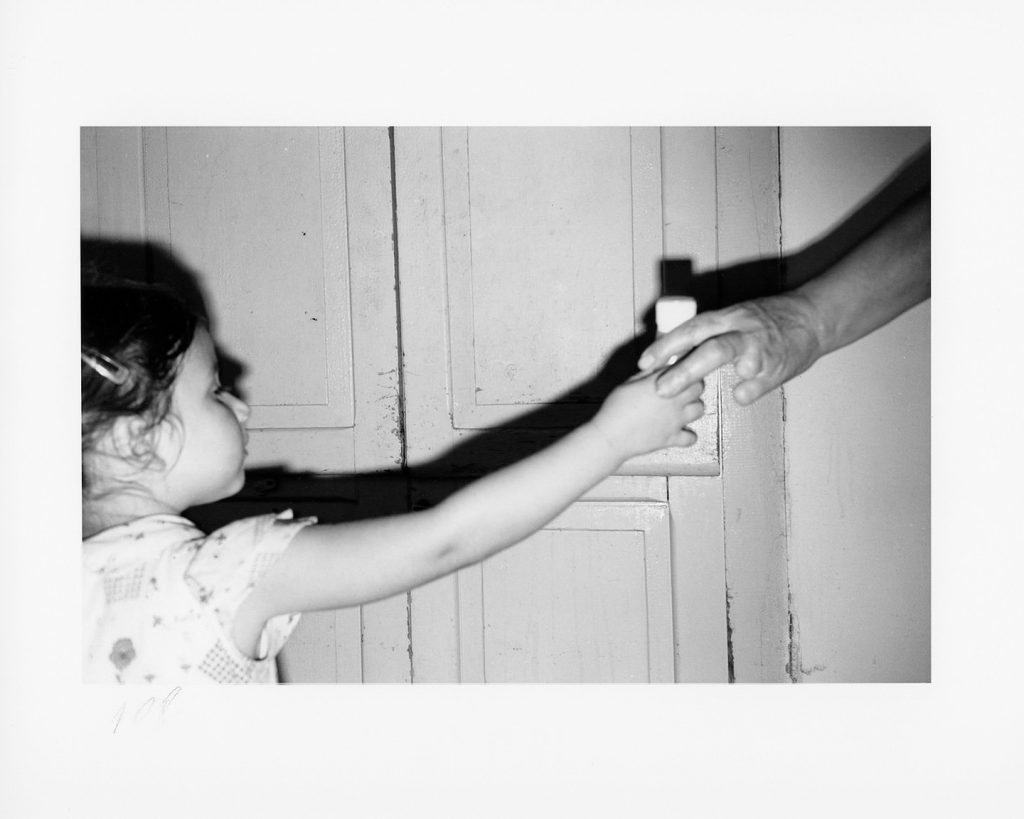
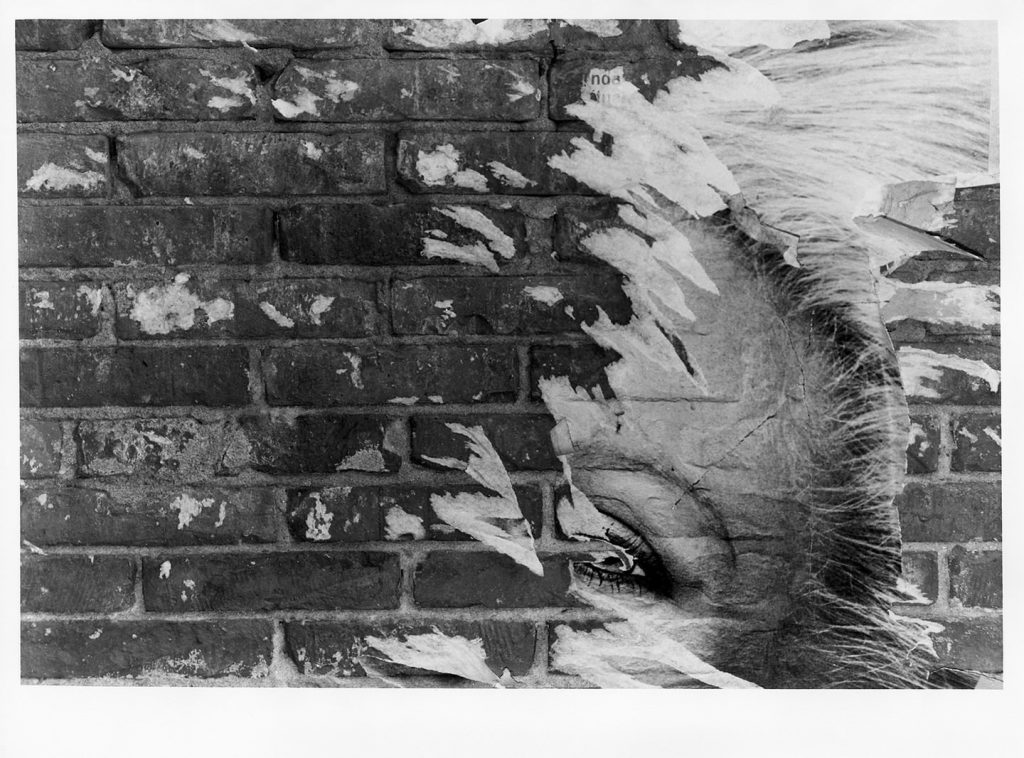
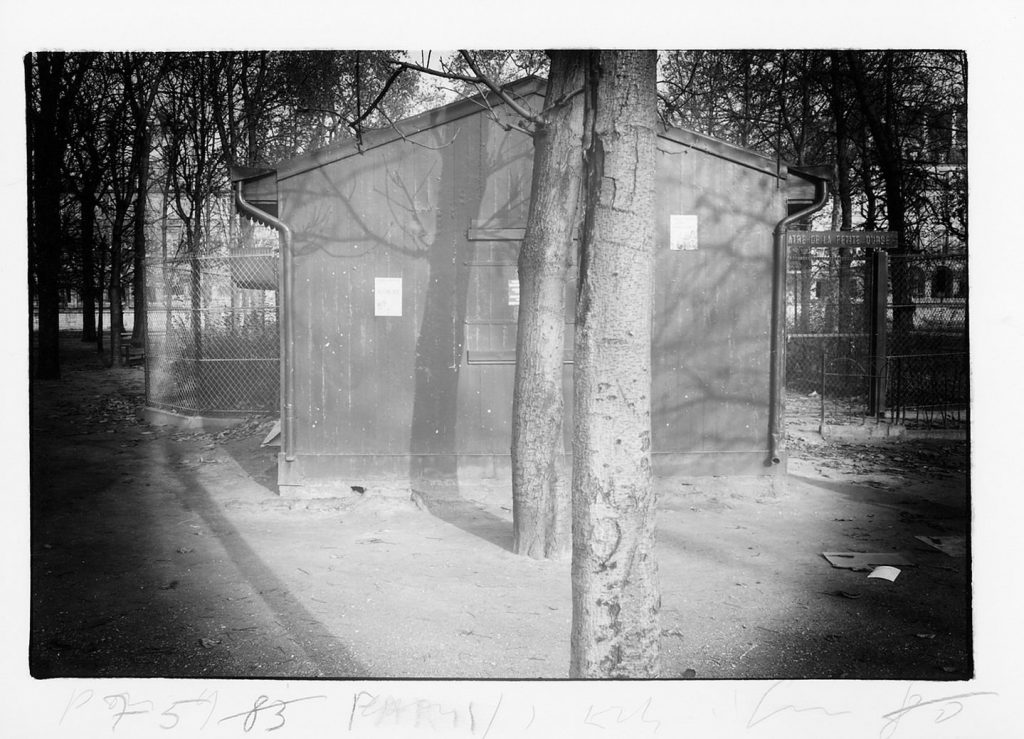
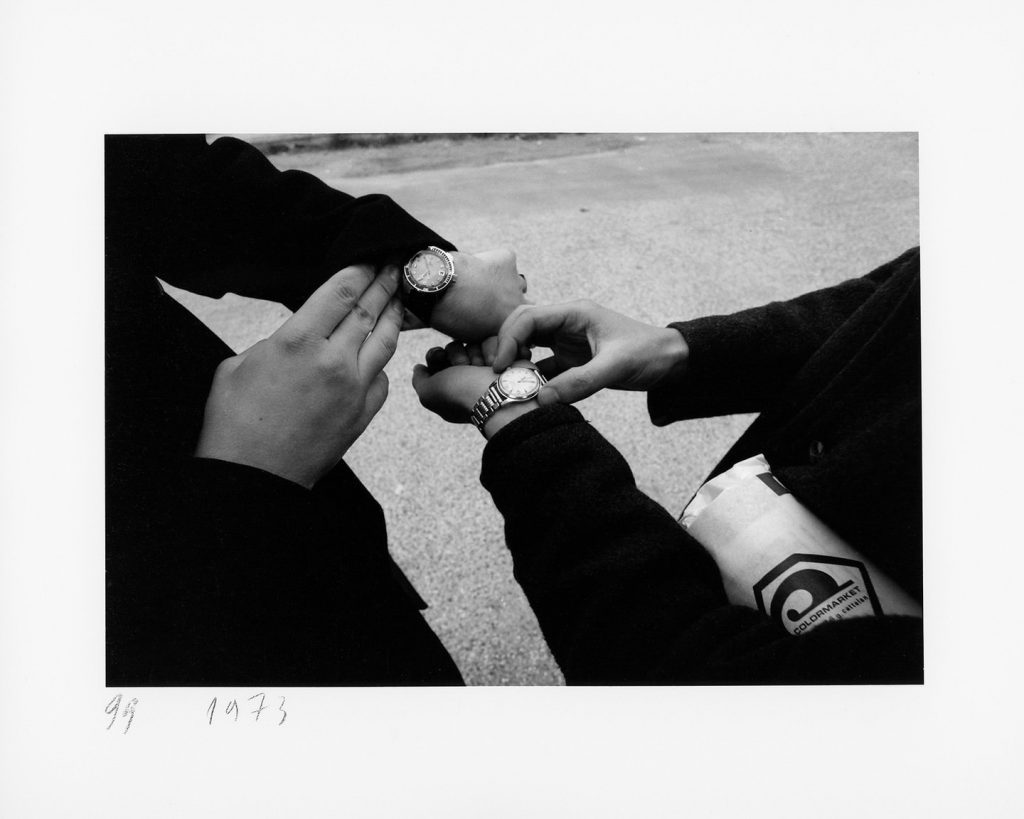
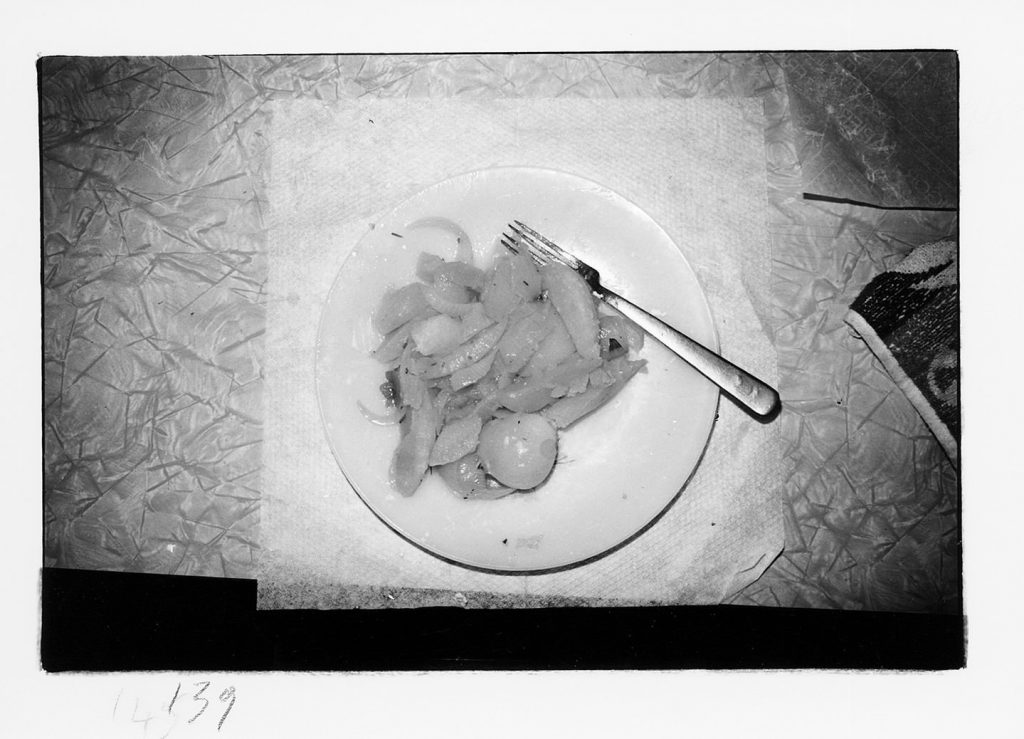
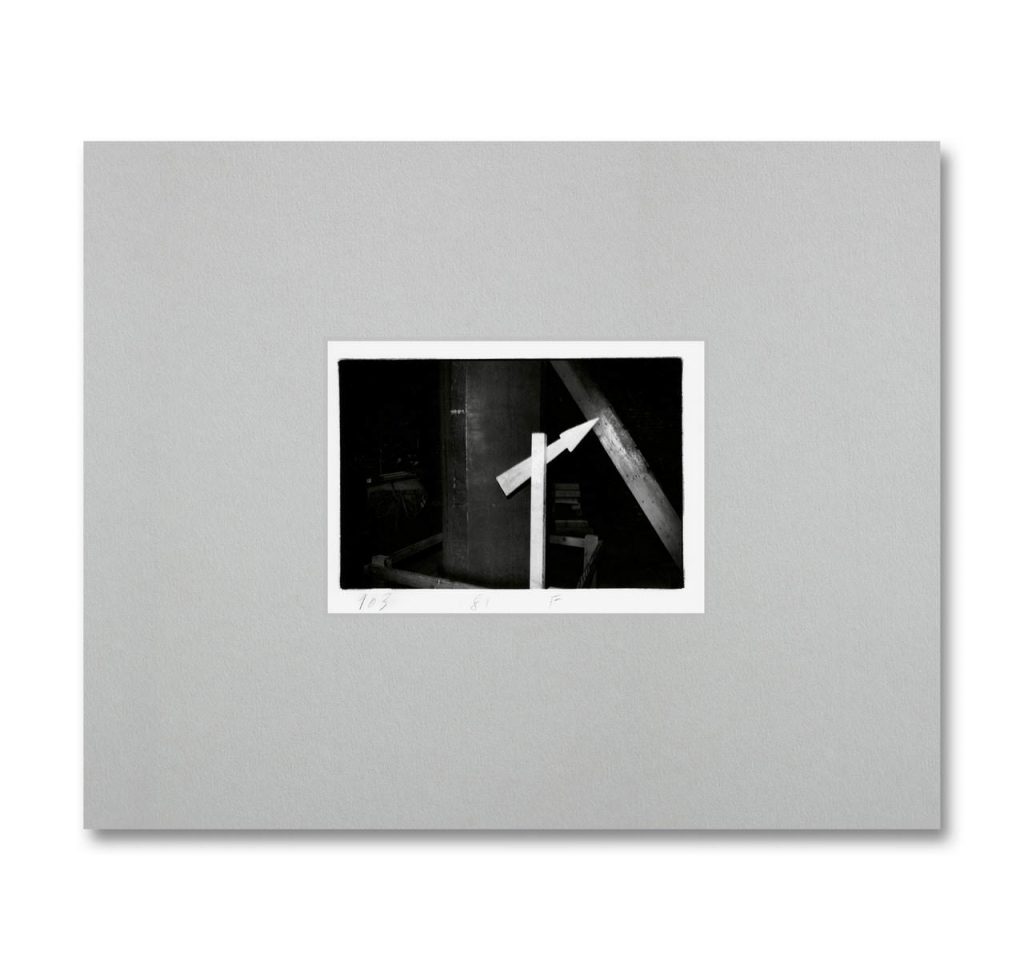
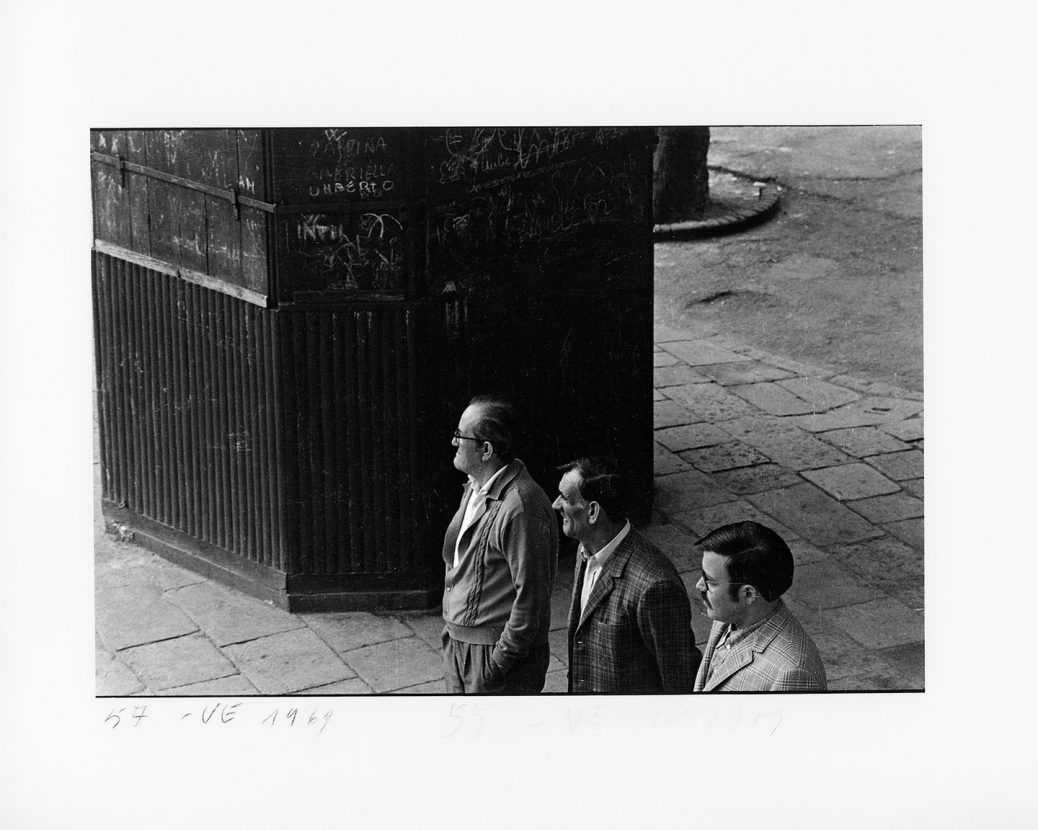
During a recent reordering of his archive, Guido Guidi came across a constellation of negatives and prints produced in the formative years of his career. Shot in black and white with compact cameras, these images trace the rhythms of everyday life in the 1970s — intimate moments with family and friends, encounters with colleagues at Venice’s architecture faculty — alongside more elusive visual fragments: solitary objects, stark shadows, cryptic signs, and empty streets.
Marked by sharp contrasts and unconventional compositions, many photographs oscillate between documentation and abstraction. Some still carry traces of their earlier lives: faded captions, partial annotations, and other remnants of past sequences. Returning to a title he had already explored in several projects of that era — including an unrealised publication developed with Luigi Ghirri for Punto e Virgola — Guidi reassembled this material into a new “album.” What emerges is not a retrospective in the conventional sense, but a renewed dialogue with his own history, shaped by the restless curiosity of his early years and the refined judgment of a mature editor.
The resulting volume juxtaposes the familiar with the strange, the legible with the uncertain. Ordinary scenes sit beside enigmatic details, producing a body of work that feels unexpectedly contemporary — a fresh statement from a photographer whose influence continues to resonate.
Album, 1969–82 is the second in a trilogy of interconnected books dedicated to Guidi’s black-and-white production from the late 1960s through the early 1980s. Together, these volumes illuminate the evolution of his visual language while extending his long-standing investigation into photography’s shifting territory: between art and use, realism and imagination, evidence and construction.
About the Author
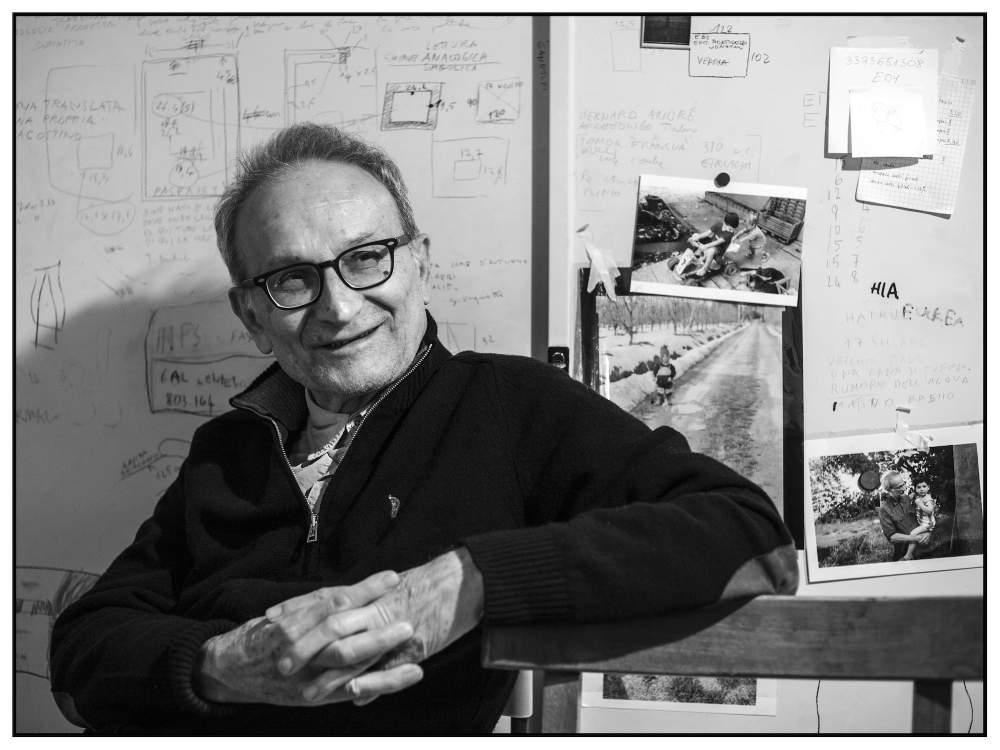
Guido Guidi (born in Cesena on January 1, 1941) is an Italian photographer recognised as a pioneer of contemporary Italian landscape photography, known for work that explores the very process of seeing. In 1959 he enrolled at the IUAV University in Venice and later joined the Advanced Course in Industrial Design, where he studied with notable figures including Bruno Zevi, Carlo Scarpa, Luigi Veronesi and Italo Zannier. Influenced by Neorealism and Conceptual Art, he turned his attention to marginal and non-spectacular spaces in the Italian landscape, documenting them with a large-format 20×25 camera. From 1980 onwards he was invited to participate in research projects on the transformation of cities and territories, including the Archivio dello Spazio project in Milan, investigations into INA-Casa public housing, and work for Atlante Italiano 003. Beginning in 1989 he taught the history and technique of photography at the Academy of Fine Arts in Ravenna. In the 1990s, together with Paolo Costantini and William Guerrieri, he helped establish Linea di Confine for Contemporary Photography, and between 1993 and 1996 he documented new urban growth along the post-Berlin Wall route between Russia and Santiago de Compostela, later published as In Between Cities. At the same time, he examined the life and legacy of the Modern Movement through photographic projects on the work of Carlo Scarpa, Ludwig Mies van der Rohe and Le Corbusier, produced and published by the Canadian Centre for Architecture in Montreal. His work has been shown in major exhibitions and museums around the world, and he has exhibited at institutions such as the Fotomuseum Winterthur, the Guggenheim and Whitney museums in New York, the Centre Pompidou in Paris and the Venice Biennale. Equally significant is his long commitment to education: since 1986 he has been invited to lead workshops, lectures and seminars at universities and institutions across Italy, contributing to the development of many generations of photographers and architects while shaping a reflective and rigorous approach to photographic practice.