
Insta360 Reveals the Snap Selfie Monitor
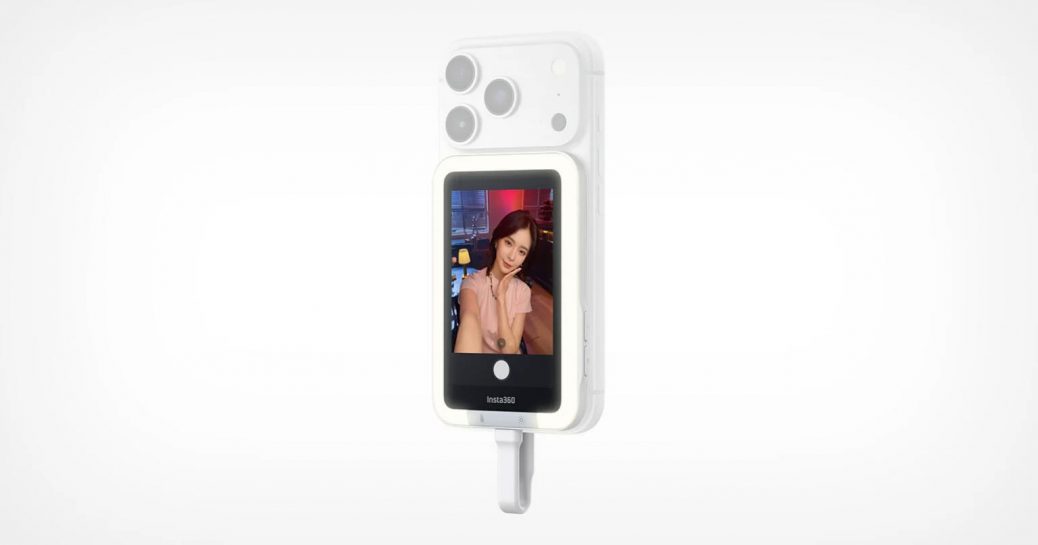
Insta360 has released the Snap, a small display accessory designed to address a persistent structural limitation of smartphones: the impossibility of seeing oneself while using the rear camera. The device consists of a 3.5-inch touchscreen that connects to a phone via a short integrated USB-C cable and attaches magnetically to the back of the device, mirroring the smartphone interface in real time. The choice of a wired USB-C connection rather than Bluetooth or Wi-Fi reduces latency to approximately 30 milliseconds, which makes the live preview usable for video recording and higher-resolution capture. This allows users to frame themselves through the main sensors rather than relying on the front-facing camera, which typically offers lower resolution and smaller optics. On devices like the iPhone 17 or the Galaxy S25 Ultra, rear cameras can deliver anywhere from three to sixteen times the resolution of their front-facing counterparts.
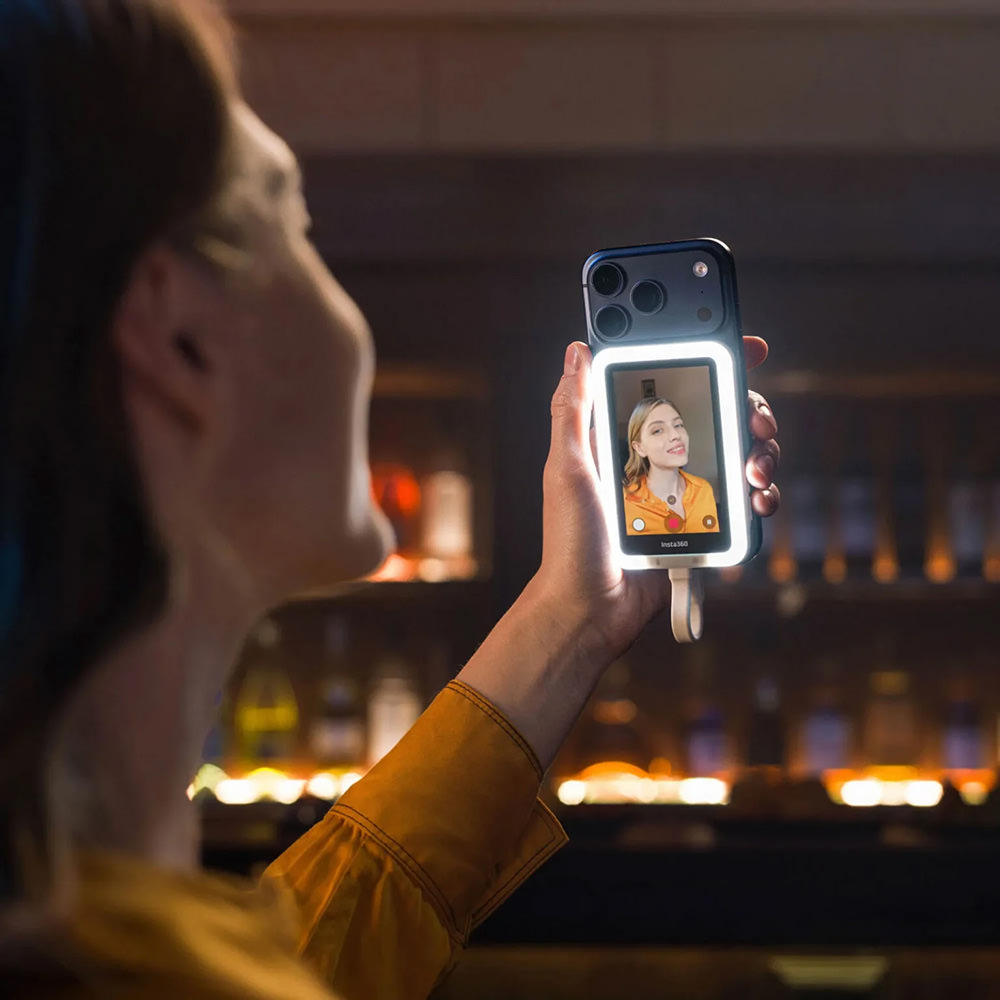
The Snap is available in two versions: a standard model and an upgrade that includes an integrated ring light co-developed with the beauty technology brand Amiro. The light offers five brightness levels and three color temperature settings — neutral, cool, and warm — controlled via buttons on the side of the unit. A folding protective cover is included to shield the screen when not in use, though it does not extend far enough to cover a modern smartphone’s display entirely. Because the device draws power directly from the phone, it carries no battery of its own: Insta360 estimates that continuous use produces a 15 to 20 percent drain on the host device’s battery.
For iPhones with MagSafe, the Snap attaches without additional hardware. Other devices require an included magnetic ring, and Android compatibility is limited to phones that support DisplayPort Alt Mode. iOS users face an additional setup step: touchscreen functionality on the Snap must be enabled through the accessibility settings by activating the zoom feature. On Android, screen mirroring is approved through a standard system prompt, and touchscreen interaction follows automatically.
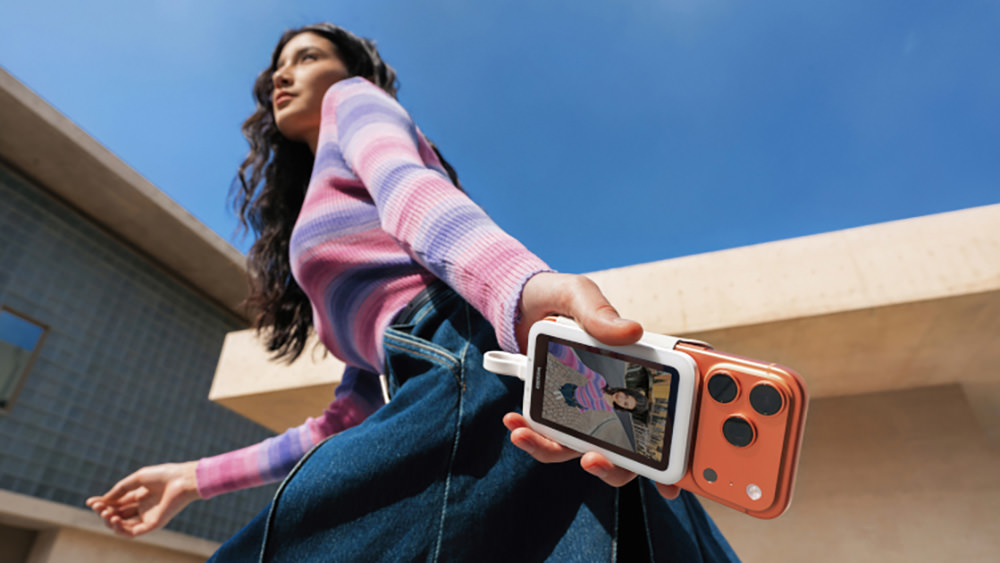

The Snap’s screen aspect ratio is narrower than that of contemporary smartphones, which creates a practical choice between two display modes: a letterboxed view that shows the full phone interface with black bars on either side, or a zoomed mode that fills the Snap’s screen but crops the top and bottom of the phone’s display, potentially placing some interface elements out of reach. Two physical buttons on the side of the unit cycle between these modes; a third button mirrors the image horizontally, a function that becomes necessary when the phone is held sideways for landscape framing.
“With Insta360 Snap, we set out to solve a simple problem that every creator knows: your phone’s best camera is on the back, but you can’t see yourself while using it,” said JK Liu, founder of Insta360. “By turning your smartphone into a powerful, creator-ready selfie system, we are helping creators and vloggers capture sharper, better-lit content anytime, anywhere, without changing the way they already like to shoot.”

The standard model retails at $79.99, while the version with the built-in light costs $89.99. The Snap is available through Insta360’s online store.