Canon Introduces the EOS R6 V
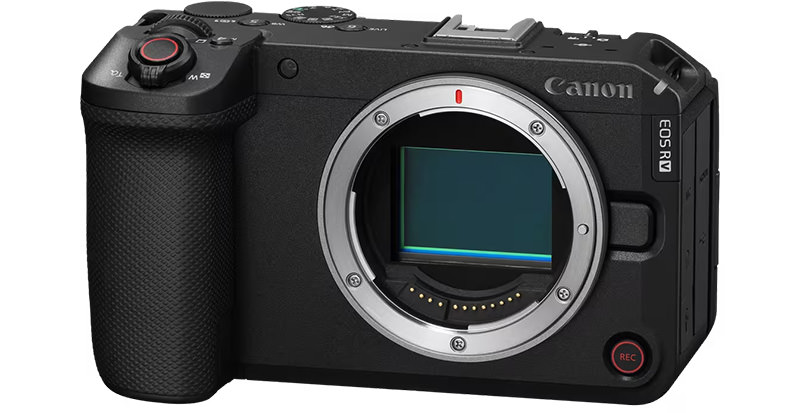
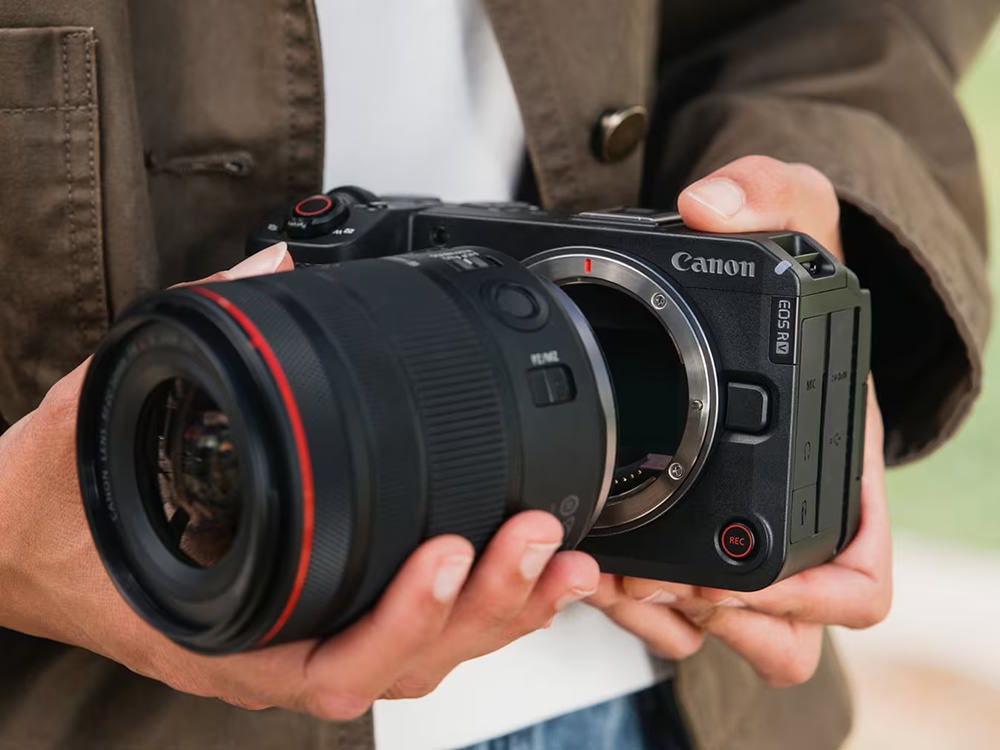
Canon has announced the EOS R6 V, a full-frame mirrorless camera positioned at the top of the company’s video-oriented V-series lineup. It is built around the same 32.5-megapixel full-frame CMOS sensor introduced with the Cinema EOS C50 and subsequently used in the EOS R6 Mark III, paired with the DIGIC X processor. The effective resolution reaches approximately 6,960 x 4,640 pixels, and Canon claims 15 or more stops of dynamic range in Canon Log 2.
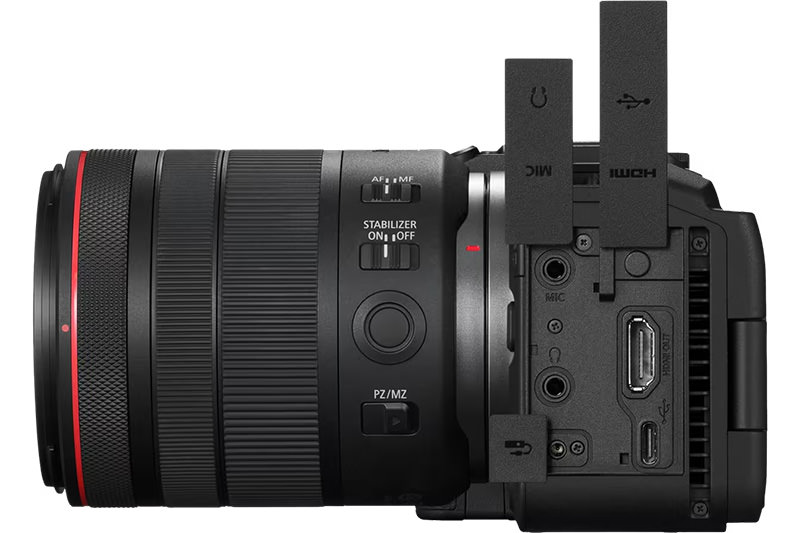
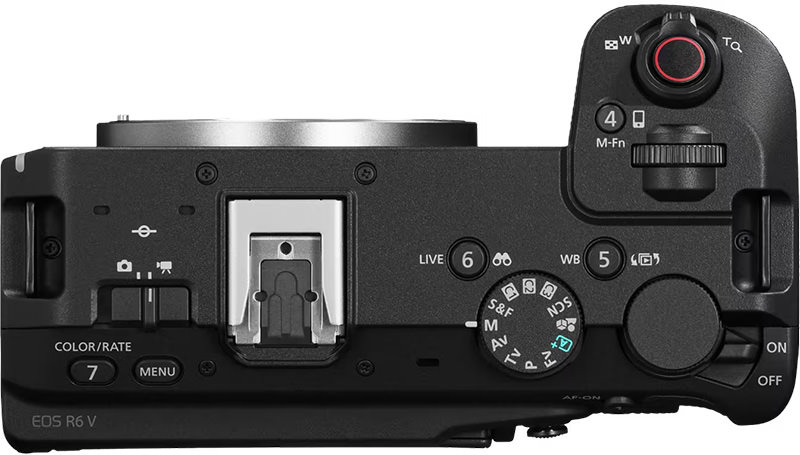
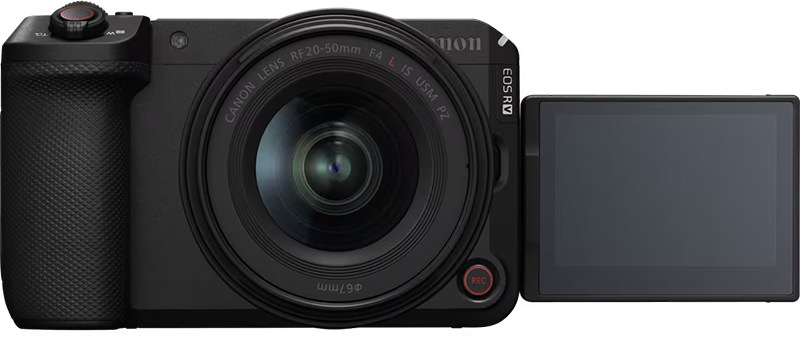
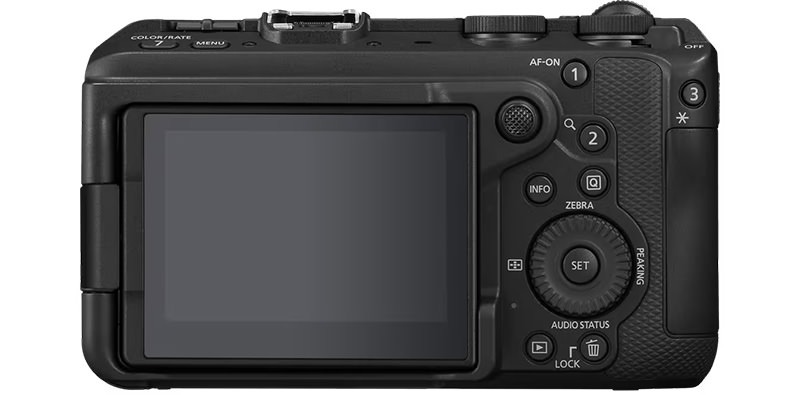
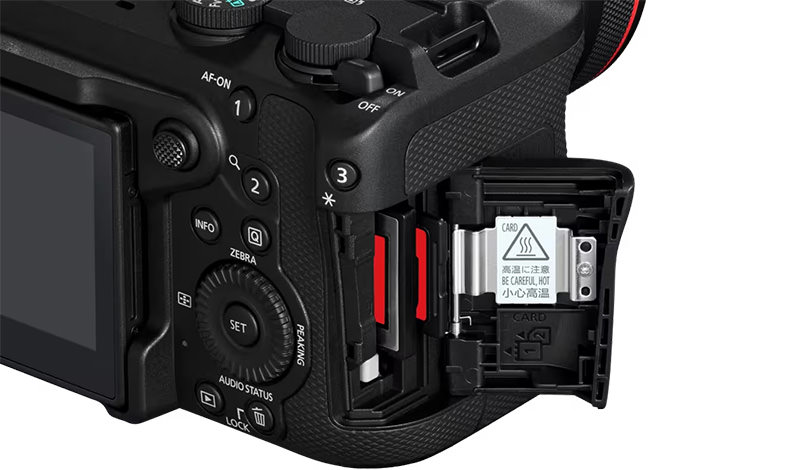
The camera records 7K internally to a CFexpress Type B card in Standard or Light RAW, with a maximum frame rate of 60p in 7K Light RAW. Open Gate recording at the full 3:2 sensor area is available up to 30p. Below 7K, oversampled 4K DCI or UHD reaches 60p, non-oversampled 4K reaches 120p with audio, and 2K or Full HD reaches 180p. Color profiles include Canon Log 2, Canon Log 3, BT.709, PQ, and HLG, with support for user-loadable .cube look files. The dual card configuration — one CFexpress Type B slot and one UHS-II SD slot — supports relay, simultaneous backup, and main-plus-proxy recording.
The single most significant engineering difference between the R6 V and the R6 Mark III is the inclusion of an internal active cooling fan: at 7K Light RAW with a 2K proxy, recording extends to approximately 33 to 37 minutes with the fan stopped, and beyond 120 minutes with it running. Canon states that 4K 60p is achievable for more than two hours at 30 degrees Celsius with the fan and overheat limit at their highest settings, a substantial improvement over the fanless R6 Mark III.
The R6 V has no electronic viewfinder. The only image-monitoring surface is a 3.0-inch vari-angle LCD with approximately 1.62 million dots. The only shutter is electronic, rated to 1/8,000 second. Canon states that speedlites will not fire even when attached to the multi-function shoe, with flash support to be added post-launch via firmware. The absence of a mechanical shutter also reduces dynamic range compared to the R6 Mark III, which retains one.
Still photography capabilities mirror those of the R6 Mark III: the camera shoots at up to 40 frames per second using the electronic shutter, with pre-continuous shooting capturing up to 20 frames before the shutter release is fully pressed. Maximum still ISO is 64,000. A dedicated Photo/Movie Mode switch allows transitions between the two without entering menus.
In-body image stabilization is rated by Canon at up to 7.5 stops at the center, measured to CIPA DC-011-2024. Coordinated IS operates automatically with RF lenses that include optical stabilization. The autofocus system is Dual Pixel CMOS AF II, shared with the C50, C80, C400, and R3, covering approximately 100 percent of the frame with most RF lenses. Subject detection covers people, animals, and vehicles. Moreover, a registered people priority function allows up to ten individuals to be stored and prioritized in crowded scenes.
The sensor uses a conventional Bayer readout — not the Dual Gain Output architecture of the C70, and not the back-illuminated stacked CMOS found in the C80, C400, and R3. The camera has a dual base ISO of 800 and 6,400, switching automatically rather than by manual selection. The DIGIC X processor, rather than the DIGIC DV 7 found in the Cinema EOS line, handles all processing.
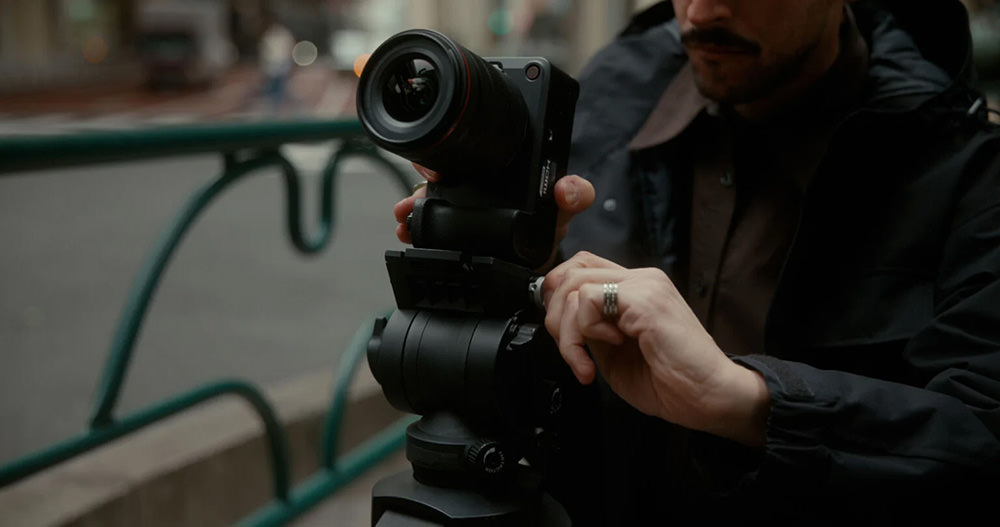
The body includes a top-plate zoom lever, a front-facing record button, a tally lamp, a vertical 1/4-20-inch tripod mount alongside the standard bottom mount, and an on-screen interface that auto-rotates when held vertically. Connectivity includes full-size HDMI Type A, a 10 Gbps USB-C port with Power Delivery support, a 3.5mm microphone input, a 3.5mm headphone output, and a remote terminal. There is no SDI port.
The camera uses the LP-E6P battery, rated for approximately 1 hour 10 minutes of 7K Light RAW at 60p with the fan active. Older LP-E6N and LP-E6NH batteries disable Wi-Fi, fan settings, and percentage-based battery readout. Body weight is 688 grams; dimensions are 141.8 x 83.3 x 79.8 mm.
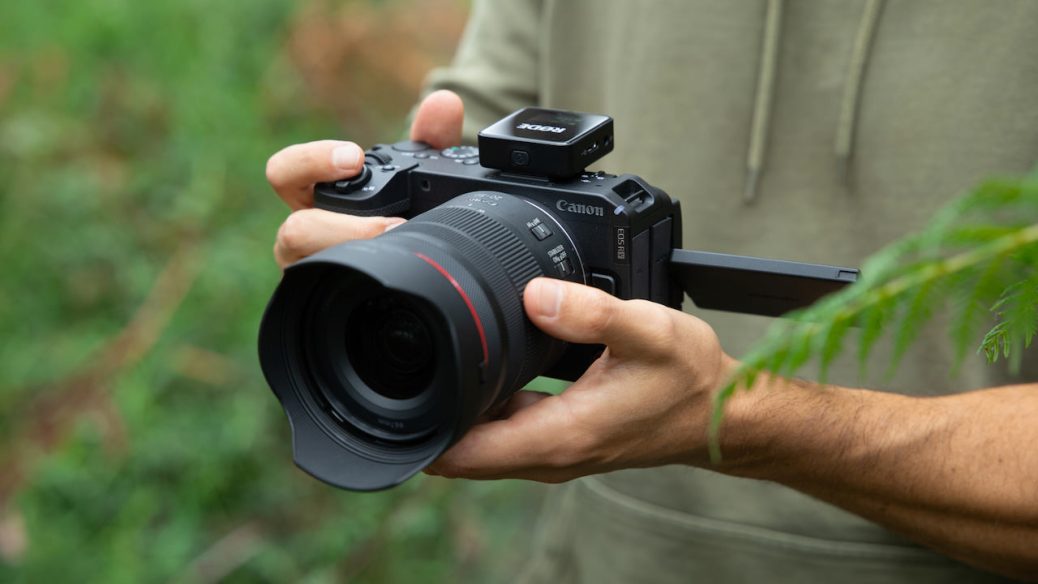
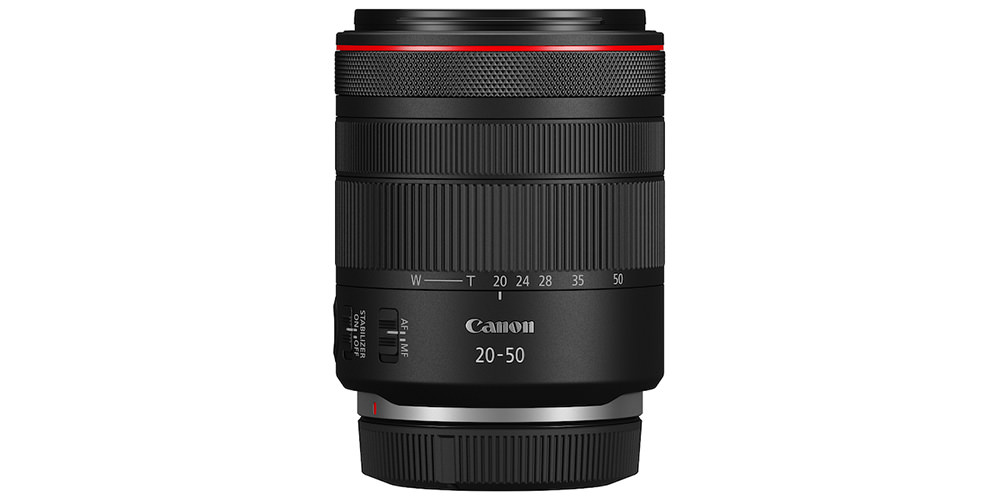
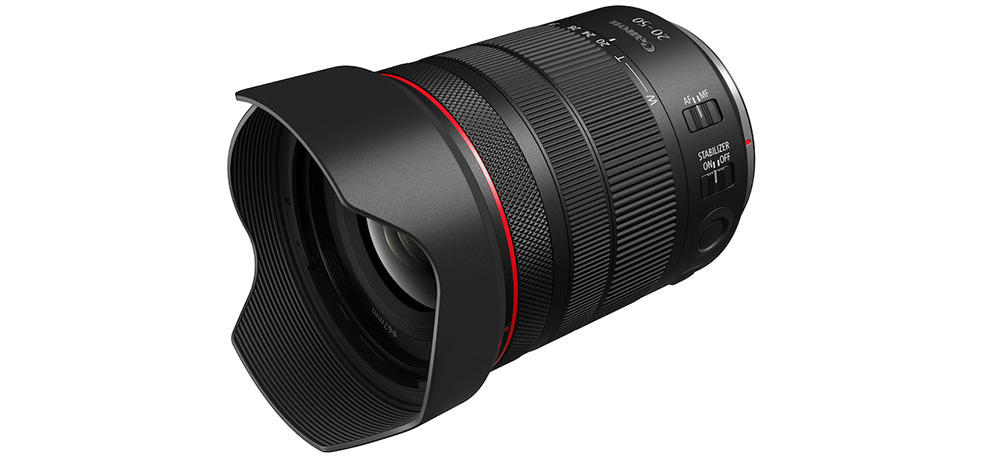
The R6 V is announced alongside the RF 20-50mm F4 L IS USM PZ, Canon’s first full-frame RF L-series lens with built-in power zoom requiring no external adapter. The lens covers a 20-50mm focal range at a constant f/4 aperture, and its optical formula uses 13 elements in 11 groups, including three UD glass elements and two aspherical elements, with Super Spectra, Air Sphere, and fluorine coatings. Three Nano USM motors are used: two drive the zoom group, one handles focus. The zoom mechanism is internal, keeping the barrel length and center of gravity stable for gimbal use. Minimum focus distance is 0.24 meters, maximum magnification is 0.33x at 50mm, filter thread is 67mm, and weight is 420 grams. Optical image stabilization is rated at 6 stops standalone and 8 stops when coordinating with IBIS. Zoom speed is adjustable in 15 steps and can be triggered remotely via the Canon Camera Connect app or Bluetooth remotes.
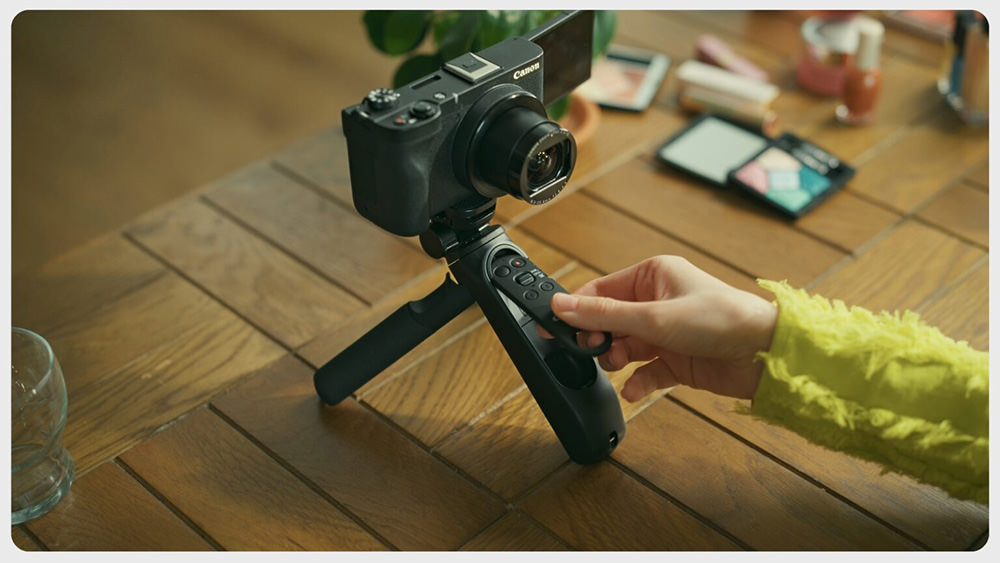
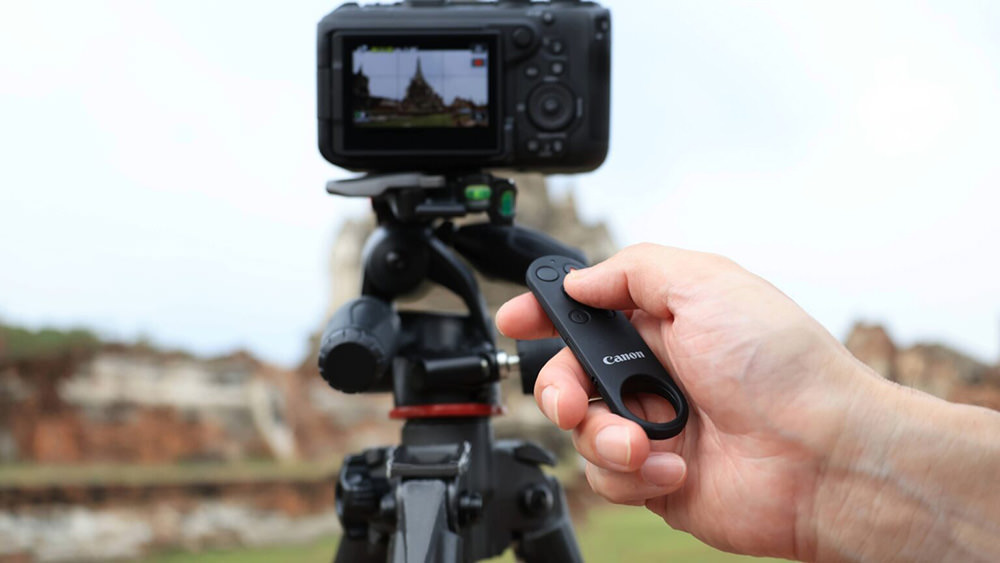
The BR-E2 Wireless Remote Control replaces the BR-E1, adding a zoom and exposure compensation lever, dedicated AF and record buttons, and two customizable buttons to be enabled via future firmware. The HG-200TBR Multi-Function Tripod Grip supports horizontal and vertical mounting and ships bundled with a BR-E2.
The Canon EOS R6 V is priced at $2,499 and is expected to ship on June 24th. A kit with the RF 20-50mm F4 L IS USM PZ is priced at $3,699. The lens is available separately for $1,399, while the BR-E2 is $69.99 and the HG-200TBR is $159.99.