
Martine Franck: Images, Press and Feminist Struggles
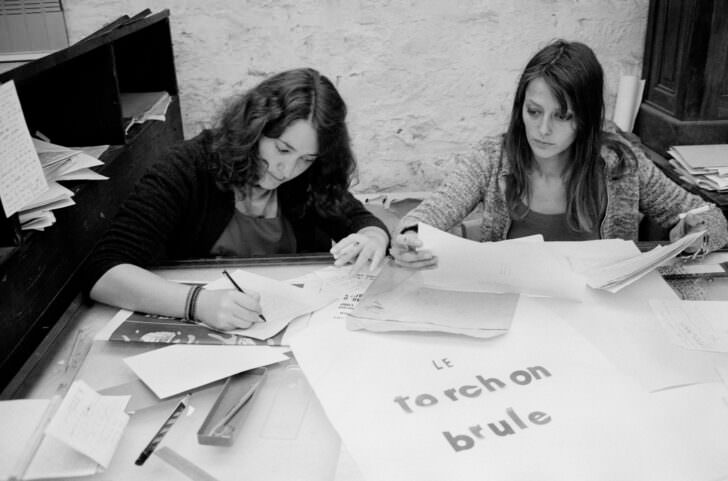
The Henri Cartier-Bresson Foundation presents Martine Franck: Images, Press and Feminist Struggles, the first major exhibition devoted to Franck’s photographs of feminist struggles. On view from October 21, 2026 to March 7, 2027, the exhibition brings together prints from the 1970s, some of which have never previously been exhibited or published outside the feminist press of the period.
Curated by Angèle Ferrere, PhD in History and Aesthetics of Photography and recipient of the 2025 Martine Franck Curatorial Research Grant, the exhibition explores a lesser-known aspect of Franck’s work in France. The grant is supported by the Linklaters Foundation.
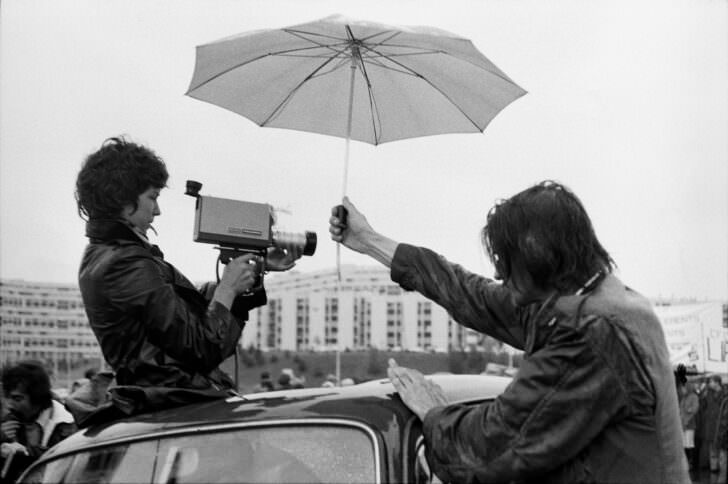
During the 1970s, Franck photographed feminist demonstrations and political actions, particularly in Paris. Her attention to the Mouvement de libération des femmes, or MLF, reflected a broader interest in the social changes taking place around her and became an important part of her photographic practice. At the time, the way women were represented in the media had itself become a political issue. Feminist movements challenged a dominant visual culture that often objectified women’s bodies and could distort or dismiss their demands. Photography and publishing therefore became important tools in the construction of alternative forms of representation. Franck shared this awareness of the power of images. In 1972, she co-founded the Viva agency, which brought together photographers concerned with both the informative role of photography and the social responsibility attached to the production and circulation of images.
The exhibition looks at the collective visual culture that developed around feminist activism during the decade. Franck’s photographs document demonstrations and public actions, but also reveal the important role played by feminist newspapers and magazines. These publications became spaces where political ideas could be debated and where images could circulate outside the conventions of the mainstream press.
Through these photographs, the exhibition also examines the close relationship between feminist activism, photography and publishing, at a moment when women were increasingly questioning who controlled their image and how their experiences were represented.
From the 1980s onwards, as feminism became more established within public institutions, Franck continued to focus on women’s lives and work. Public commissions led to series such as Des femmes et la création [Women and Creation] and later Des métiers et des femmes [Jobs and Women]. Her approach became more focused on individual experiences, but the questions of representation and equality that had shaped her work in the 1970s remained present throughout her career.
About the Author
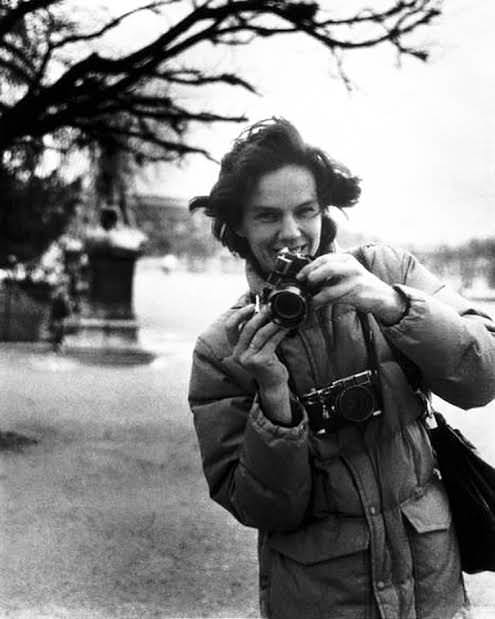
Martine Franck (1938–2012) was born in Antwerp, Belgium, on April 2, 1938. She studied art history at the University of Madrid and later at the École du Louvre in Paris, where she wrote a thesis on the influence of Cubism on sculpture.
A journey through Asia in 1963 marked a turning point in her life and led her to photography. After returning to Paris, she worked at Time-Life and assisted photographers including Eliot Elisofon and Gjon Mili before beginning her career as a freelance photographer. Her photographs were published in magazines and newspapers including Life, Sports Illustrated, Fortune, Vogue and The New York Times.
Her friendship with Ariane Mnouchkine also led to a long association with the Théâtre du Soleil, which Franck photographed from its early years and continued to follow throughout her life. She joined the Vu agency in 1970 and co-founded Viva in 1972 with Hervé Gloaguen, Guy Le Querrec, François Hers, Jean Lattès and Richard Kalvar. In 1980, she joined Magnum Photos as an associate member and became a full member in 1983.
Franck’s work combined documentary photography with a sustained interest in social issues and everyday life. Over the course of her career, she photographed artists, political movements, older people, marginalized communities and women at work, while also developing long-term projects on theatre and cultural life. In 2002, she founded the Henri Cartier-Bresson Foundation together with Henri Cartier-Bresson and their daughter Mélanie. She became its president in 2004 and remained closely involved with the Foundation until her death in Paris in 2012.
Martine Franck: Images, Press and Feminist Struggles
October 21, 2026 – March 7, 2027
Henri Cartier-Bresson Foundation – Paris – France
More info: