
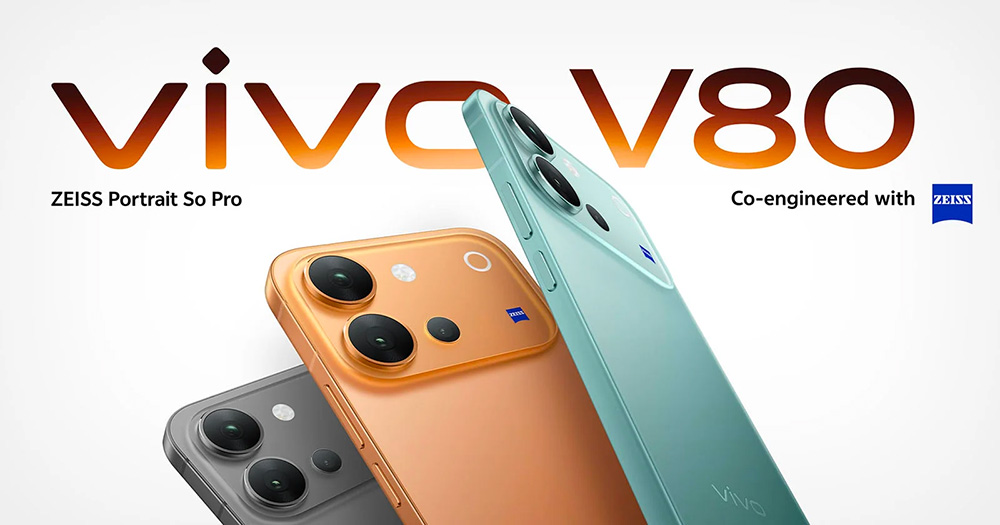
Vivo Releases V80 Smartphone With Zeiss Cameras
Vivo has introduced the V80, a mid-range smartphone featuring a camera system developed in collaboration with German company Zeiss. The new model retains much of the photographic hardware found in the earlier V70, while introducing a redesigned body and additional exterior finishes. Its camera configuration combines a high-resolution main sensor with a dedicated periscope telephoto lens, although the ultrawide camera remains comparatively limited.
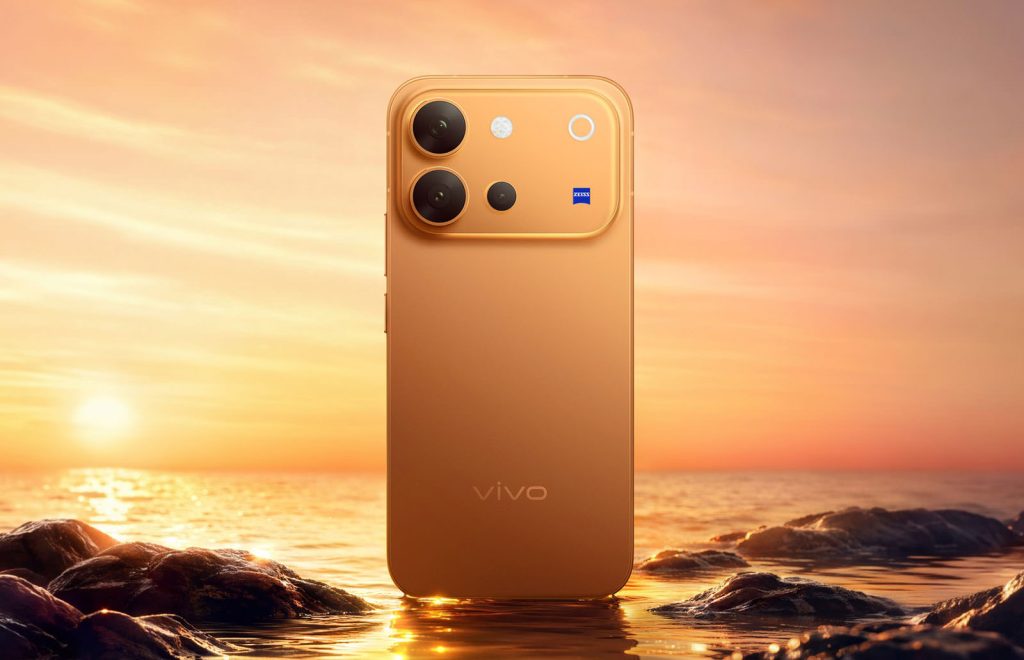
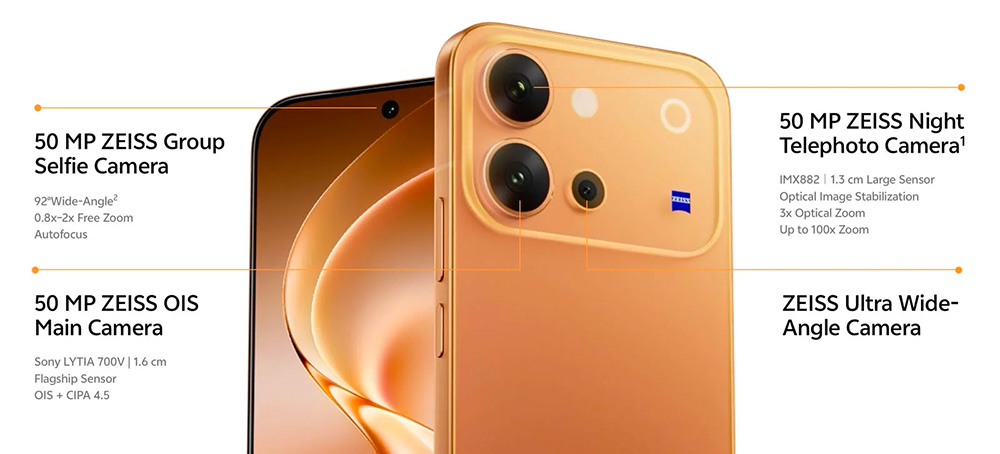
The main camera uses a 50-megapixel Type 1/1.56 sensor paired with a 23mm-equivalent f/1.9 lens. It is accompanied by a second 50-megapixel camera with a Type 1/1.95 sensor and a 73mm-equivalent periscope telephoto lens. This configuration provides approximately 3x optical magnification relative to the main camera, allowing the device to capture more distant subjects without relying exclusively on digital cropping.
By contrast, the third rear camera uses an 8-megapixel ultrawide sensor with a 115-degree field of view. Although it extends the available framing options, its lower resolution distinguishes it from the main and telephoto cameras. The overall configuration is therefore largely unchanged from the V70, with the V80 focusing more on design and photographic processing than on substantial sensor upgrades.
The collaboration with Zeiss also extends to the smartphone’s portrait photography functions. The V80 incorporates Center-Stage Portrait mode, which uses computational processing to reproduce selected characteristics associated with traditional Zeiss lenses. Among the available options are a 100mm-equivalent portrait mode inspired by Planar optics, with softer tones and reduced saturation, and an 85mm-equivalent mode that simulates the background rendering associated with Sonnar lenses. These effects are generated through software rather than through changes to the physical optical system.
In terms of construction, Vivo has introduced a one-piece glass design that integrates the rear panel and the area surrounding the camera module. The glass is shaped through a cold-carving process, producing a continuous surface around the raised camera assembly.
The company has also introduced a Starwish Purple finish based on laser holographic lithography. The manufacturing process creates thousands of microscopic patterns within the rear surface, producing an apparent three-dimensional effect that changes with the viewing angle.
The V80 features a 6.59-inch AMOLED display with a claimed peak brightness of 5,000 nits in localized areas and a maximum full-screen brightness of 1,800 nits. The display is intended to support image viewing and general smartphone use under different lighting conditions, although these brightness figures refer to specific operating scenarios.
The Vivo V80 is available at approximately €580, depending on the region and configuration. The company has not announced uniform availability across all European markets.