
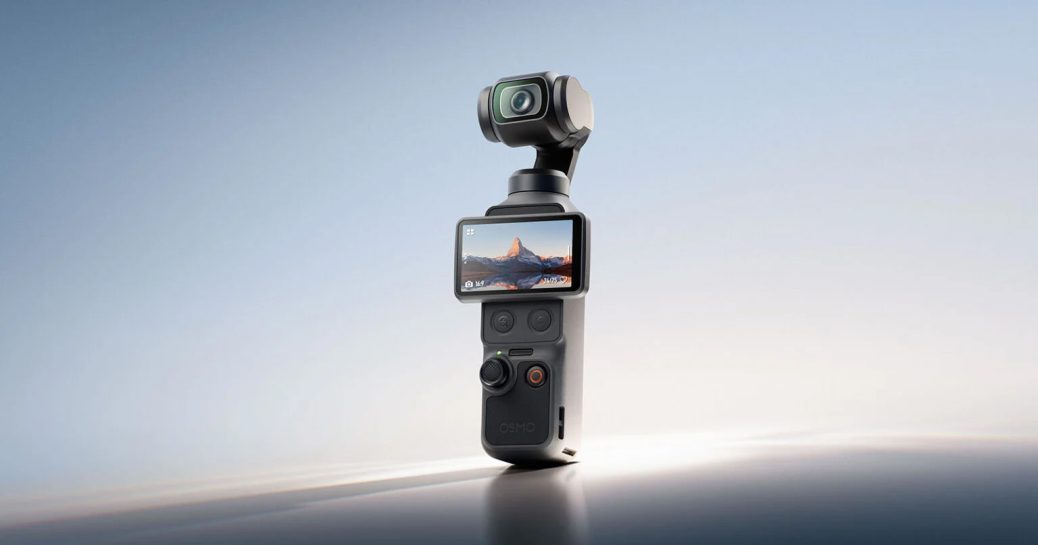
DJI Introduces the Osmo Pocket 4 with Imaging and Video Upgrades
DJI has officially announced the Osmo Pocket 4, the fourth generation of its pocket gimbal camera. The device retains the foundational hardware of its predecessor — a one-inch CMOS sensor paired with a fixed 20mm equivalent f/2.0 lens with a minimum focus distance of 0.2 meters — while introducing a set of incremental but substantive improvements across imaging, video, usability, and connectivity.
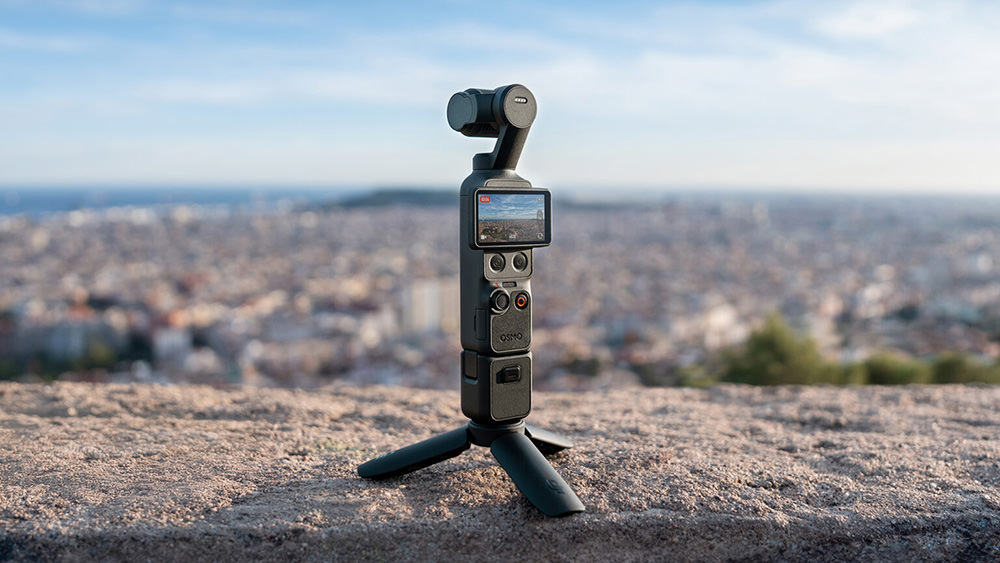
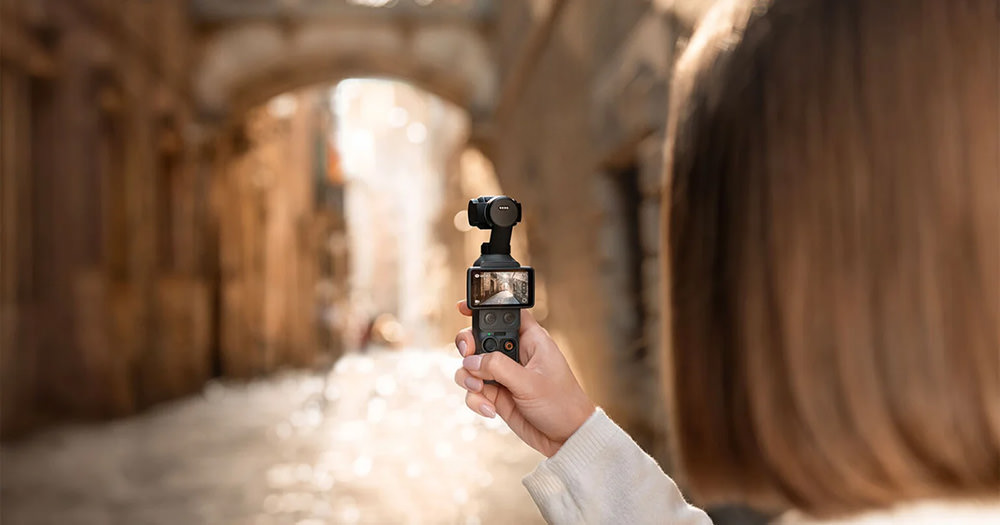
The most significant video upgrade is the jump from 4K at 120 frames per second to 4K at 240 frames per second, enabling slow-motion playback at ten times speed at 24p, or eight times at 30p. Standard recording modes remain available at 24, 25, 30, 48, 50, and 60 frames per second in both 16:9 and vertical 9:16 formats, and the maximum video bitrate rises from 130 to 180 Mbps. The camera now supports a true 10-bit D-Log color profile with a claimed 14 stops of dynamic range — a meaningful distinction from the Pocket 3, whose D-Log M implementation was not considered a full logarithmic profile by professional color grading standards. The ISO range for both photo and video spans 50 to 12,800, with an extended low-light video mode reaching ISO 25,600 at up to 4K/30fps. A slow shutter video mode allows exposure times down to 1/4 second in video, enabling motion blur effects that would be difficult to achieve with purely electronic stabilization.
Still photography has been substantially revised. The Pocket 4 captures 37-megapixel images, up from 9.4 megapixels on the Pocket 3, with a maximum resolution of 7,680×4,320 pixels in 16:9 and 6,144×6,144 in 1:1. Both DNG raw and JPEG formats are supported, and manual long exposure extends to four seconds — a range the three-axis mechanical gimbal is designed to assist in keeping sharp. The ISO range applies equally to stills, and the 10-bit D-Log profile with 14 stops of dynamic range is available across both photo and video capture. Six built-in film tones — CC Film, NC Film, Pastel, Warm Tone, Movie, and Retro — can be applied at the time of capture, and an in-camera beautify function allows adjustment of skin smoothness, brightness, and tone.
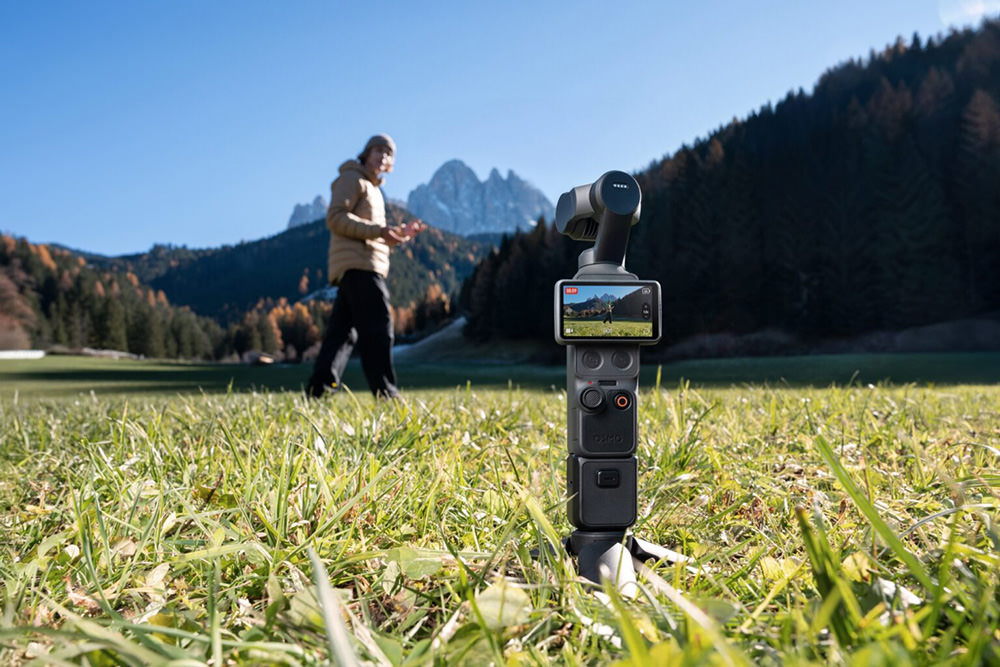


The camera introduces 2x lossless zoom at full 4K resolution and 4x zoom at 1080p. A dedicated zoom button below the screen toggles between 1x and 2x with a single tap, or jumps to 4x with a double tap. The 2x setting produces an effective 40mm equivalent focal length. Subject tracking has been updated to ActiveTrack 7.0, which DJI states can follow people, vehicles, pets, and arbitrary objects at up to 4x zoom. In addition, two new tracking modes accompany this: Dynamic Framing allows repositioning of tracked subjects according to compositional guides via the joystick, while Face Auto-Detect automatically follows the registered subject nearest the center of frame. Autofocus includes Subject Lock Tracking, which locks continuous focus on a tapped face, and Registered Subject Priority, which allows pre-registration of up to three individuals. Finally, gesture controls — a palm for ActiveTrack, a peace sign for photo or recording — enable hands-free operation.
Several hardware changes distinguish the Pocket 4 from its predecessor. A 5D analog joystick replaces the earlier directional controls, offering proportional gimbal speed based on input magnitude. The 2-inch OLED touchscreen reaches a peak brightness of 1,000 nits — up from 700 — and now covers 100% of the P3 wide color gamut. Below the screen sit two new physical buttons: a zoom button and a fully customizable function button Recording can be initiated by rotating the screen.
Internal storage stands at 107GB, whereas the Pocket 3 had none. MicroSD cards up to 1TB are supported. Data transfer via USB 3.1 reaches up to 800 MB/s, and Wi-Fi 6 enables wireless transfer at up to 90 MB/s. DisplayPort output supports live streaming at up to 4K/60fps, and built-in timecode with less than one frame of drift over eight hours enables multi-camera synchronization. The three-microphone array records spatial audio, and when DJI Mic transmitters are connected, the camera records four channels across two tracks within a single MP4 file.
The battery has a capacity of 1,545 mAh and supports up to 240 minutes of recording at 1080p/24fps with the screen and Wi-Fi disabled, compared to 166 minutes on the Pocket 3. A 65W PD charger reaches 80% in 18 minutes and full charge in 32 minutes. An optional Battery Handle accessory adds 1,080 mAh of capacity and includes a USB 3.1 port and a 1/4-inch thread for tripod mounting, while an optional magnetic Fill Light offers three brightness levels and three color temperatures. The Pocket 4 is compatible with several existing Pocket 3 accessories, including the wide-angle lens, black mist filter, and magnetic ND filter set. The device weighs 190.5 grams and measures 144.2 × 44.4 × 33.5mm
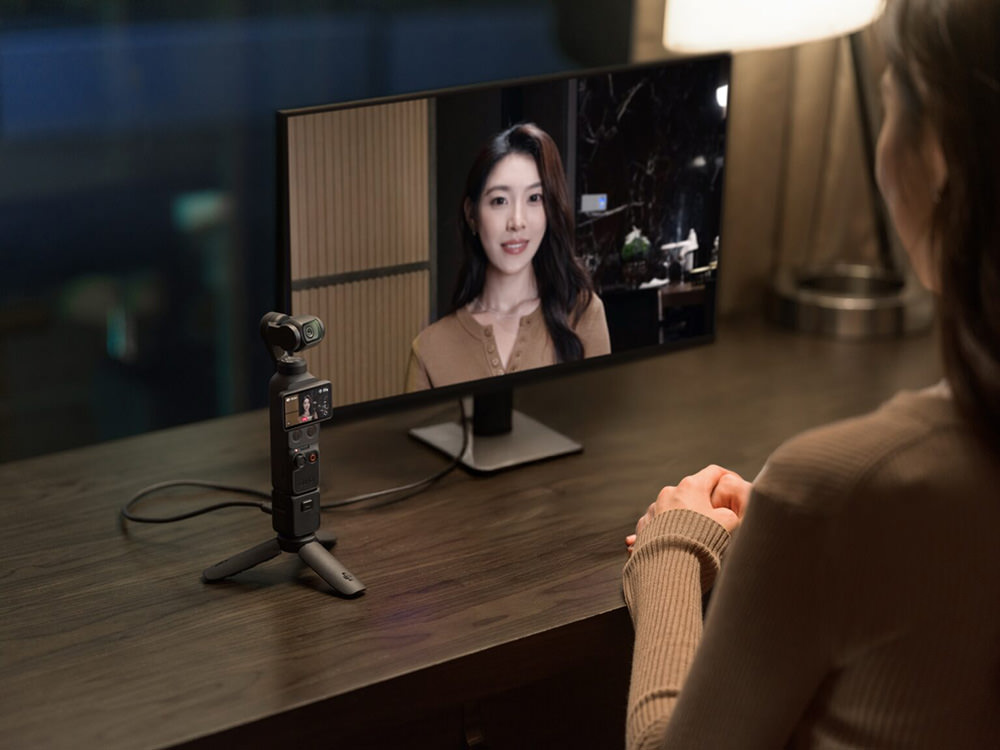
The camera is available in three configurations in markets outside the United States. The Essential Combo is priced from €479, the Standard Combo from €499, and the Creator Combo — which includes the wide-angle lens, a DJI Mic 3 transmitter, the Fill Light, a mini tripod, and a carrying bag — from €619. The Osmo Pocket 4 is not available for sale in the United States, as FCC authorization remains pending, a situation that reflects broader regulatory friction between DJI and the US government extending beyond its drone product line.