
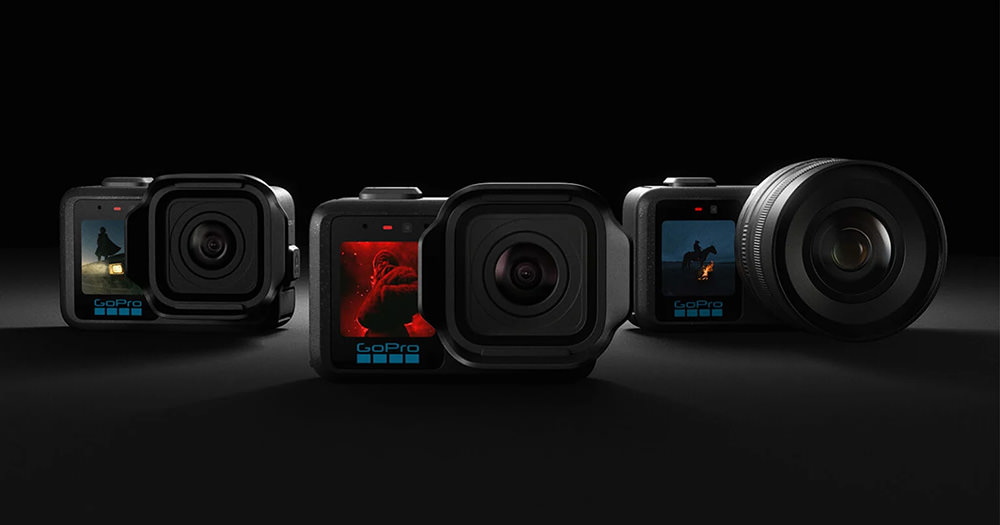
GoPro Presents the Mission 1 Series
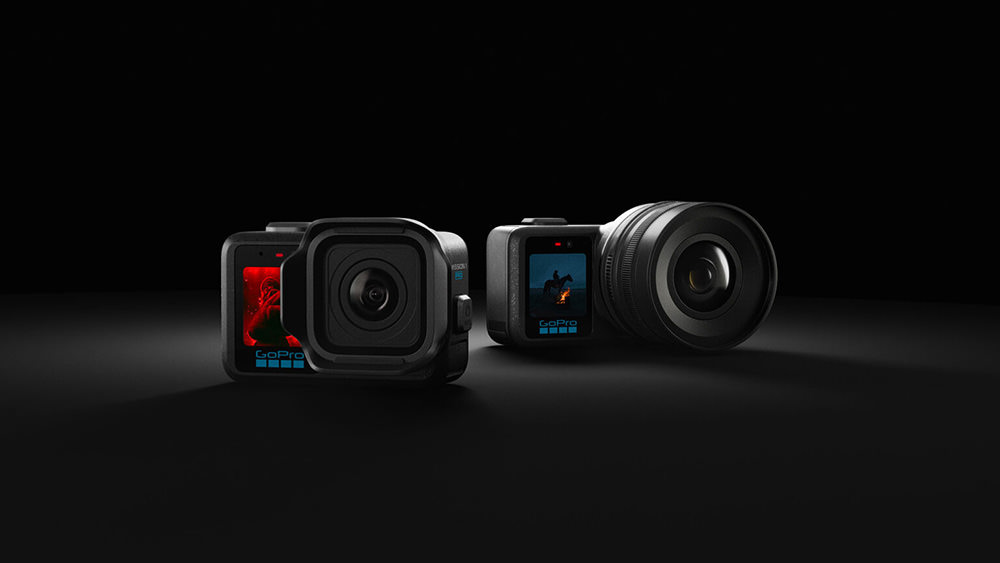
GoPro has announced three new cameras under the Mission 1 name — the Mission 1, the Mission 1 Pro, and the Mission 1 Pro ILS. The announcement comes at a difficult moment: the company cut roughly 23% of its workforce ahead of NAB 2026, its first appearance at the show in years, while DJI and Insta360 have been steadily eroding its market share.
“The MISSION 1 Series is the pinnacle of performance for low-cost, compact cinema cameras,” said Nicholas Woodman, GoPro’s founder and CEO. “Our most demanding, pro-minded customers have asked us for years to make this very line of cameras, and we’ve finally delivered. The MISSION 1 Series is designed to go to hell and back, and that’s exactly where our customers are going to take them. The footage is going to look amazing.”
All three cameras share a 50-megapixel, 1-inch-type sensor and GoPro’s new GP3 processor, built on a 5nm process. The sensor is a substantial step up from the 1/1.9-inch chip in the Hero 13, with a claimed dynamic range of up to 14 stops. The GP3 includes a neural processing unit aimed at low-light performance and improved thermal efficiency — historically a problem area for the brand.
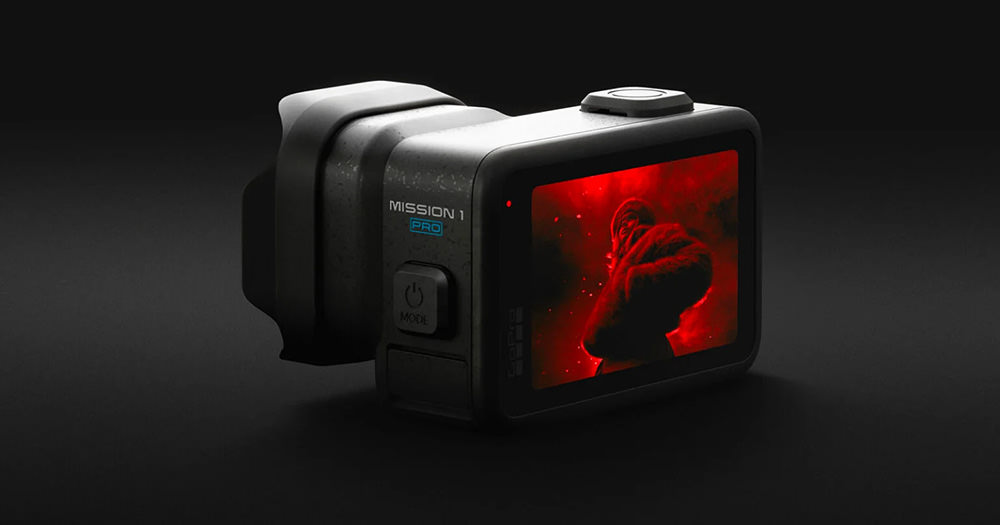
The Mission 1 Pro records 8K at up to 60fps, 4K at up to 240fps, and 1080p at up to 960fps in short bursts. The standard Mission 1 instead is capped at 8K30, 4K120 in slow motion, and 1080p240. Both share 10-bit recording, GP-Log2, HLG-HDR, HyperSmooth stabilization with 360-degree horizon lock, 240Mbps bitrate, 50-megapixel RAW stills, and waterproofing to 20 meters without a housing. Both feature a new 2.59-inch OLED rear display, a 1.4-inch front LCD, and redesigned raised buttons. The built-in lens covers 159 degrees at f/2.8.
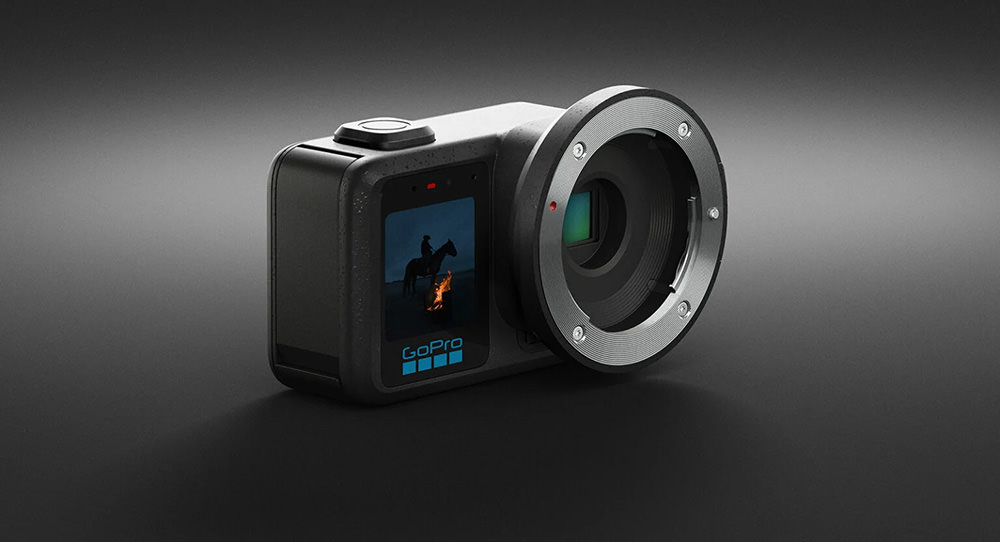
The Mission 1 Pro ILS is the conceptually distinct model. It accepts Micro Four Thirds mount optics, opening access to a wide ecosystem of glass from Panasonic, OM System, Leica, and others. The body shares the same sensor and processor as the Mission 1 Pro but is weatherproof rather than waterproof to 20 meters. The 1-inch sensor behind an MFT mount produces a crop factor of roughly 2.7–3x relative to full frame, compressing wide-angle coverage while making telephoto and macro applications more interesting. The mount carries no electronic contact pins, so autofocus and electronic aperture control are unavailable — all operation with MFT lenses is manual, with focus peaking and punch-in zoom as aids. This positions the ILS for controlled production contexts: crash rigs, drone payloads, gimbal setups, and anywhere a conventional mirrorless body physically will not fit.
Battery life has been a persistent weakness in this category. The American company claims the new Enduro 2 battery at 2150mAh, combined with the more efficient GP3, delivers over five hours at 1080p and over three hours at 4K30 — figures that would represent a meaningful improvement if confirmed in practice. All three cameras include four built-in microphones, 32-bit float audio, Bluetooth 5.3 with Super Wideband support, and timecode sync for multi-camera work.
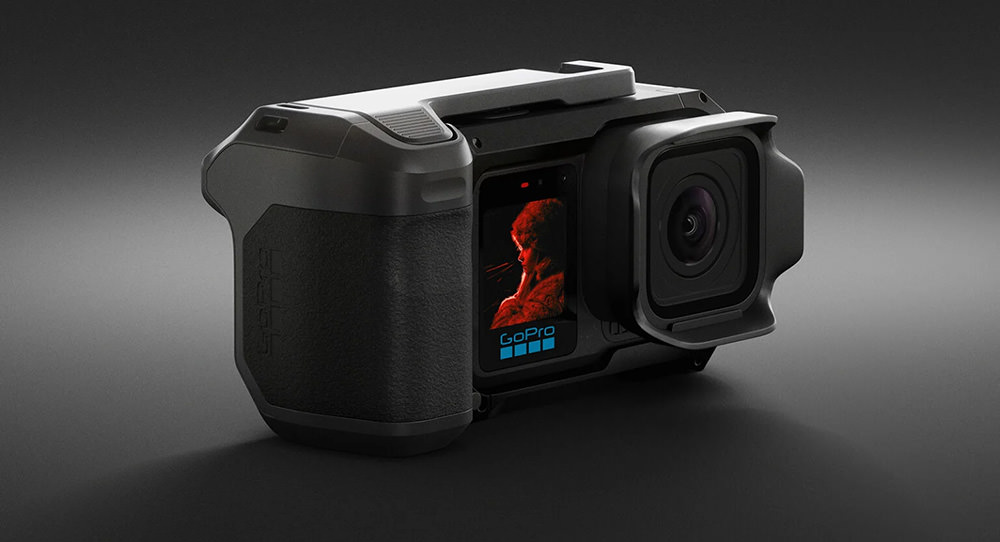
The accessory lineup includes a redesigned Media Mod with micro-HDMI output, a new wireless microphone system with 150-meter range and 6.5-hour battery life, a Volta 2 grip-battery at 5800mAh, an updated Light Mod 2, ND filter sets, and a Protective Housing extending waterproofing to 60 meters.
“With the launch of the MISSION 1 Series, GoPro is entering the premium end of the digital imaging market in a significant way,” said Pablo Lema, GoPro’s Senior Vice President of Product. “The combination of our new 50 megapixel 1” sensor and ultra-efficient GP3 processor sets a new performance bar for compact cinema cameras, enabling resolutions, frame rates, low-light performance, runtimes and thermal capabilities never seen before in cameras this small. We expect the MISSION 1 Series to expand the creative potential of filmmakers and creators around the world, similar to the impact GoPro made when it pioneered the category for durable, ultra-capable compact cameras.”
Pricing was initially withheld at launch, with GoPro citing instability in the flash memory market. The standard Mission 1 will retail for $599.99, the Mission 1 Pro for $699.99, and the Mission 1 Pro ILS — shipping in Q3 2026 — also at $699.99, without a lens. Preorders for the Mission 1 and Mission 1 Pro opened through GoPro’s official store with shipping expected May 28; broader retail availability begins May 21.